Skip to content

Year 3Multiplication & Division

Apply known multiplication and division facts to solve contextual problems with different structures, including quotitive and partitive division (1)

CoverCover and first page

Preview only. The download is one file, listed in full below.

Every page is shown before you download. The files themselves come with membership, or sign in if you already have one.

Included with membership

Unlock with membership

Already a member? Sign in and it downloads from this page.

Keep it for later and group it with the rest of the block. No account needed to start.

  • Print it as it is, or as many as you need
  • Instant download, no watermark

About this resource

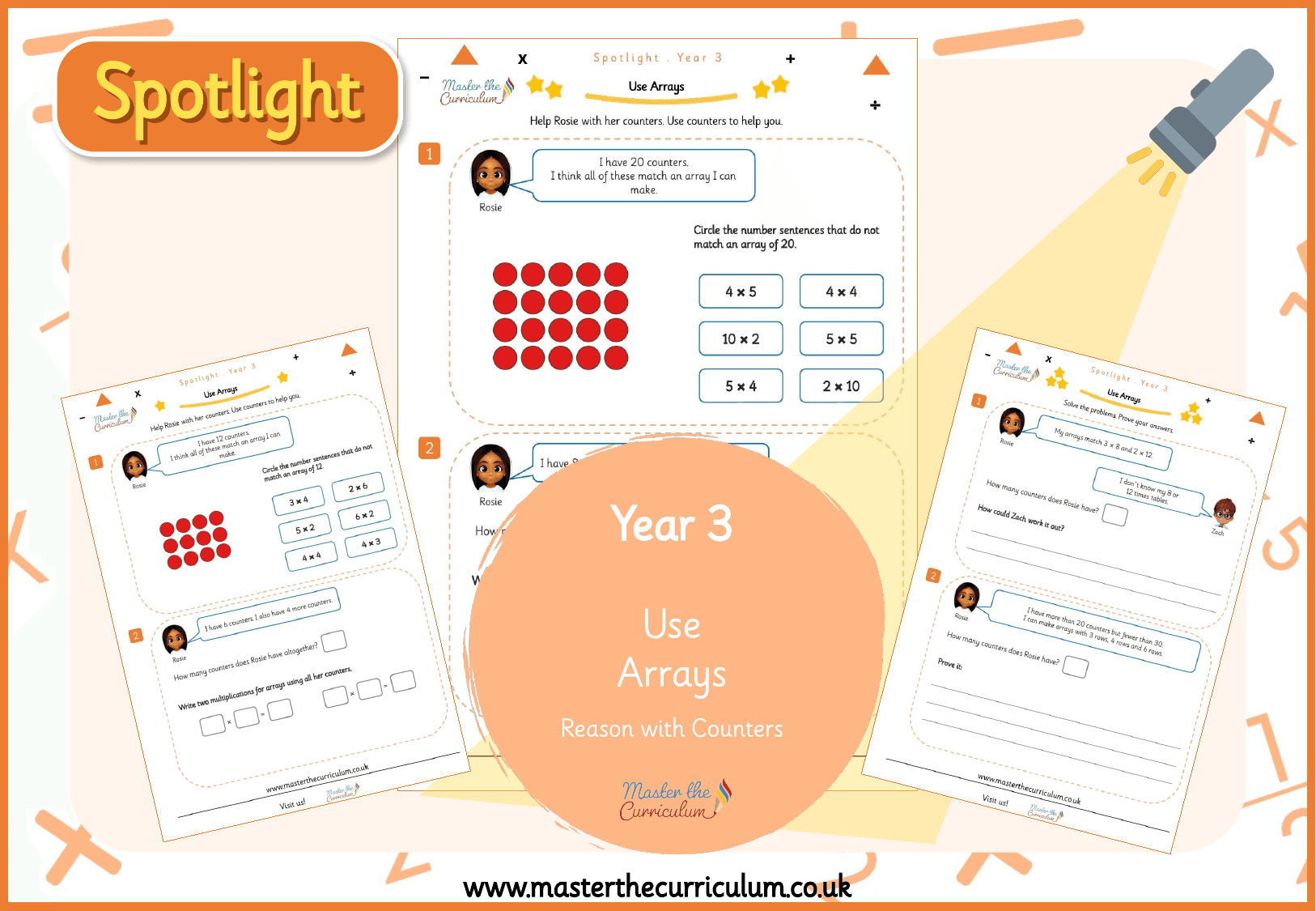
At this stage, pupils will be developing fluency in the 5, 10, 2, 4 and 8 multiplication tables (3NF–2 ), so should be able to solve multiplication problems about groups of 5, 10, 2, 4 or 8. Pupils have already begun to learn that if the factors are swapped, the product remains the same (3NF–2) Language focus “factor times factor is equal to product”. “The order of the factors does not affect the product”. Pupils should also learn that the commutative property allows them to use their known facts to solve problems about 5, 10, 2, 4 or 8 equal groups (for example, 2 groups of 7). An array can be used to illustrate how the commutative property relates to different grouping interpretations – the example below shows that 7 groups of 2 and 2 groups of 7 both correspond to the same total quantity (14). This means that pupils can use their knowledge that 7 2 14× = to solve a problem about 2 groups of 7, even though they have not yet learned the 7 multiplication table. Pupils should already be solving division calculations using known division facts corresponding to the 5, 10, 2, 4 and 8 multiplication tables (3NF–2). They must also be able to use these known facts to solve both quotitive (grouping) and partitive (sharing) contextual division problems. The same array that was used to illustrate the commutative property of multiplication can also be used to show how known division facts can be applied to the two different division structures. At this stage, pupils only need to be able to apply division facts corresponding to division by 5, 10, 2, 4 and 8 to solve division problems with the two different contexts. In year 4, pupils will learn, for example, that if they know that 2 × 7 = 14, then they know both 14 ÷ 2 = 7 and 14 ÷ 7 = 2. When pupils are solving contextual problems, dividing into groups of 5, 10, 2, 4 or 8 (quotitive division) or sharing into 5, 10, 2, 4 or 8 parts (partitive division), they should calculate by recalling a known multiplication fact rather than Read more

At this stage, pupils will be developing fluency in the 5, 10, 2, 4 and 8 multiplication tables (3NF–2 ), so should be able to solve multiplication problems about groups of 5, 10, 2, 4 or 8. Pupils have already begun to learn that if the factors are swapped, the product remains the same (3NF–2) Language focus “factor times factor is equal to product”. “The order of the factors does not affect the product”. Pupils should also learn that the commutative property allows them to use their known facts to solve problems about 5, 10, 2, 4 or 8 equal groups (for example, 2 groups of 7). An array can be used to illustrate how the commutative property relates to different grouping interpretations – the example below shows that 7 groups of 2 and 2 groups of 7 both correspond to the same total quantity (14). This means that pupils can use their knowledge that 7 2 14× = to solve a problem about 2 groups of 7, even though they have not yet learned the 7 multiplication table. Pupils should already be solving division calculations using known division facts corresponding to the 5, 10, 2, 4 and 8 multiplication tables (3NF–2). They must also be able to use these known facts to solve both quotitive (grouping) and partitive (sharing) contextual division problems. The same array that was used to illustrate the commutative property of multiplication can also be used to show how known division facts can be applied to the two different division structures. At this stage, pupils only need to be able to apply division facts corresponding to division by 5, 10, 2, 4 and 8 to solve division problems with the two different contexts. In year 4, pupils will learn, for example, that if they know that 2 × 7 = 14, then they know both 14 ÷ 2 = 7 and 14 ÷ 7 = 2. When pupils are solving contextual problems, dividing into groups of 5, 10, 2, 4 or 8 (quotitive division) or sharing into 5, 10, 2, 4 or 8 parts (partitive division), they should calculate by recalling a known multiplication fact rather than

What you get, one file

  • PDFActivity

This pack is print and go. Our catalogue does not list an editable copy of it, so none is offered here rather than promising a file nobody has opened. Page counts are not printed either, because we do not publish them and a guessed number is worse than none.

More multiplication & division for Year 3

Y3

Multiplication & Division

Spotlight Y3 Use Known Facts to Find Multiples of 2

masterthecurriculum.co.uk

3 levels
Included with membership
Y3

Multiplication & Division

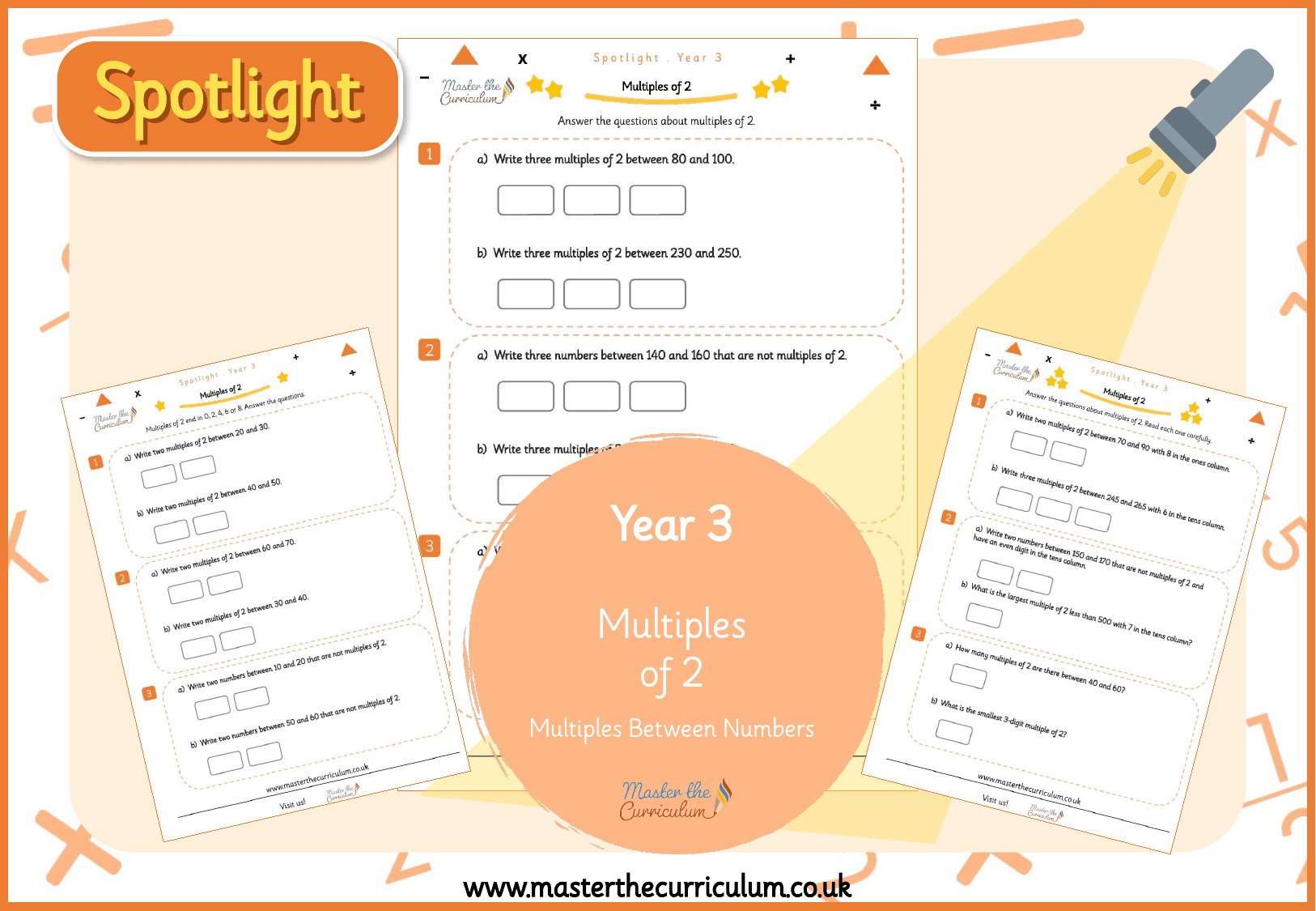
Spotlight Y3 Find Multiples of 2 Between Two Numbers

masterthecurriculum.co.uk

3 levels
Included with membership
Y3

Multiplication & Division

Spotlight Y3 Even Numbers are Multiples of 2

masterthecurriculum.co.uk

3 levels
Included with membership
Y3

Multiplication & Division

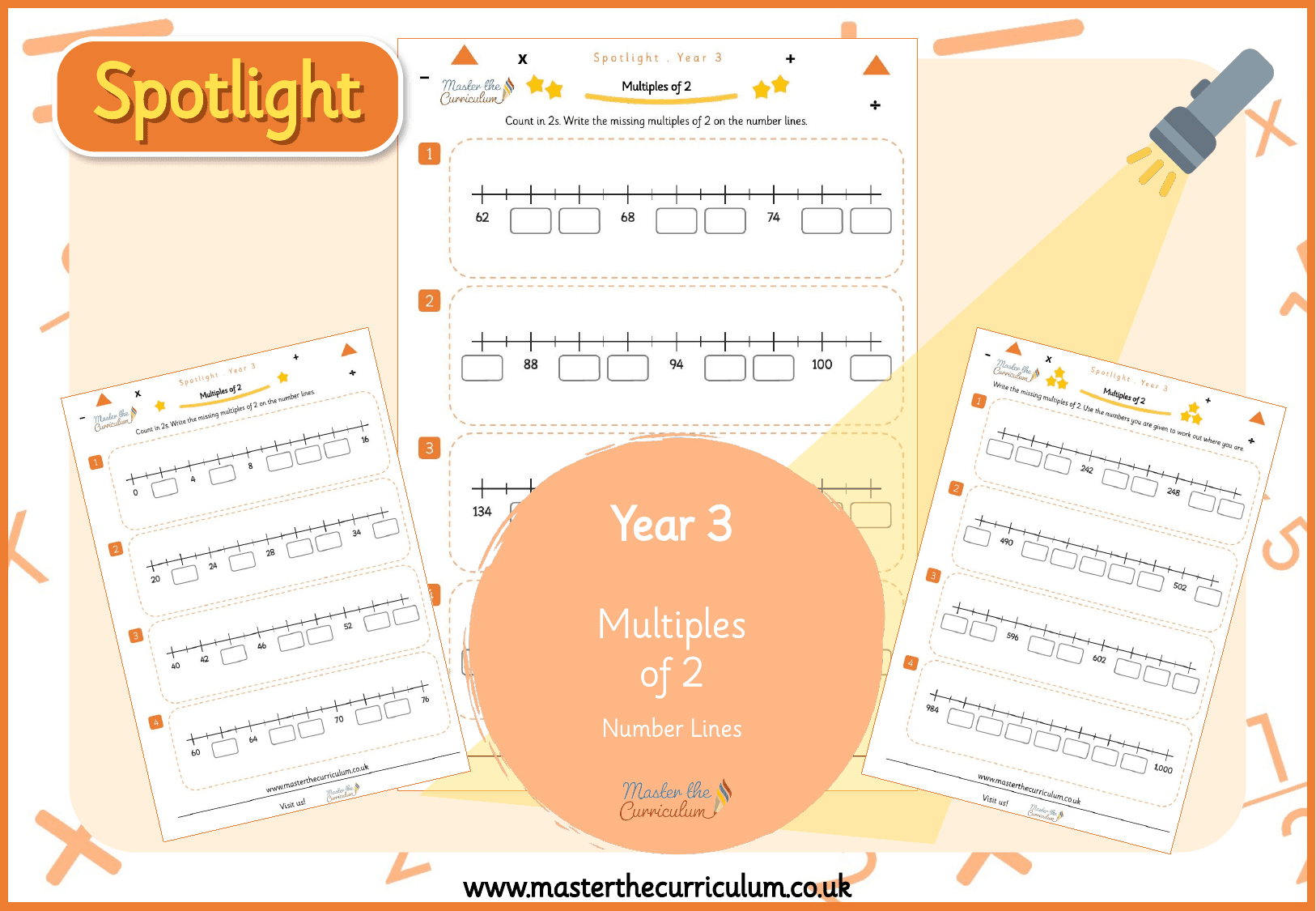
Spotlight Y3 Multiples of 2 on Number Lines

masterthecurriculum.co.uk

3 levels
Included with membership
Y3

Multiplication & Division

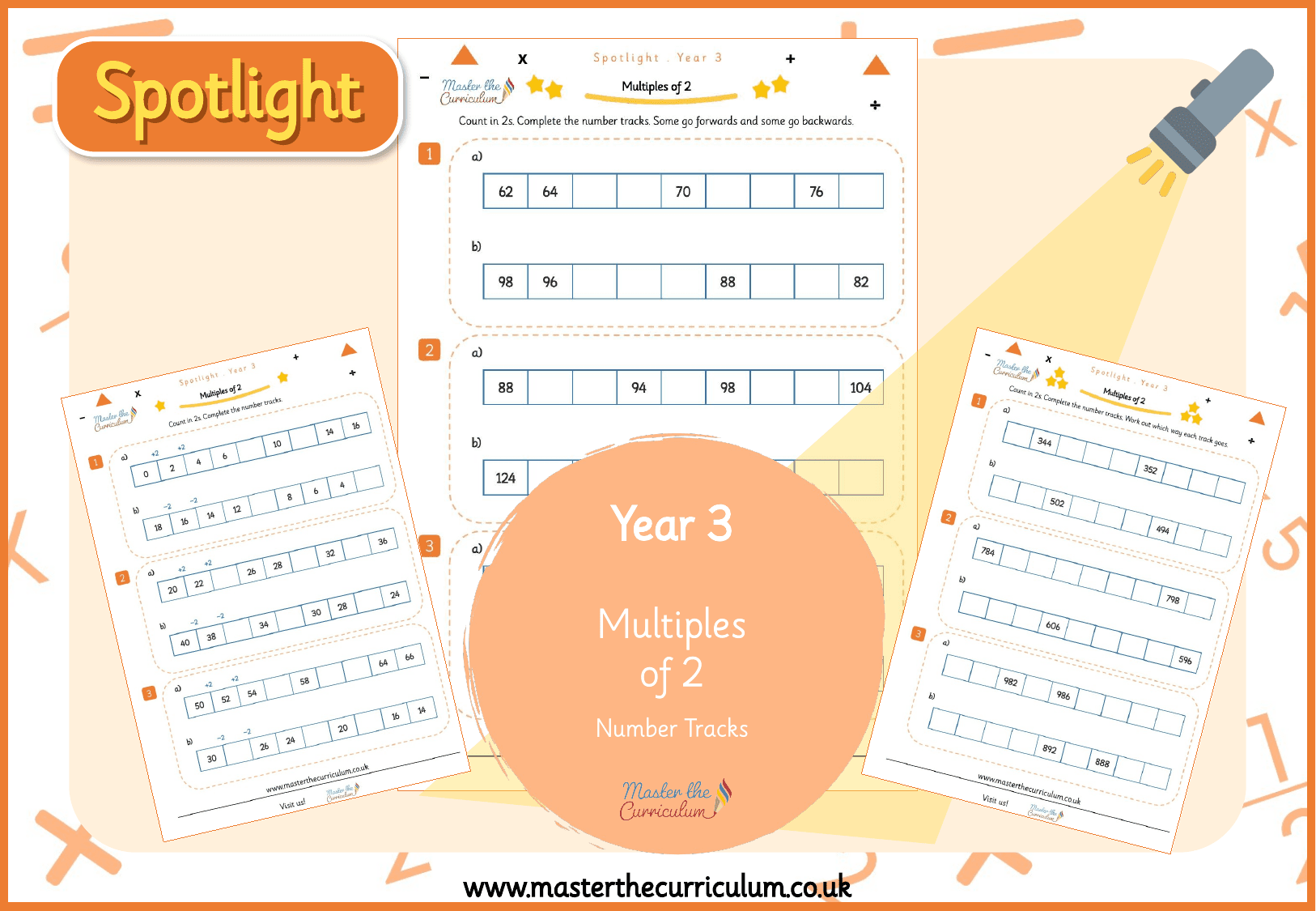
Spotlight Y3 Count in 2s on Number Tracks

masterthecurriculum.co.uk

3 levels
Included with membership
Y3

Multiplication & Division

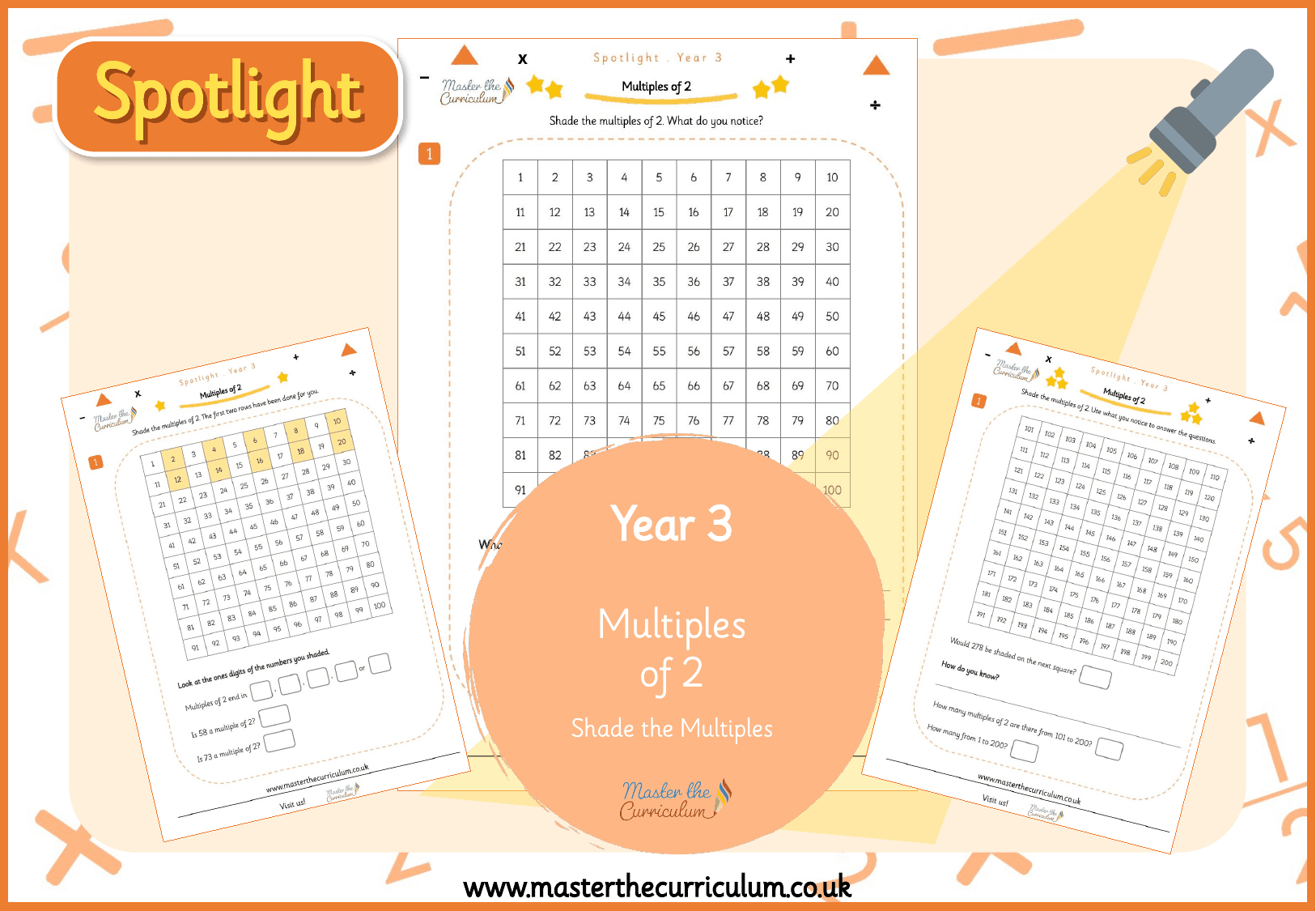
Spotlight Y3 Shade the Multiples of 2 on a Hundred Square

masterthecurriculum.co.uk

3 levels
Included with membership
Y3

Multiplication & Division

Spotlight Y3 Reason with Counters and Arrays

masterthecurriculum.co.uk

3 levels
Included with membership
Y3

Multiplication & Division

Spotlight Y3 Spot the Mistake in Arrays

masterthecurriculum.co.uk

3 levels
Included with membership

Got a question about this resource?

Leave a message and we’ll get back to you.

Editable resourcesOpens in PowerPoint so you can edit to suit your classWhite Rose supportingFollows the small steps you already plan fromKey eventsSeasonal and cultural resources for the moments in the school yearReasoning Maths HubReasoning and problem solving, by year group

Sign up to keep updated on new resources

An email when there is something new for the year group you actually teach. Unsubscribe in a click.

Year group you teach

We keep your address, and the year group you teach, so we can tell you when there is something new for it. Here is how we look after it: privacy policy.