

Y2
Fractions
Year 2 Fractions Home Learning
masterthecurriculum.co.uk
Included with membership
Trusted by primary teachers across the UK · New resources every week
For parents
Ten minutes at the kitchen table, matched to what your child’s class is actually doing this term. Answers on the back. Nothing to print if you would rather not.
My child is stuck on something →What year is your child in?
In school it will be called “Number: Place Value”. That is the wording on the plan on the classroom wall.
What that actually means
Every digit in a number is worth a different amount depending on where it sits. The 4 in 40 is worth ten times the 4 in 4. That is the whole idea, and almost everything else in maths this year leans on it. This year the numbers go up to 100.
One pack per unit, in the same order the class teaches them, so what your child does at the kitchen table is the thing they did that week in school. Included with the Year 2 membership.
Fractions
masterthecurriculum.co.uk

Home Learning
masterthecurriculum.co.uk

Home Learning
masterthecurriculum.co.uk
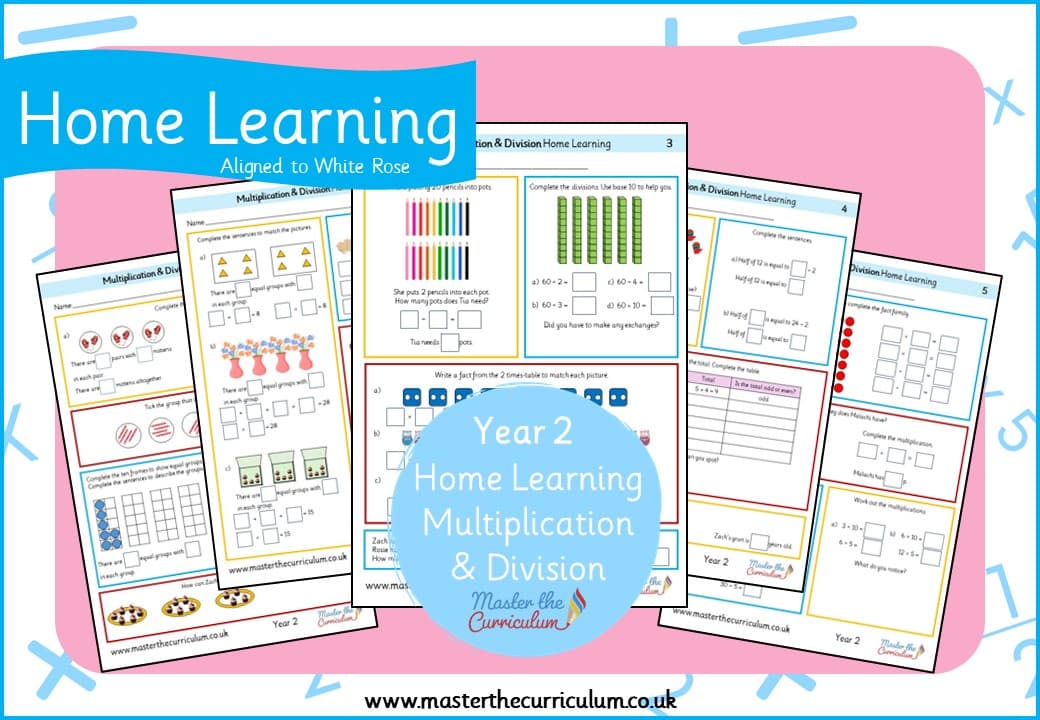
Multiplication & Division
masterthecurriculum.co.uk

Geometry
masterthecurriculum.co.uk

Statistics
masterthecurriculum.co.uk

Measurement
masterthecurriculum.co.uk
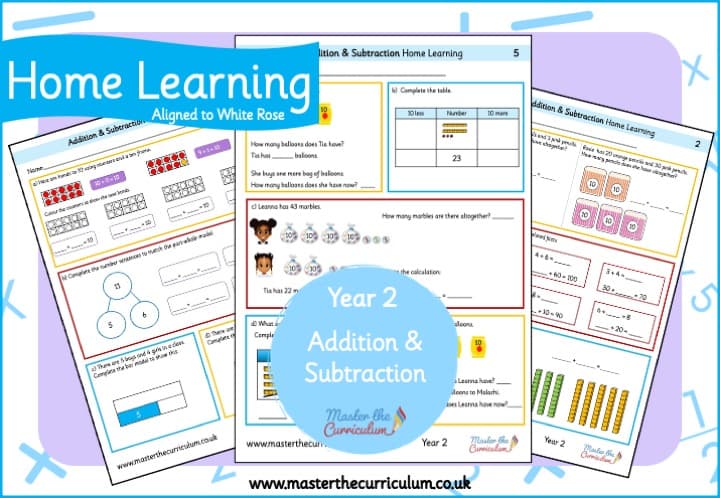
Addition & Subtraction
masterthecurriculum.co.uk

Geometry
masterthecurriculum.co.uk

Measurement
masterthecurriculum.co.uk

Number & Place Value
masterthecurriculum.co.uk
If you teach at home
Maths lessons that print nothing at all. Each one is a short script for the adult, the questions to ask, and what to do with objects already in the house: buttons, coins, a handful of pasta, the stairs. They were written for classrooms where a worksheet was the wrong tool, and they suit a kitchen table for the same reason.
They are written for Early Years to Year 4. Years 5 and 6 are not covered yet, and the termly home pack above is the better fit there.
Working Without Worksheets
masterthecurriculum.co.uk
Geometry
masterthecurriculum.co.uk
Working Without Worksheets
masterthecurriculum.co.uk
Times Tables
masterthecurriculum.co.uk

Statistics
masterthecurriculum.co.uk

Reasoning & Problem Solving
masterthecurriculum.co.uk
Measurement
masterthecurriculum.co.uk
Working Without Worksheets
masterthecurriculum.co.uk
No account to set up for the free ones. The paid plans are the same memberships teachers buy, at the same prices, and both include VAT.
Free
1,044 free resources on the site, whole packs with the answers, and no card at any point. Sign up at the foot of any page and we will tell you when there is something new for your child’s year group.
Free just your email address
Browse the free onesOne year group
Every week of the autumn term for your child’s year, in the order the school teaches it, with the answers included. Switch year group when they move up.
£7a month, or £55 a year
Paying yearly saves £29. Cancel any time.
See the plansEvery year group
All 8,073 resources, Reception to Year 6. For families with more than one child, or if you would rather work a term ahead.
£10a month, or £77 a year
Paying yearly saves £43. Cancel any time.
See what is includedIf any of these turned up in a newsletter or at a parents evening and you nodded politely, here is what they meant.
Every sheet has the answers on it, and the method is shown rather than assumed. If your child says "that is not how we do it", the sheet will show you how they do it.
Short and often is what works, and it is also what a Tuesday evening allows. Nothing here is designed to take a whole afternoon.
These are made for primary classrooms and sold to schools. What you do at home matches what happens in class, rather than confusing it.
An email when there is something new for the year group you actually teach. Unsubscribe in a click.
We keep your address, and the year group you teach, so we can tell you when there is something new for it. Here is how we look after it: privacy policy.