

Y1
Addition & Subtraction
Spotlight Y1 Fact Families with Digit Cards
masterthecurriculum.co.uk
3 levelsIncluded with membership
Trusted by primary teachers across the UK · New resources every week
Preview only. The download is one file, listed in full below.
Every page is shown before you download. The files themselves come with membership, or sign in if you already have one.
Included with membership
Unlock with membershipAlready a member? Sign in and it downloads from this page.
Keep it for later and group it with the rest of the block. No account needed to start.
Learning to ‘see’ a whole number and the parts within it at the same time is an important stage in the development of pupils’ understanding of number. Composing numbers (putting parts together to make a whole) underpins addition, and decomposing a number into parts (partitioning) underpins subtraction. Exploring different ways that a number can be partitioned and put back together again helps pupils to understand that addition and subtraction are inverse operations. Pupils should be presented with varied cardinal (quantity) representations, both concrete and pictorial, which support identification of the ‘numbers within a number’. The examples below provide different ways of showing that 8 can be composed from 2 numbers. The representations draw attention to the parts within the whole. Pupils should learn to interpret and sketch partitioning diagrams to represent the ways numbers can be partitioned or combined. At this stage, these should be used alongside quantity images to support development of the understanding of quantity. Pupils should be able to relate the numerals in the partitioning diagrams to the quantities in images, and use the language of parts and wholes to describe the relationship between the numbers. Pupils should also experience working with manipulatives and practise partitioning a whole number of items into parts, then putting the parts back together. They should understand that the total quantity is conserved. Pupils should repeatedly partition and recombine the whole, in different ways. Pupils should learn how to work systematically to partition each of the numbers to 10 into 2 parts. They should recognise that there is a finite number of ways that a given number can be partitioned. Pupils should pay attention to the patterns observed when working systematically, for example: • in each step below, the value of one part increases by 1 and the value of the other part decreases by 1, while the whole remains the same • number pairs are repeated, b
This pack is print and go. Our catalogue does not list an editable copy of it, so none is offered here rather than promising a file nobody has opened. Page counts are not printed either, because we do not publish them and a guessed number is worse than none.
Addition & Subtraction
masterthecurriculum.co.uk
3 levels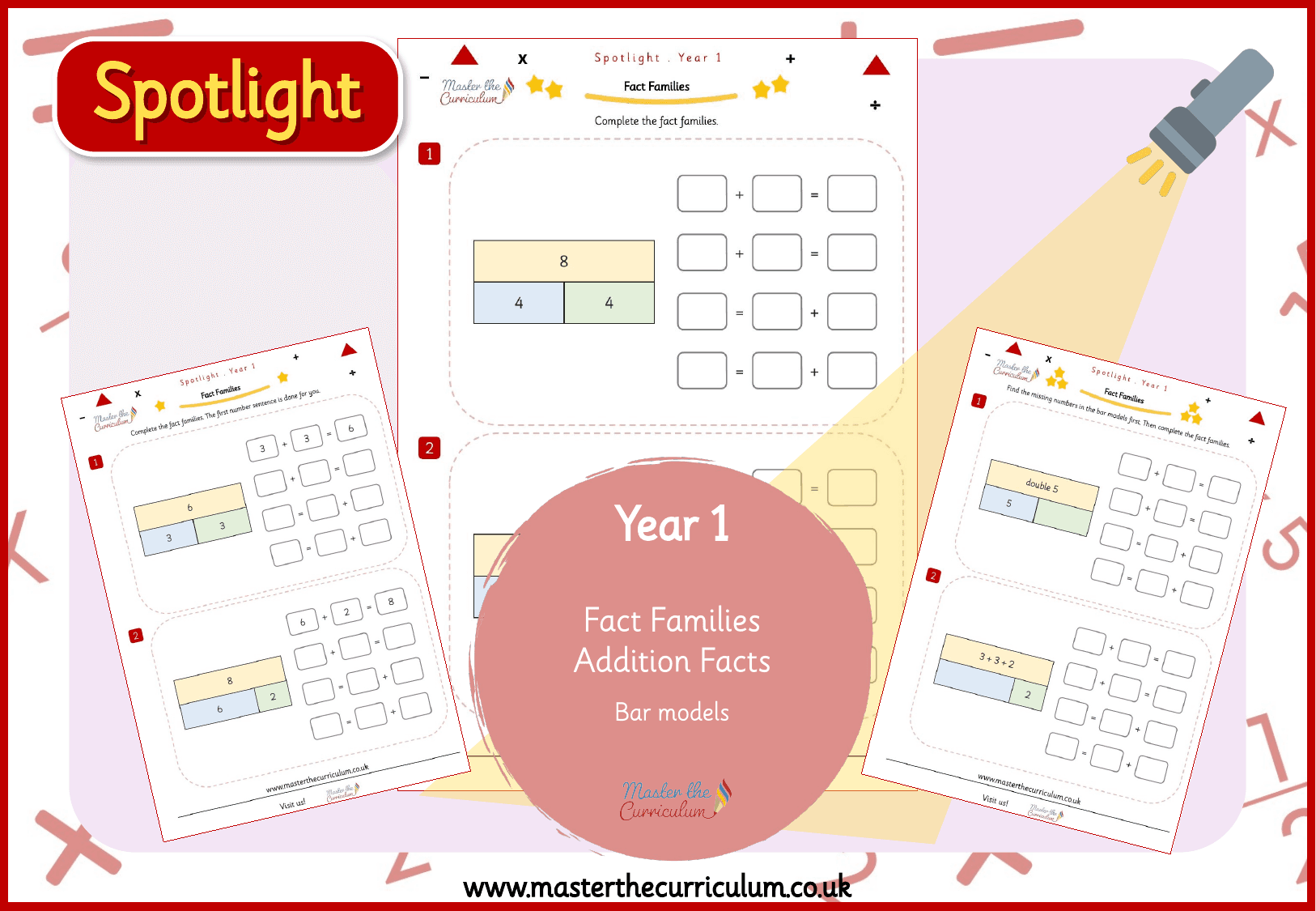
Addition & Subtraction
masterthecurriculum.co.uk
3 levels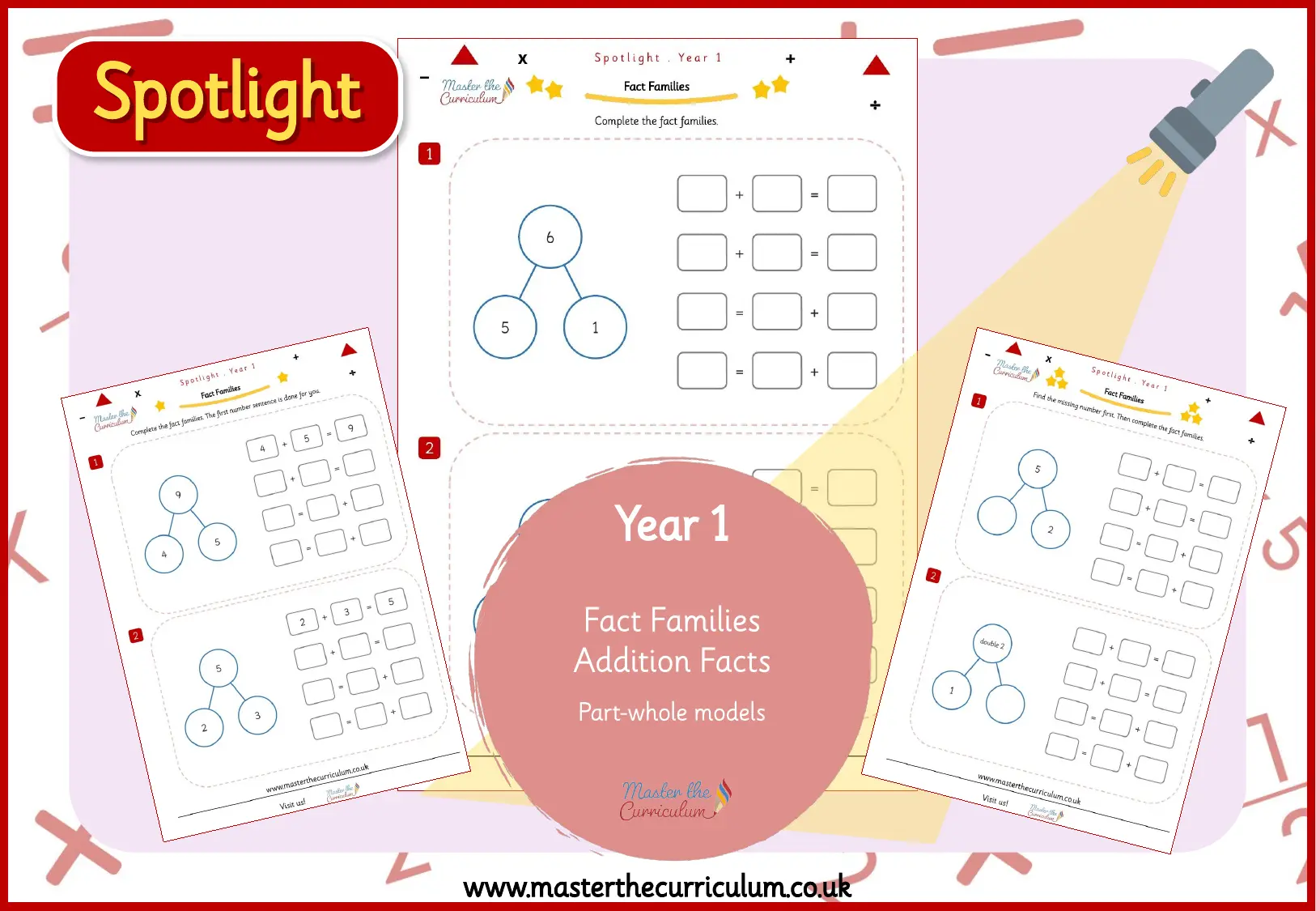
Addition & Subtraction
masterthecurriculum.co.uk
3 levels
Addition & Subtraction
masterthecurriculum.co.uk
3 levels
Addition & Subtraction
masterthecurriculum.co.uk
3 levels
Addition & Subtraction
masterthecurriculum.co.uk
3 levels
Addition & Subtraction
masterthecurriculum.co.uk
3 levels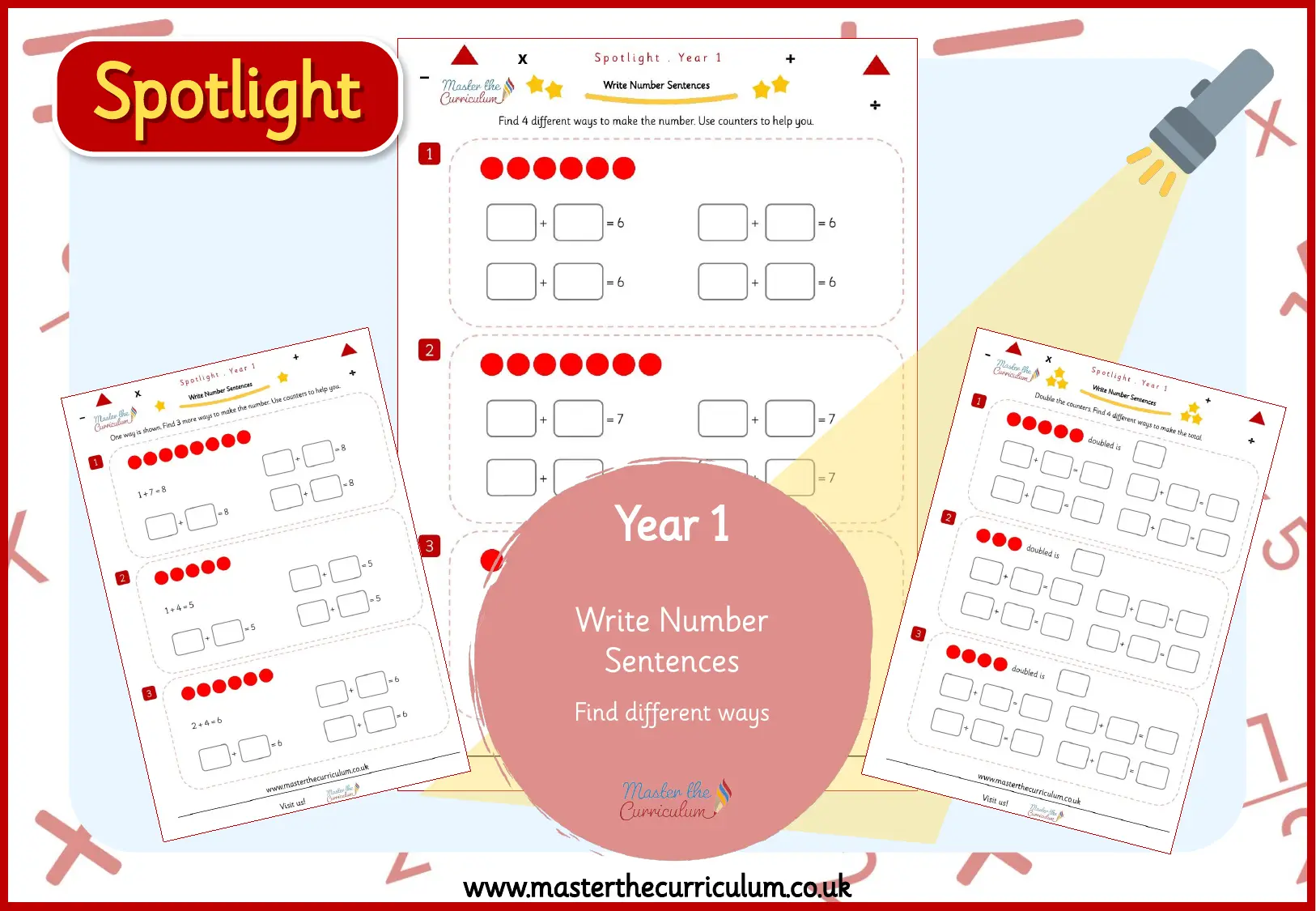
Addition & Subtraction
masterthecurriculum.co.uk
3 levels