Mastering Dyslexia – Maths Support
Included with membership
Trusted by primary teachers across the UK · New resources every week
Preview only. The download is one file, listed in full below.
Every page is shown before you download. The files themselves come with membership, or sign in if you already have one.
Included with membership
Unlock with membershipAlready a member? Sign in and it downloads from this page.
Keep it for later and group it with the rest of the block. No account needed to start.
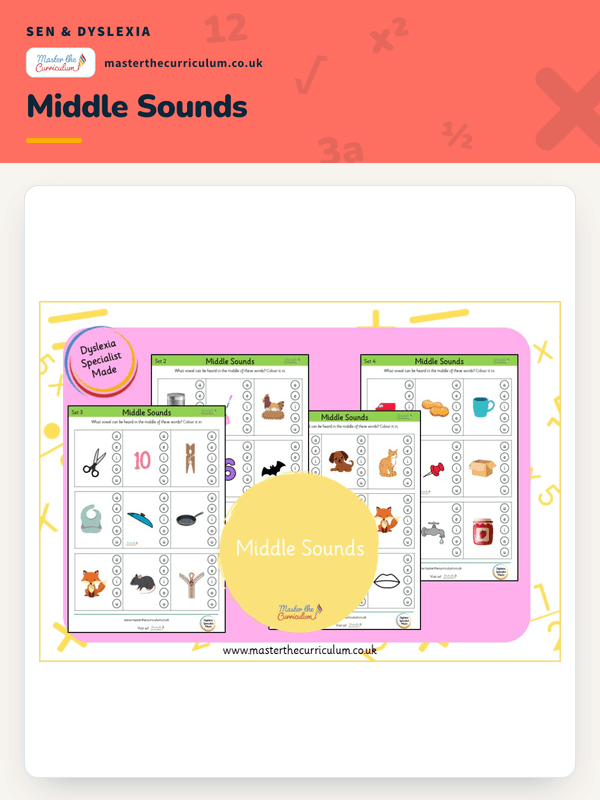
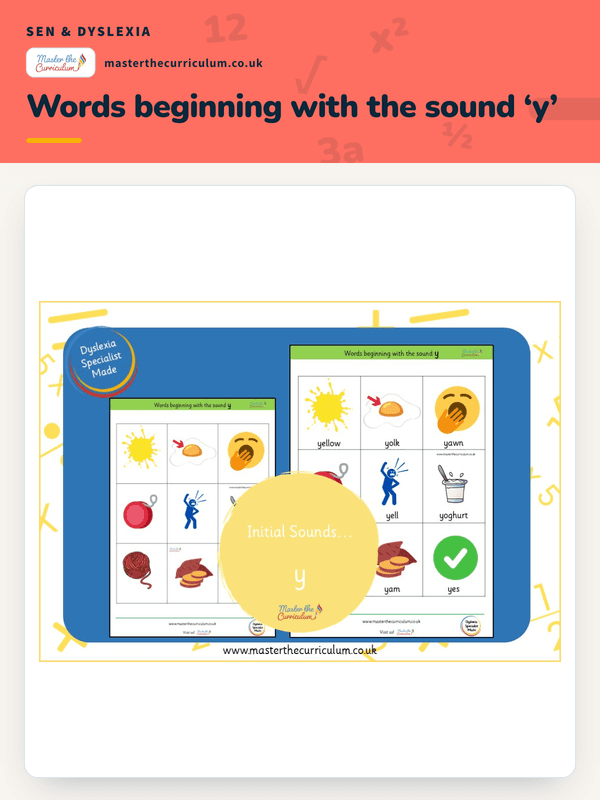
Initial Sounds – Phonics Resource for Dyslexia Support (Phase 2 & 3) Product Description: Designed with dyslexia-friendly practices in mind, the Initial Sounds Phonics Resource is a structured, engaging tool to help early learners master initial sound recognition from Phases 2 and 3 of phonics instruction. This specialist resource includes 14 carefully sequenced worksheets, each focusing on a targeted group of letter sounds. Every sheet invites children to identify and circle the first sound of an image, encouraging visual-auditory association a key strategy for learners with dyslexia. Why It Works for Dyslexic Learners: Clear visual layout minimizes distraction and supports focus Repetitive structure reinforces sound-letter connections Encourages multi-sensory learning when paired with oral sound practice Supports development of phonemic awareness, a core area of need in dyslexia Can be laminated for tactile activities (e.g., tracing letters, using counters or pegs) Covers: Phase 2 sounds: s, a, t, p, i, n, m, d, g, o, c, k, e, u, r, h, b, f, l Phase 3 sounds: j, v, w, x, y, z Plus mixed review sheets for consolidation This resource is ideal for 1:1 interventions, small group work, or classroom support settings. It complements any structured literacy or phonics program. Recommended For: Dyslexia specialists, SENCOs, teaching assistants, and parents supporting children with reading difficulties.
This pack is print and go. Our catalogue does not list an editable copy of it, so none is offered here rather than promising a file nobody has opened. Page counts are not printed either, because we do not publish them and a guessed number is worse than none.