
Y3
Measurement
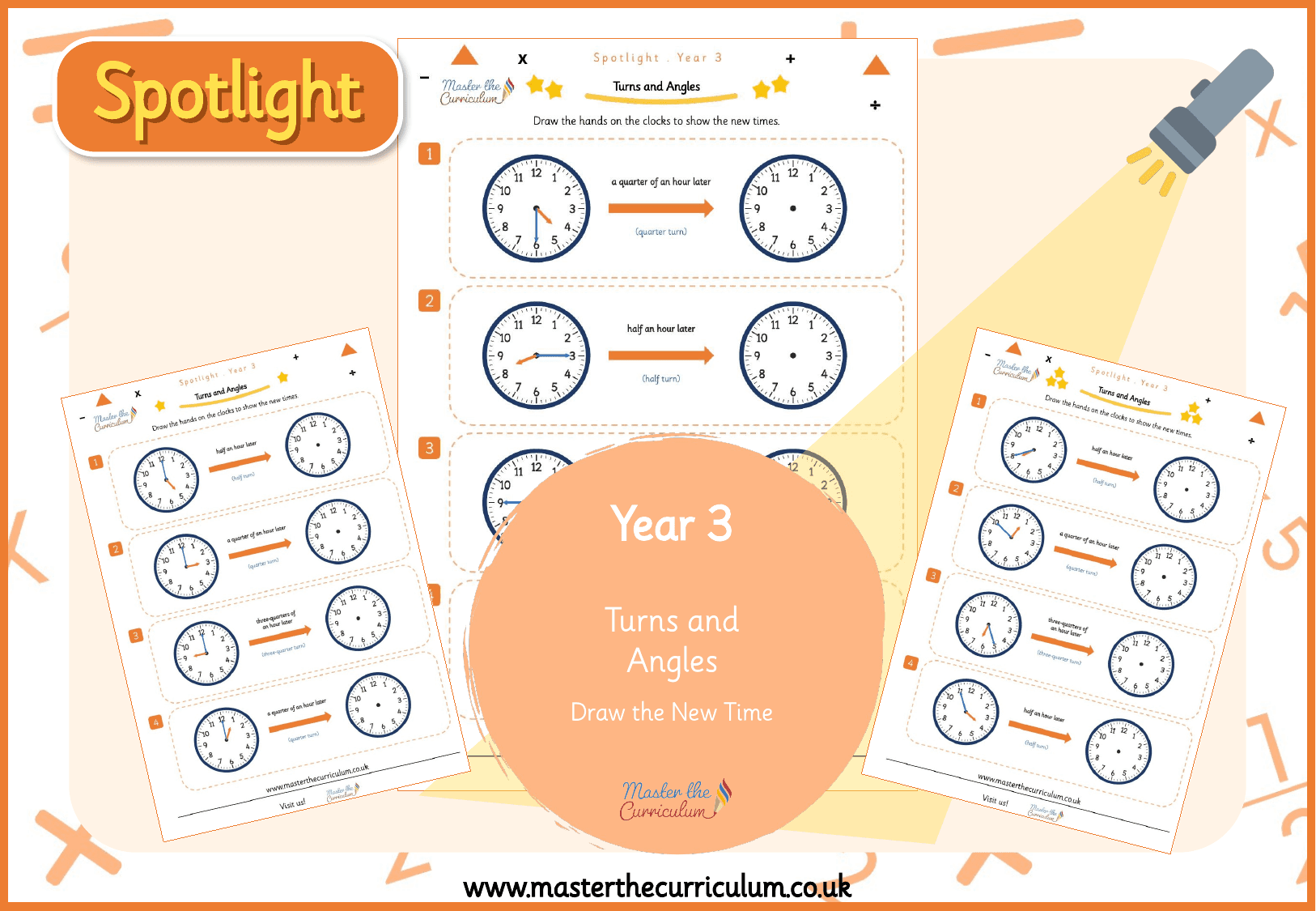
Spotlight Y3 Turns and Angles: Draw the New Time
masterthecurriculum.co.uk
3 levelsIncluded with membership
Trusted by primary teachers across the UK · New resources every week
An engaging Year 3 Money lesson where children add and subtract amounts of money through practical shopping and budgeting activities. Includes interactive teaching slides, real-life problem-solving tasks and teacher guidance to develop confidence with pounds and pence.
Preview only. The download is 4 files, listed in full below.
Every page is shown before you download. The files themselves come with membership, or sign in if you already have one.
Included with membership
Unlock with membershipAlready a member? Sign in and it downloads from this page.
Keep it for later and group it with the rest of the block. No account needed to start.
Bring money maths to life with this engaging Year 3 Money Lesson: Add and Subtract Money resource. Designed for the Year 3 Summer Money unit, this practical lesson gives children the opportunity to apply both addition and subtraction skills using real-life shopping scenarios, helping them develop confidence with pounds, pence and financial problem-solving. Using interactive teaching slides and hands-on activities, pupils calculate the total value of coins and notes, work out what they can afford to buy, and calculate how much money they have left after making purchases. Children explore a variety of addition and subtraction strategies while deciding which methods are most efficient for different calculations. They also practise selecting appropriate coins and notes to make payments and explore different ways to make the same amount of money. The main activity transforms the classroom into a shop, allowing pupils to solve practical money challenges by using price tags, shopping tasks and budgeting problems. Throughout the lesson, children develop reasoning skills by explaining their choices, comparing amounts and identifying whether addition, subtraction or both operations are needed to solve each problem. Teacher guidance includes key questions, assessment opportunities and common misconceptions, such as confusing pounds and pence, deciding which operation to use and misinterpreting shopping questions. This low-preparation resource supports the Year 3 National Curriculum objective to add and subtract amounts of money using both pounds (£) and pence (p) in practical contexts while building essential financial literacy skills. What's included: Interactive teaching presentation Practical shopping and budgeting activities Real-life money problem-solving tasks Discussion and reasoning opportunities Key questions and assessment guidance Common misconceptions to address Teacher notes and lesson structure Perfect for: Year 3 Money Adding and subtracting money Pounds and pen
This pack is listed as editable, so the editable copy comes with it. We do not print page counts here, because our catalogue does not publish them and a guessed number is worse than none.
Measurement, Year 33 numbered lessons
Measurement
masterthecurriculum.co.uk
3 levels
Measurement
masterthecurriculum.co.uk
3 levels
Measurement
masterthecurriculum.co.uk
3 levels
Measurement
masterthecurriculum.co.uk
3 levels
Measurement
masterthecurriculum.co.uk
3 levels
Measurement
masterthecurriculum.co.uk
3 levels
Measurement
masterthecurriculum.co.uk
3 levels
Number & Place Value
masterthecurriculum.co.uk
3 levels