
Y1
Fractions
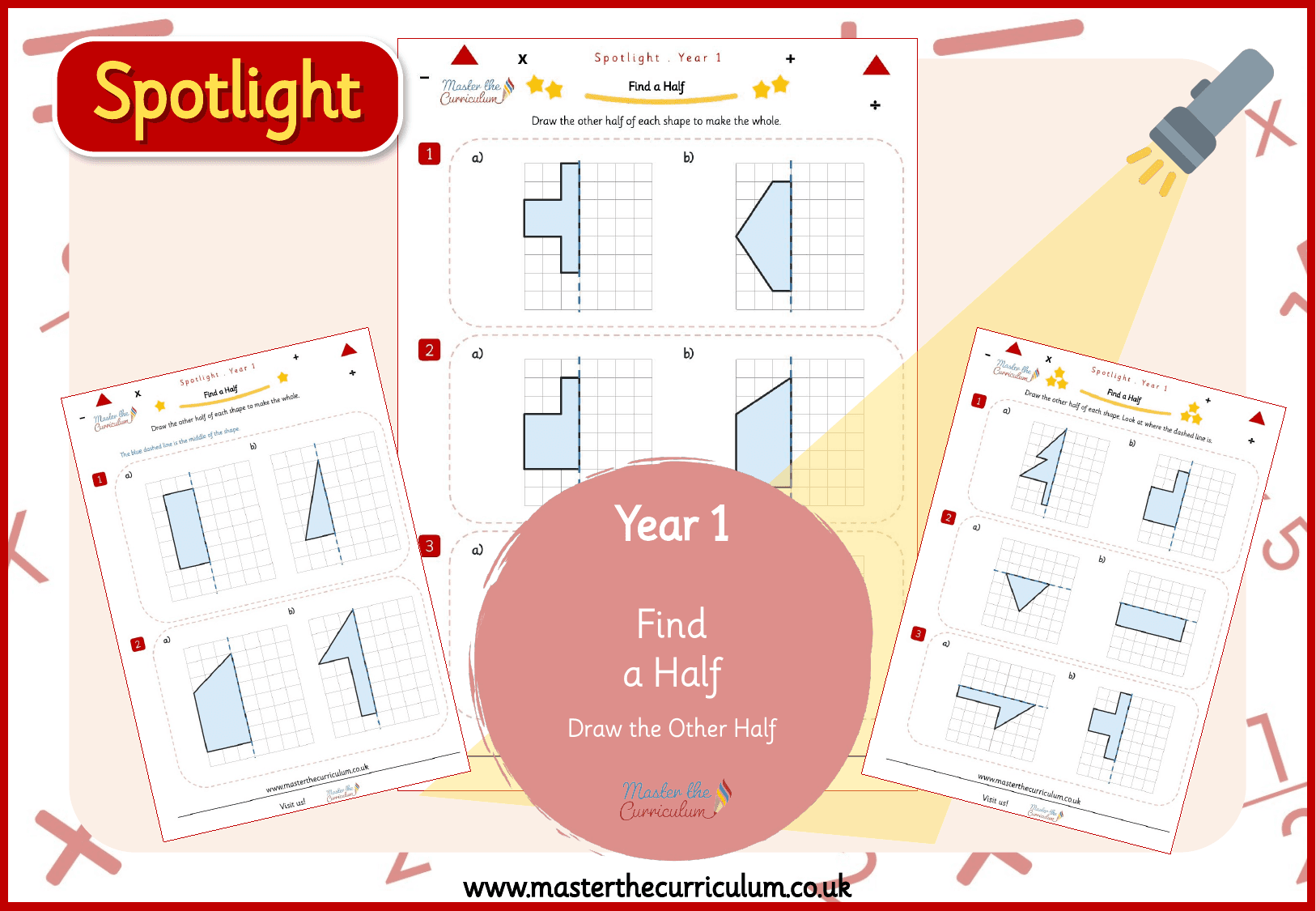
Spotlight Y1 Find a Half: Draw the Other Half
masterthecurriculum.co.uk
3 levelsIncluded with membership
Trusted by primary teachers across the UK · New resources every week
A fun Working Without Worksheets lesson where Year 1 pupils learn to name and order the days of the week through songs, discussion, and hands-on sequencing. Includes plan, slides, and active learning tasks.
Preview only. The download is 4 files, listed in full below.
Every page is shown before you download. The files themselves come with membership, or sign in if you already have one.
Included with membership
Unlock with membershipAlready a member? Sign in and it downloads from this page.
Keep it for later and group it with the rest of the block. No account needed to start.
Help children understand the sequence and pattern of the days of the week with this engaging Working Without Worksheets lesson. Through songs, discussion, and hands-on ordering activities, pupils learn to name, order, and talk about the days of the week in a fun and memorable way. The lesson begins with a lively starter where children name the days of the week and sing a catchy song — “Monday, Tuesday, Wednesday, Thursday, Friday, Saturday, Sunday too…” — using clapping or marching actions to reinforce rhythm and order. This active start builds confidence in recalling all seven days. During the main teaching input, children explore how the days of the week follow a repeating pattern. Using the teaching slides, they count and discuss what each day ends with (‘day’) and connect the sequence to real life by talking about what they do on different days — school days, clubs, PE lessons, weekends, and family time. They learn to distinguish between weekdays and the weekend, helping to make time more meaningful in their everyday routines. In the main activity, children cut, sort, and stick the days of the week into the correct order. As they work, they’re challenged to answer key questions such as “Which day comes before Wednesday?” and “Which day comes after Saturday?” More confident learners can extend the task by adding drawings or notes about what they do on each day. The lesson concludes with a quick-fire quiz and chant recap, helping to consolidate understanding and reinforce sequencing language in an enjoyable way. This lesson provides the perfect foundation for later work on months of the year, calendars, and time intervals, supporting early understanding of temporal patterns and order. What’s Included in the Pack ✔ Full lesson plan with objectives, teaching guidance, and plenary ✔ Animated teaching slides for clear visual modelling ✔ Starter: Days of the week recall and interactive song ✔ Main input: Identifying weekdays and weekends, and sequencing discussion ✔
This pack is listed as editable, so the editable copy comes with it. We do not print page counts here, because our catalogue does not publish them and a guessed number is worse than none.
Fractions
masterthecurriculum.co.uk
3 levels
Fractions
masterthecurriculum.co.uk
3 levels
Fractions
masterthecurriculum.co.uk
3 levels
Fractions
masterthecurriculum.co.uk
3 levels
Fractions
masterthecurriculum.co.uk
3 levels
Fractions
masterthecurriculum.co.uk
3 levels
Fractions
masterthecurriculum.co.uk
3 levels
Fractions
masterthecurriculum.co.uk
3 levels