Skip to content

Year 3Addition & Subtraction

L5 Solve Addition and Subtraction Missing Number Problems

A Year 3 maths lesson on solving missing number problems using inverse operations. Pupils use part–whole models, reasoning strategies and a classroom problem hunt to find unknown values in addition and subtraction calculations.

CoverCover and first page

Preview only. The download is 4 files, listed in full below.

Every page is shown before you download. The files themselves come with membership, or sign in if you already have one.

Included with membership

Unlock with membership

Already a member? Sign in and it downloads from this page.

Keep it for later and group it with the rest of the block. No account needed to start.

  • Print it as it is, or as many as you need
  • Instant download, no watermark

About this resource

This Year 3 maths lesson on missing number problems and inverse operations helps pupils develop confidence in solving addition and subtraction equations with unknown values. By combining visual models, mental maths strategies and reasoning tasks, children learn how to use the inverse relationship between addition and subtraction to find missing numbers and check their answers. The lesson begins with a starter activity revisiting previous Year 3 learning on addition, subtraction, place value and fractions. Pupils recall how inverse operations can be used to solve missing number problems and review examples from a previous lesson. Together, the class discusses how the order of numbers and the operation change when using the inverse, and considers whether using the inverse is always the most helpful strategy. During the main teaching input, pupils explore a clear step-by-step approach to solving missing number problems. The teacher models how to: Verbalise the problem to understand what is happening mathematically Represent the numbers using a part–whole model to visualise the relationship between the values Use the inverse calculation to determine the missing number Pupils are also reminded of previously learned mental maths strategies that can simplify calculations, such as adjusting numbers to make them easier to work with. For example, solving 782 − 352 by subtracting 350 first before adjusting the remaining amount. Children then practise solving several missing number calculations on whiteboards, using both part–whole models and inverse operations to support their reasoning. The lesson also includes a word problem, where pupils must identify the relevant information before deciding which calculation is required. In the independent activity, pupils take part in a fun and engaging missing number hunt around the classroom. Laminated problem cards are placed around the room and children record each problem in their books. For every calculation, pupils are expecRead more

This Year 3 maths lesson on missing number problems and inverse operations helps pupils develop confidence in solving addition and subtraction equations with unknown values. By combining visual models, mental maths strategies and reasoning tasks, children learn how to use the inverse relationship between addition and subtraction to find missing numbers and check their answers. The lesson begins with a starter activity revisiting previous Year 3 learning on addition, subtraction, place value and fractions. Pupils recall how inverse operations can be used to solve missing number problems and review examples from a previous lesson. Together, the class discusses how the order of numbers and the operation change when using the inverse, and considers whether using the inverse is always the most helpful strategy. During the main teaching input, pupils explore a clear step-by-step approach to solving missing number problems. The teacher models how to: Verbalise the problem to understand what is happening mathematically Represent the numbers using a part–whole model to visualise the relationship between the values Use the inverse calculation to determine the missing number Pupils are also reminded of previously learned mental maths strategies that can simplify calculations, such as adjusting numbers to make them easier to work with. For example, solving 782 − 352 by subtracting 350 first before adjusting the remaining amount. Children then practise solving several missing number calculations on whiteboards, using both part–whole models and inverse operations to support their reasoning. The lesson also includes a word problem, where pupils must identify the relevant information before deciding which calculation is required. In the independent activity, pupils take part in a fun and engaging missing number hunt around the classroom. Laminated problem cards are placed around the room and children record each problem in their books. For every calculation, pupils are expec

What you get, 4 files

  • PDFPlanning
  • PDFTeaching slides
  • PDFWorksheets
  • ZIPThe whole pack

This pack is listed as editable, so the editable copy comes with it. We do not print page counts here, because our catalogue does not publish them and a guessed number is worse than none.

The rest of this block

Addition & Subtraction, Year 325 numbered lessons

  1. Lesson 3Year 3: Addition and Subtraction: Lesson 3 – Add 3-digit and 1-digit Numbers
  2. Lesson 4Year 3: Addition and Subtraction: Lesson 4 – Subtract 1-digit from 3-digits
  3. Lesson 5 · you are hereSolve Addition and Subtraction Missing Number Problems
  4. Lesson 6Solve One-Step Addition and Subtraction Word Problems
  5. Lesson 7Solve Two-Step and Mixed Addition and Subtraction Word Problems

More addition & subtraction for Year 3

Y3

Addition & Subtraction

Spotlight Y3 More Than and Less Than Sentences

masterthecurriculum.co.uk

3 levels
Included with membership
Y3

Addition & Subtraction

Spotlight Y3 Function Tracks: Add and Subtract Mentally

masterthecurriculum.co.uk

3 levels
Included with membership
Y3

Number & Place Value

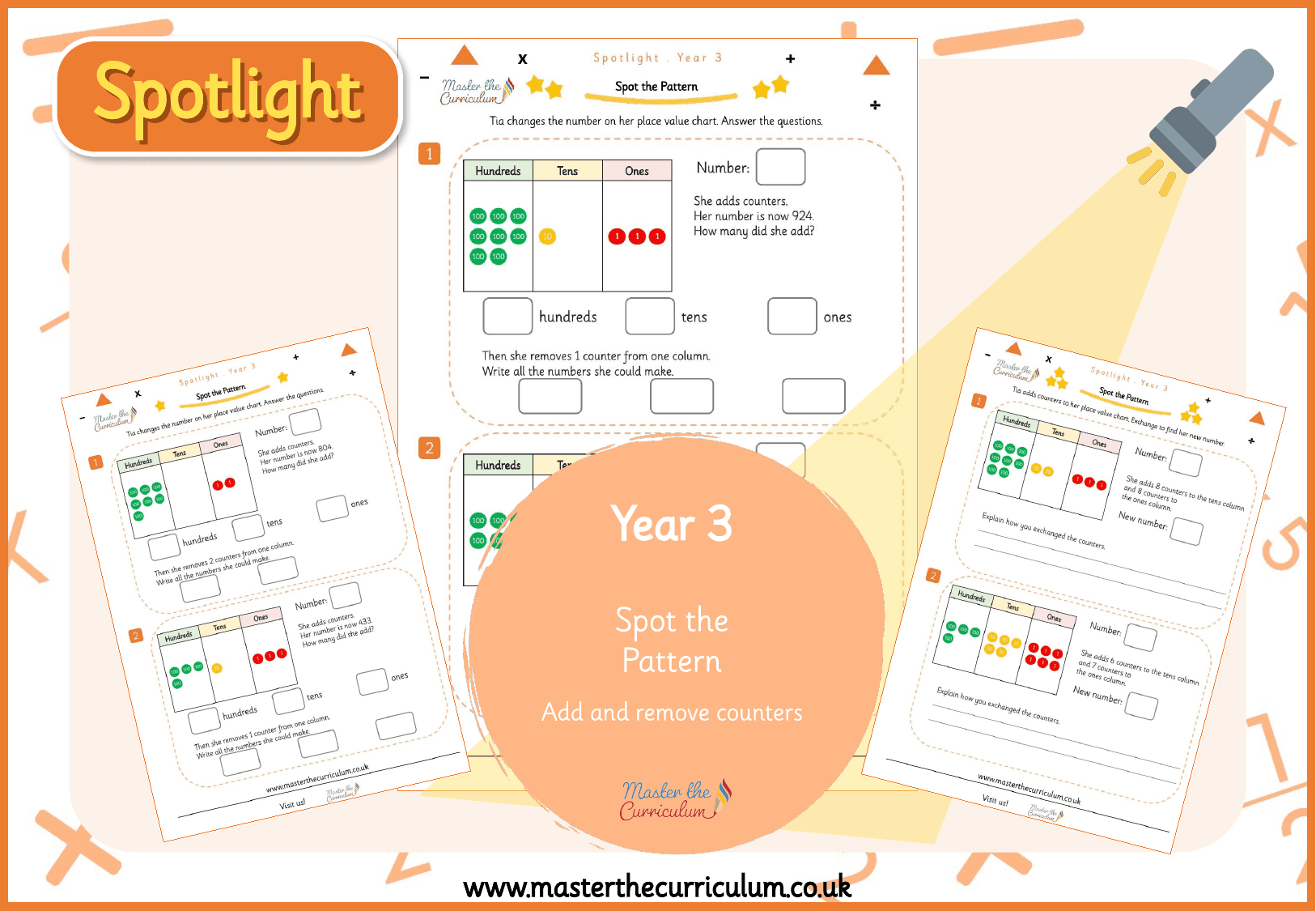
Spotlight Y3 Add and Remove Counters on a Place Value Chart

masterthecurriculum.co.uk

3 levels
Included with membership
Y3

Addition & Subtraction

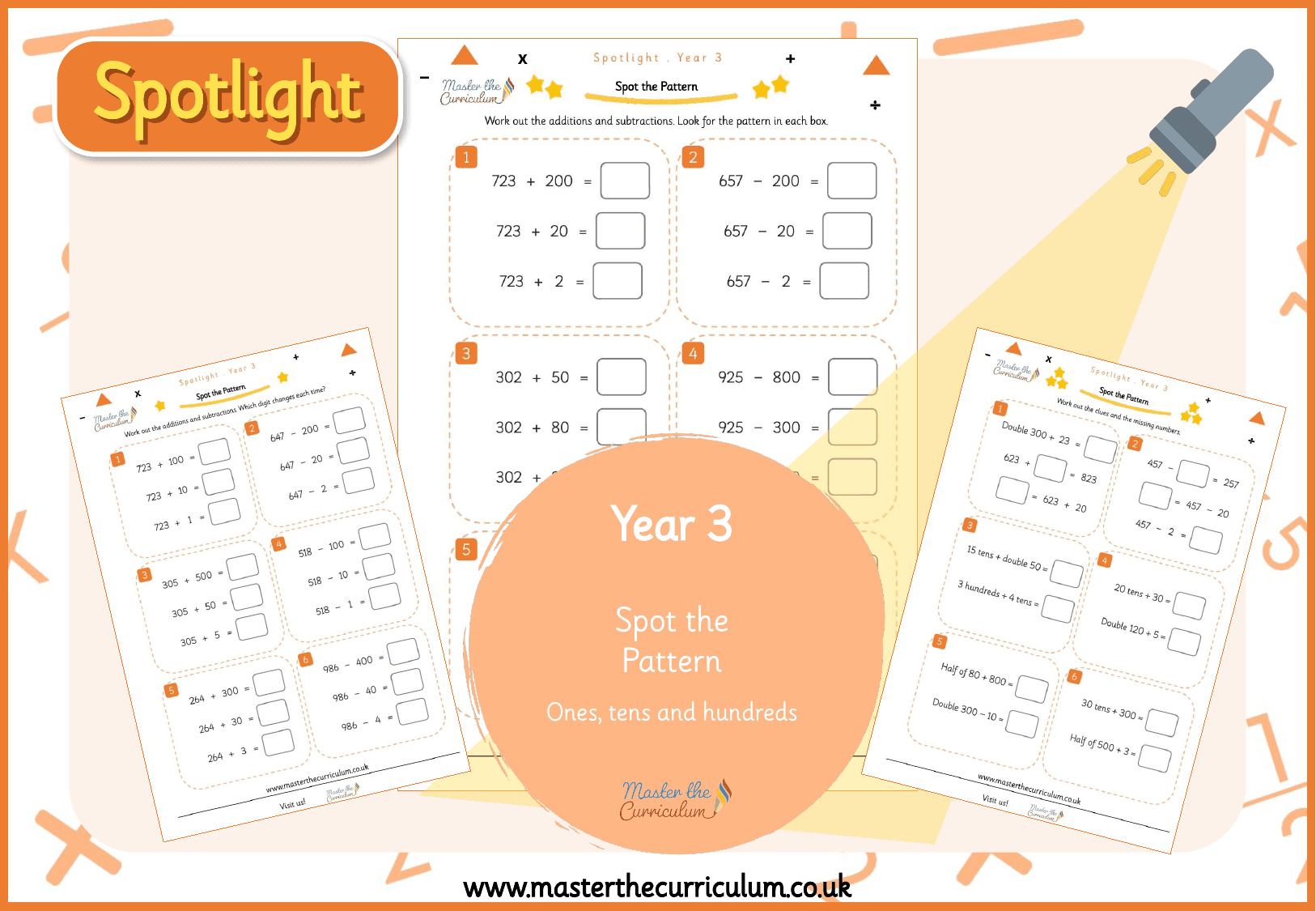
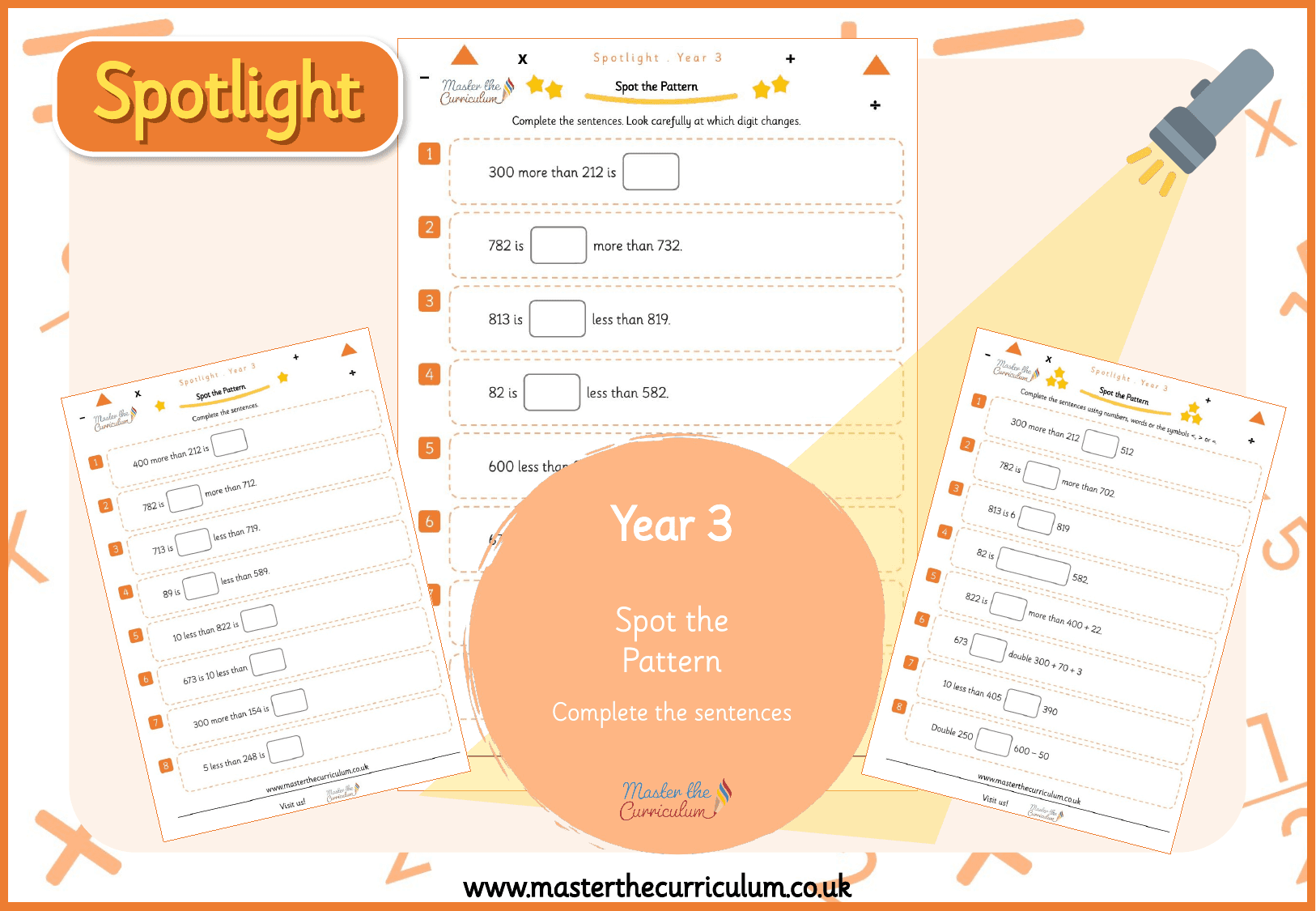
Spotlight Y3 Spot the Pattern: Ones, Tens and Hundreds

masterthecurriculum.co.uk

3 levels
Included with membership
Y3

Addition & Subtraction

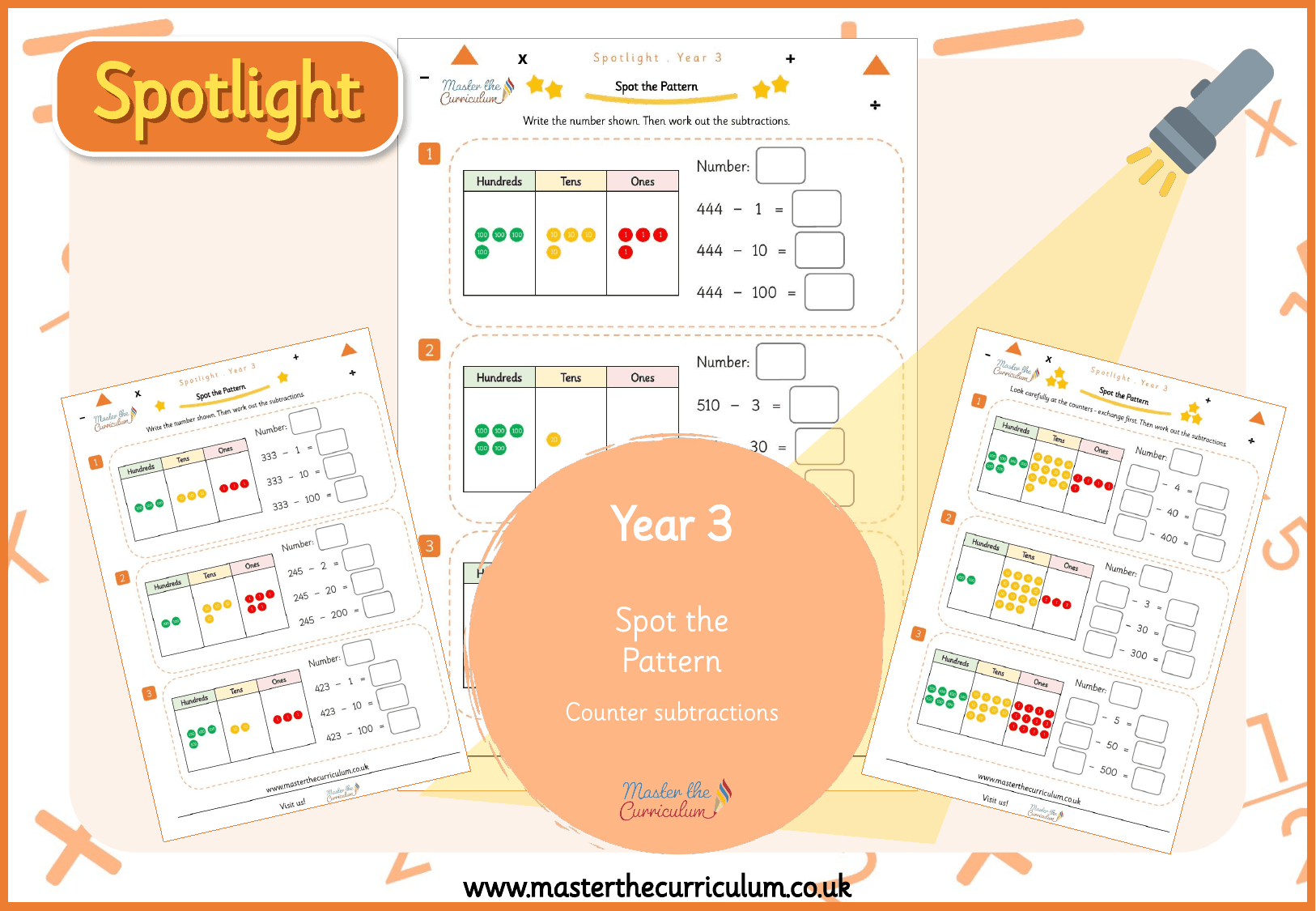
Spotlight Y3 Subtract Ones, Tens and Hundreds with Counters

masterthecurriculum.co.uk

3 levels
Included with membership
Y3

Addition & Subtraction

Spotlight Y3 Add Ones, Tens and Hundreds with Base 10

masterthecurriculum.co.uk

3 levels
Included with membership
Y3

Addition & Subtraction

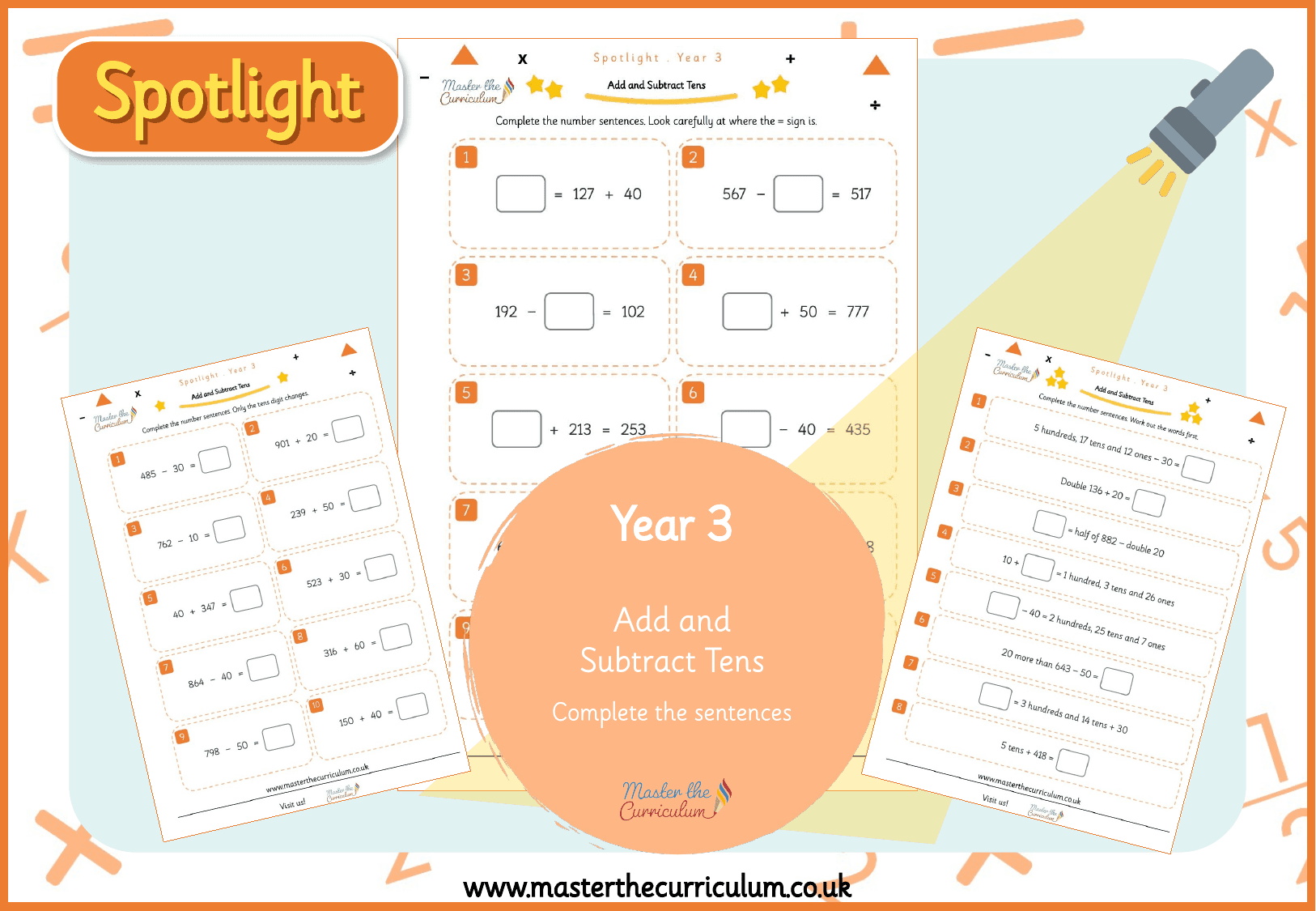
Spotlight Y3 Add and Subtract Tens from 3-Digit Numbers

masterthecurriculum.co.uk

3 levels
Included with membership
Y3

Addition & Subtraction

Spotlight Y3 Tens Patterns: What Do You Notice?

masterthecurriculum.co.uk

3 levels
Included with membership

Got a question about this resource?

Leave a message and we’ll get back to you.

Editable resourcesOpens in PowerPoint so you can edit to suit your classWhite Rose supportingFollows the small steps you already plan fromKey eventsSeasonal and cultural resources for the moments in the school yearReasoning Maths HubReasoning and problem solving, by year group

Sign up to keep updated on new resources

An email when there is something new for the year group you actually teach. Unsubscribe in a click.

Year group you teach

We keep your address, and the year group you teach, so we can tell you when there is something new for it. Here is how we look after it: privacy policy.