
Y2
Multiplication & Division
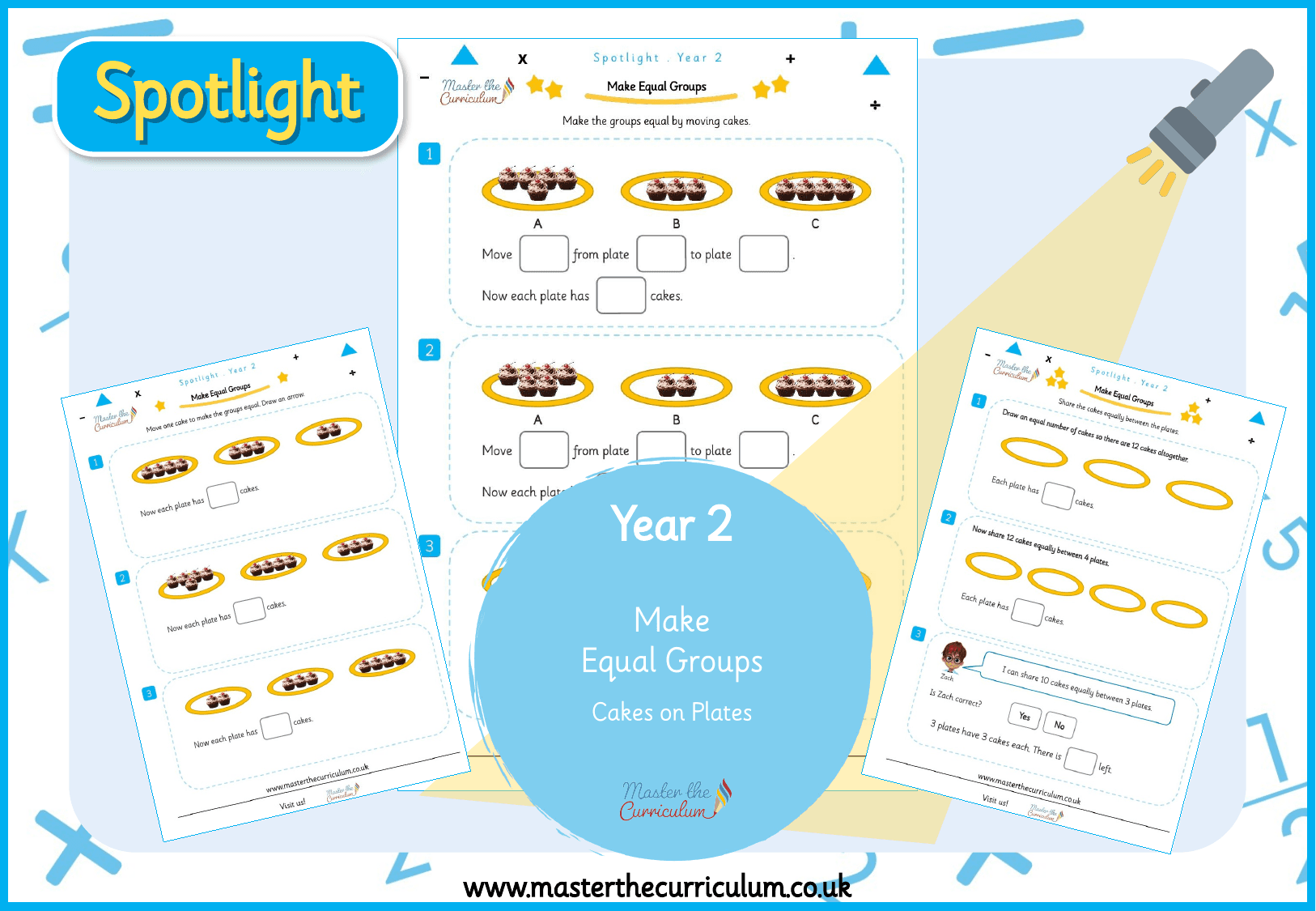
Spotlight Y2 Make Equal Groups: Cakes on Plates
masterthecurriculum.co.uk
3 levelsIncluded with membership
Trusted by primary teachers across the UK · New resources every week
Preview only. The download is one file, listed in full below.
Every page is shown before you download. The files themselves come with membership, or sign in if you already have one.
Included with membership
Unlock with membershipAlready a member? Sign in and it downloads from this page.
Keep it for later and group it with the rest of the block. No account needed to start.
Pupils must first be able to recognise equal groups. To better understand and identify equal groups, pupils should initially explore both equal and unequal groups. Pupils should then learn to describe equal groups with words. Language focus “There are 3 equal groups of eggs.” “There are 5 eggs in each group.” “There are 3 groups of 5.” Based on their existing additive knowledge, pupils should be able to represent equal-group contexts with repeated addition expressions, for example 5 + 5 + 5. They should then learn to write multiplication expressions to represent the same contexts, for example 3 × 5. Pupils must be able to explain how each term in a multiplication expression links to the context it represents. Pupils must also be able to understand equivalence between a repeated addition expression and a multiplication expression: 5 + 5 + 5 = 3 × 5. Pupils should then learn to calculate the total number of items (the product), for contexts based on the 2, 5 and 10 multiplication tables, initially by skip counting. They should be able to write complete multiplication equations, for example 3 × 5 = 15, and explain how each term links to the context. Language focus “The 3 represents the number of groups.” “The 5 represents the number of eggs in each group.” “The 15 represents the total number of eggs.” Pupils should be able to relate multiplication to situations where the total number of items cannot be seen, for example by representing 3 × 5 with three 5-value counters. You can find out more about fluency and recording for the 2, 5 and 10 multiplication tables here in the calculation and fluency section: 2MD–1.
This pack is print and go. Our catalogue does not list an editable copy of it, so none is offered here rather than promising a file nobody has opened. Page counts are not printed either, because we do not publish them and a guessed number is worse than none.
Multiplication & Division
masterthecurriculum.co.uk
3 levels
Multiplication & Division
masterthecurriculum.co.uk
3 levels
Multiplication & Division
masterthecurriculum.co.uk
3 levels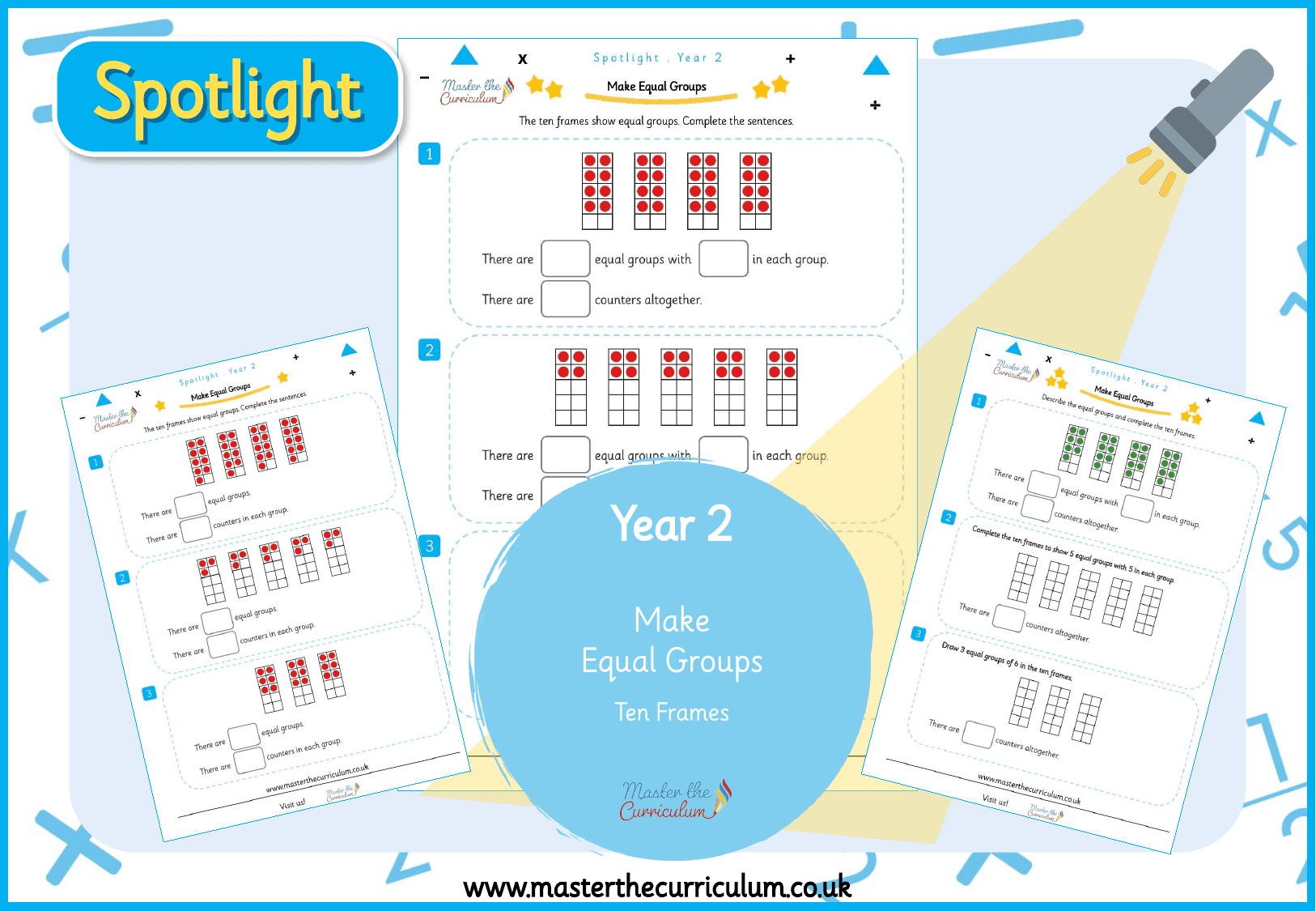
Multiplication & Division
masterthecurriculum.co.uk
3 levels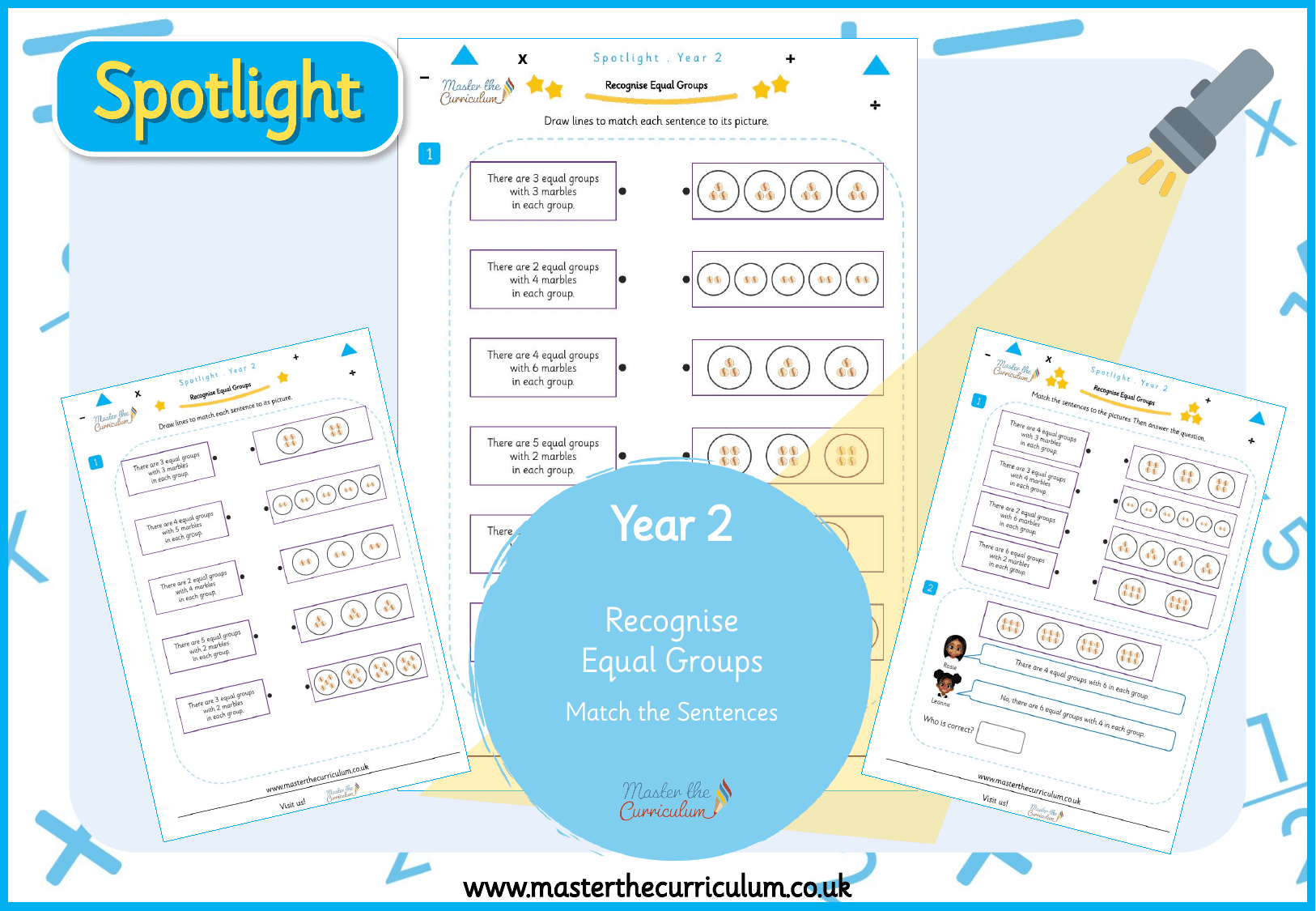
Multiplication & Division
masterthecurriculum.co.uk
3 levels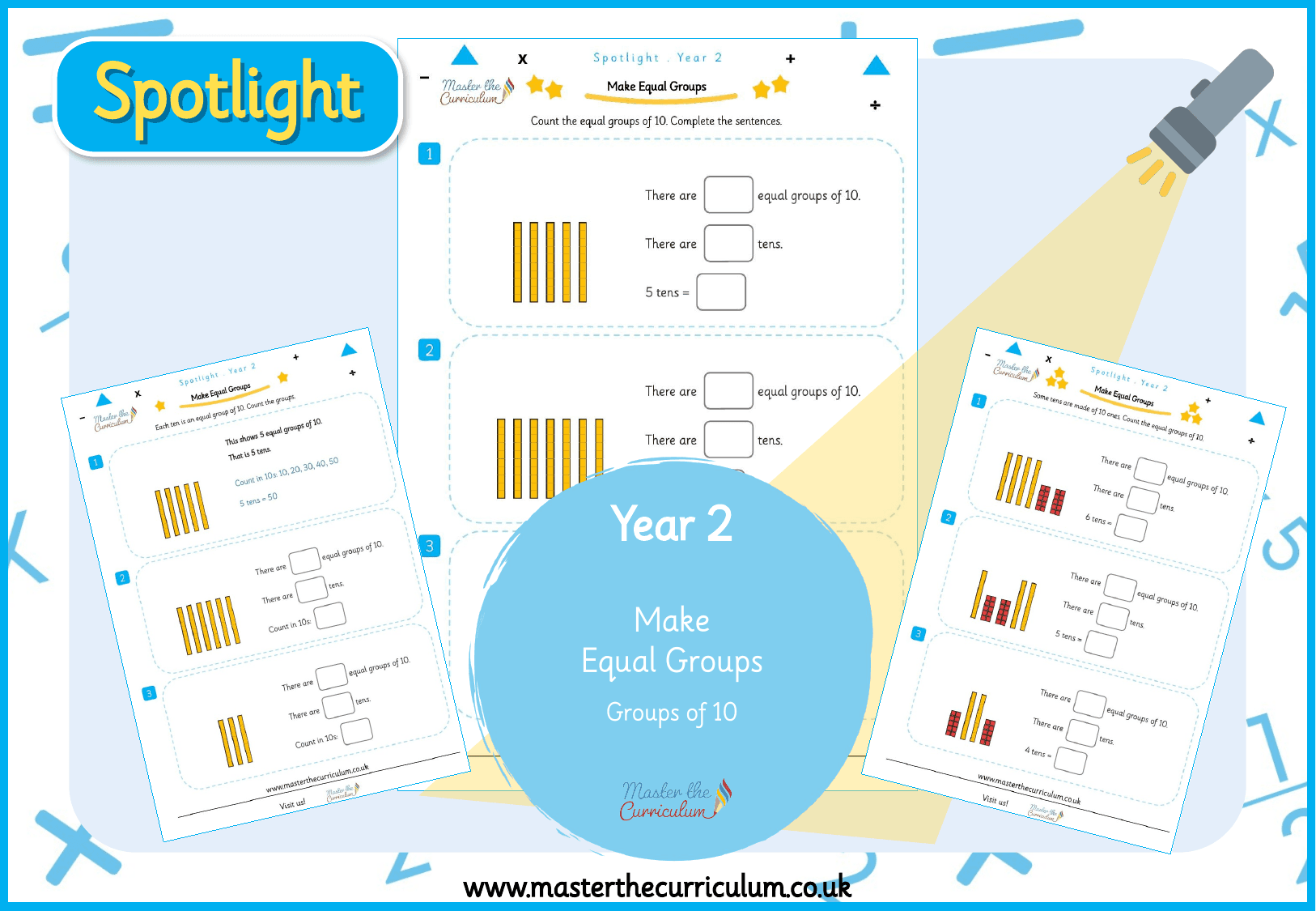
Multiplication & Division
masterthecurriculum.co.uk
3 levels
Multiplication & Division
masterthecurriculum.co.uk
3 levels
Multiplication & Division
masterthecurriculum.co.uk
3 levels