
Y2
Geometry
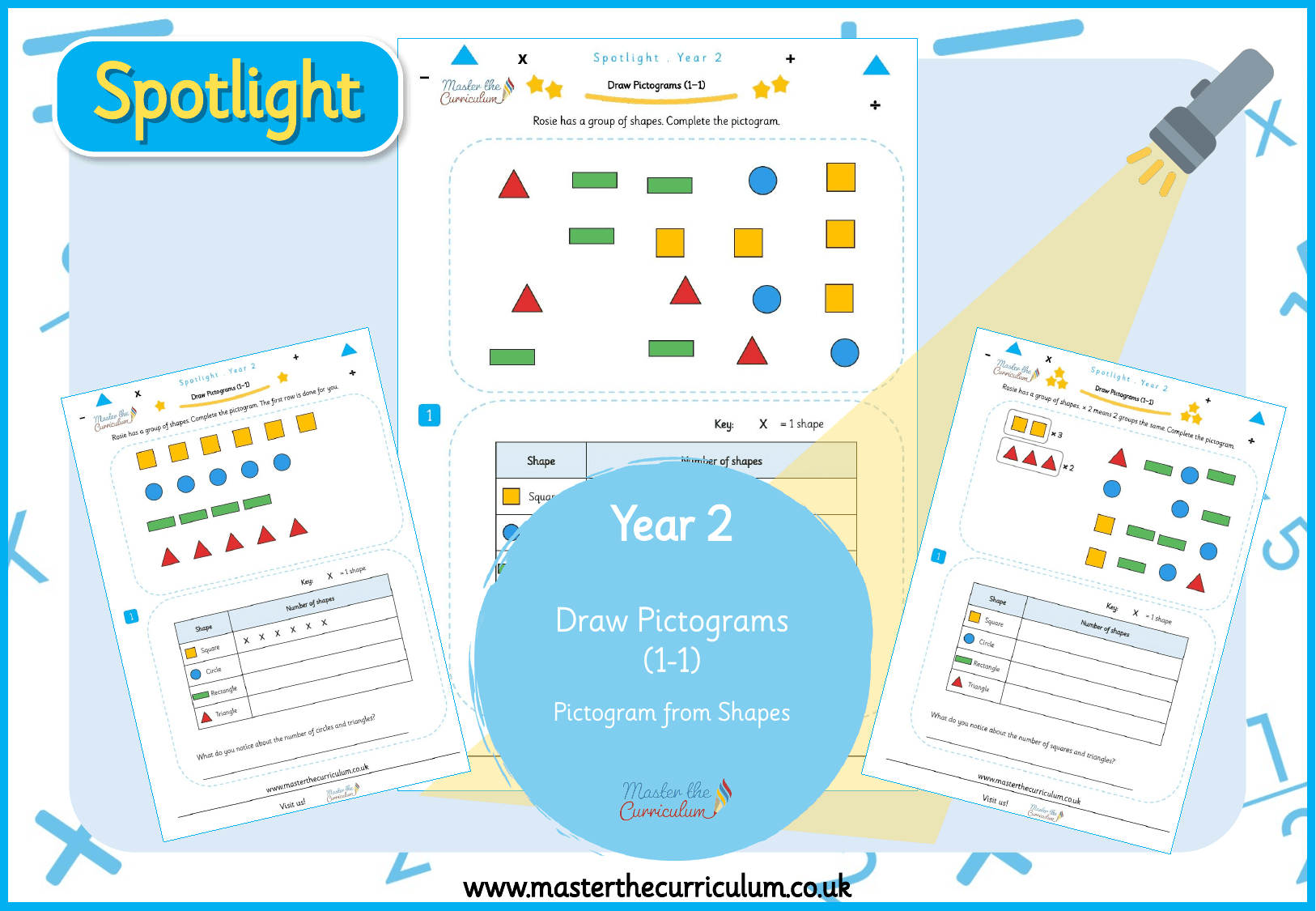
Spotlight Y2 Draw Pictograms: Pictogram from Shapes
masterthecurriculum.co.uk
3 levelsIncluded with membership
Trusted by primary teachers across the UK · New resources every week
Preview only. The download is one file, listed in full below.
Every page is shown before you download. The files themselves come with membership, or sign in if you already have one.
Included with membership
Unlock with membershipAlready a member? Sign in and it downloads from this page.
Keep it for later and group it with the rest of the block. No account needed to start.
Building on 1G–1, pupils should continue to explore and discuss common 2D and 3D shapes, now extending to include quadrilaterals and other polygons, and cuboids, prisms and cones. Pupils must now learn to use precise language to describe 2D shapes, including the terms ’sides’ and ‘vertex’/’vertices’. They should learn to identify the sides of a given 2D shape and to identify a vertex as a point where two sides meet. Pupils must learn that a polygon is a 2D shape which has only straight sides and then learn to identify a given polygon by counting the number sides (or vertices). Pupils should practise running their finger along each side as they count the sides (or practise touching each vertex as they count the vertices). Later, pupils may mark off the sides or vertices on an image as they count. It is important that they learn to count the sides/vertices accurately, counting each once and only once. Pupils must know that it is the number of sides/vertices that determines the type of polygon, rather than whether the given shape looks like their mental image of a particular polygon. For example, although pupils may informally describe the shape below as “like a square with 2 corners cut off”, they should be able to recognise and explain that, because it has 6 straight sides, it is a hexagon. Language focus “This shape is a hexagon because it has exactly 6 straight sides.” “These shapes are all pentagons because they all have exactly 5 straight sides.” When discussing 3D shapes, pupils should be able to correctly use the terms ‘edges’, ‘vertex’/‘vertices’ and ‘faces’. Pupils need to be able to accurately count the number of edges, vertices and faces for simple 3D shapes, such as a triangular-based pyramid or a cuboid, using sticky paper (if necessary) to keep track of the edges/vertices/faces as they count. Pupils should be able to identify the 2D shapes that make up the faces of 3D shapes, including identifying pyramids according to the shape of their base (‘square-ba
This pack is print and go. Our catalogue does not list an editable copy of it, so none is offered here rather than promising a file nobody has opened. Page counts are not printed either, because we do not publish them and a guessed number is worse than none.
Geometry
masterthecurriculum.co.uk
3 levels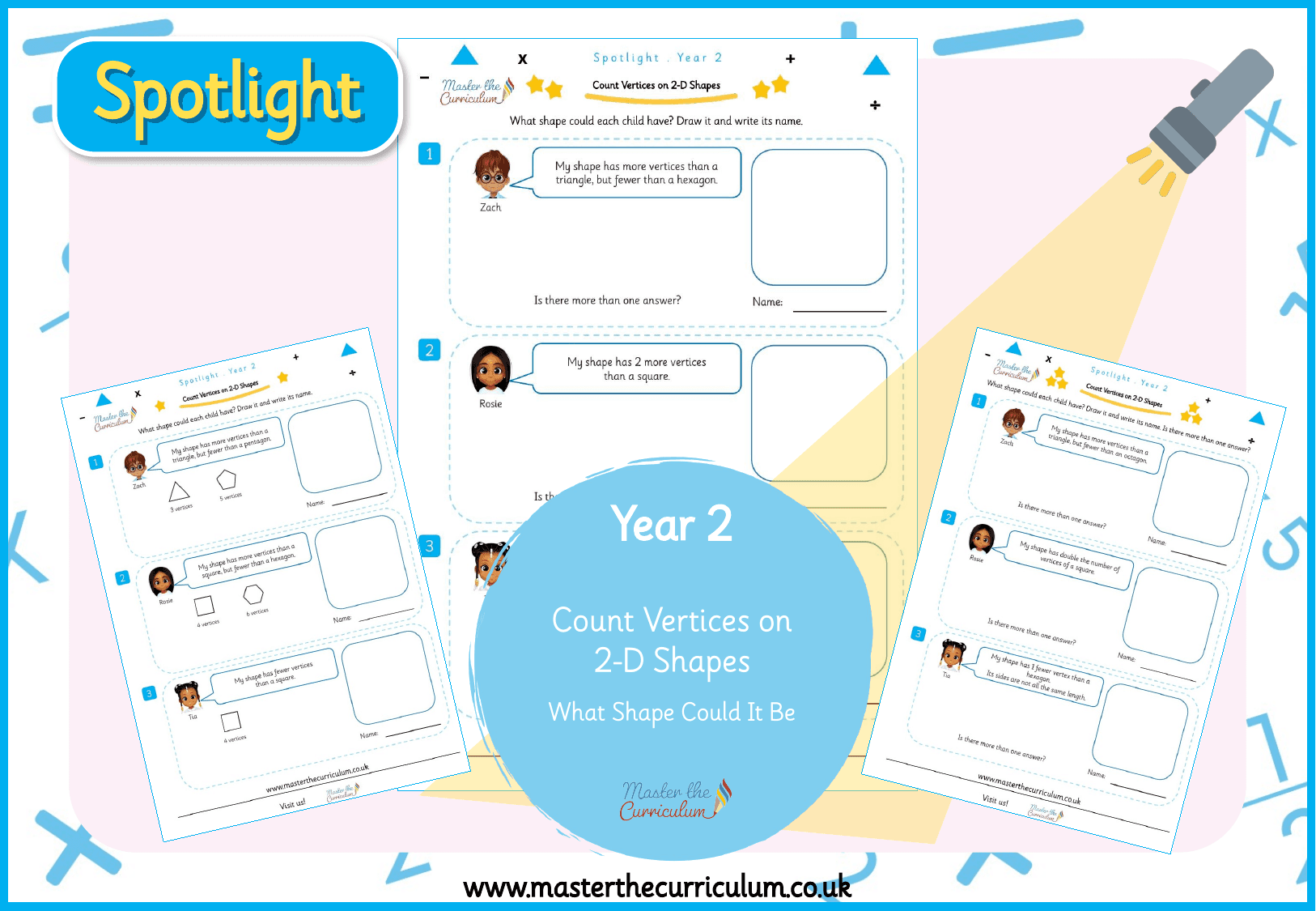
Geometry
masterthecurriculum.co.uk
3 levels
Geometry
masterthecurriculum.co.uk
3 levels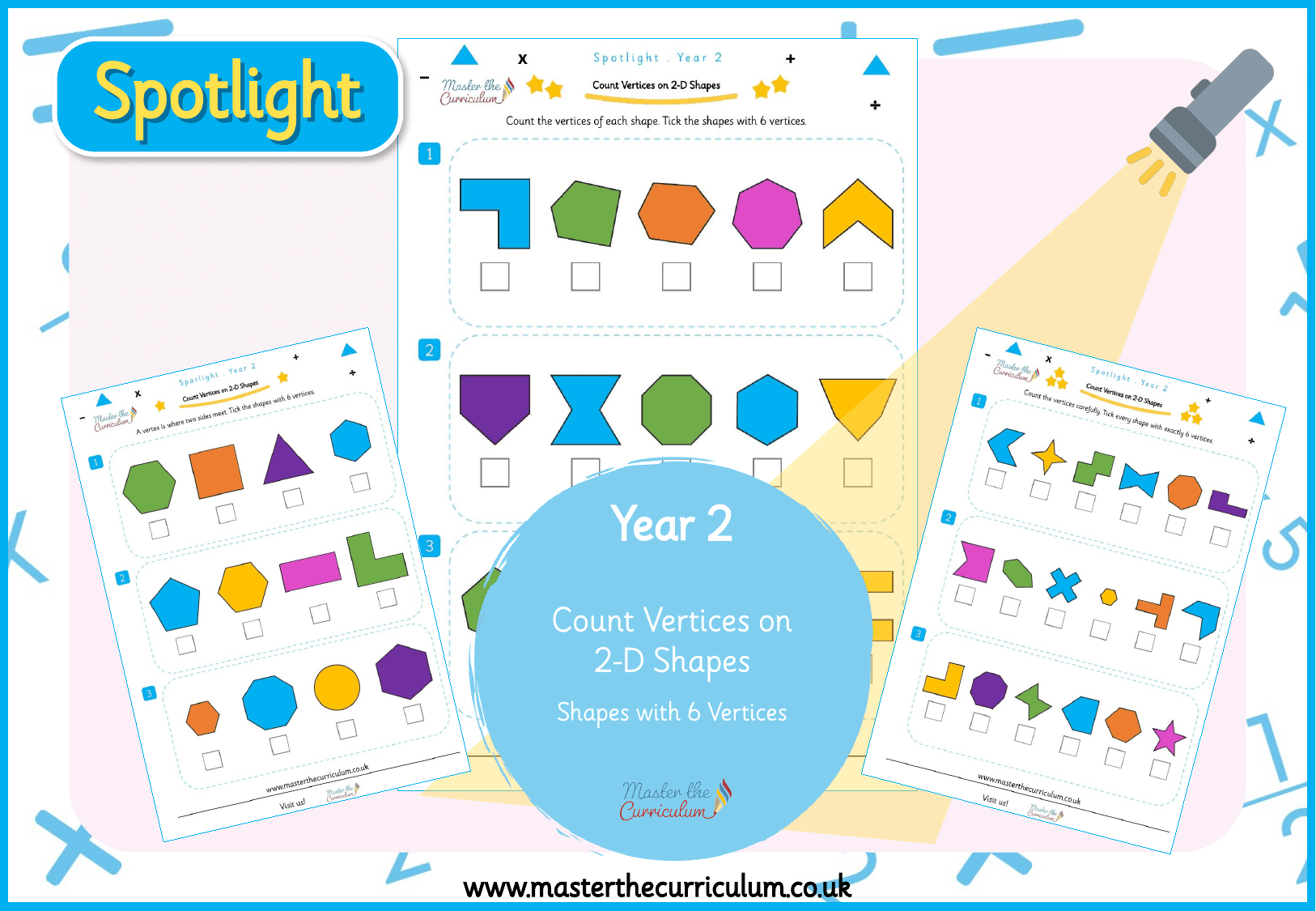
Geometry
masterthecurriculum.co.uk
3 levels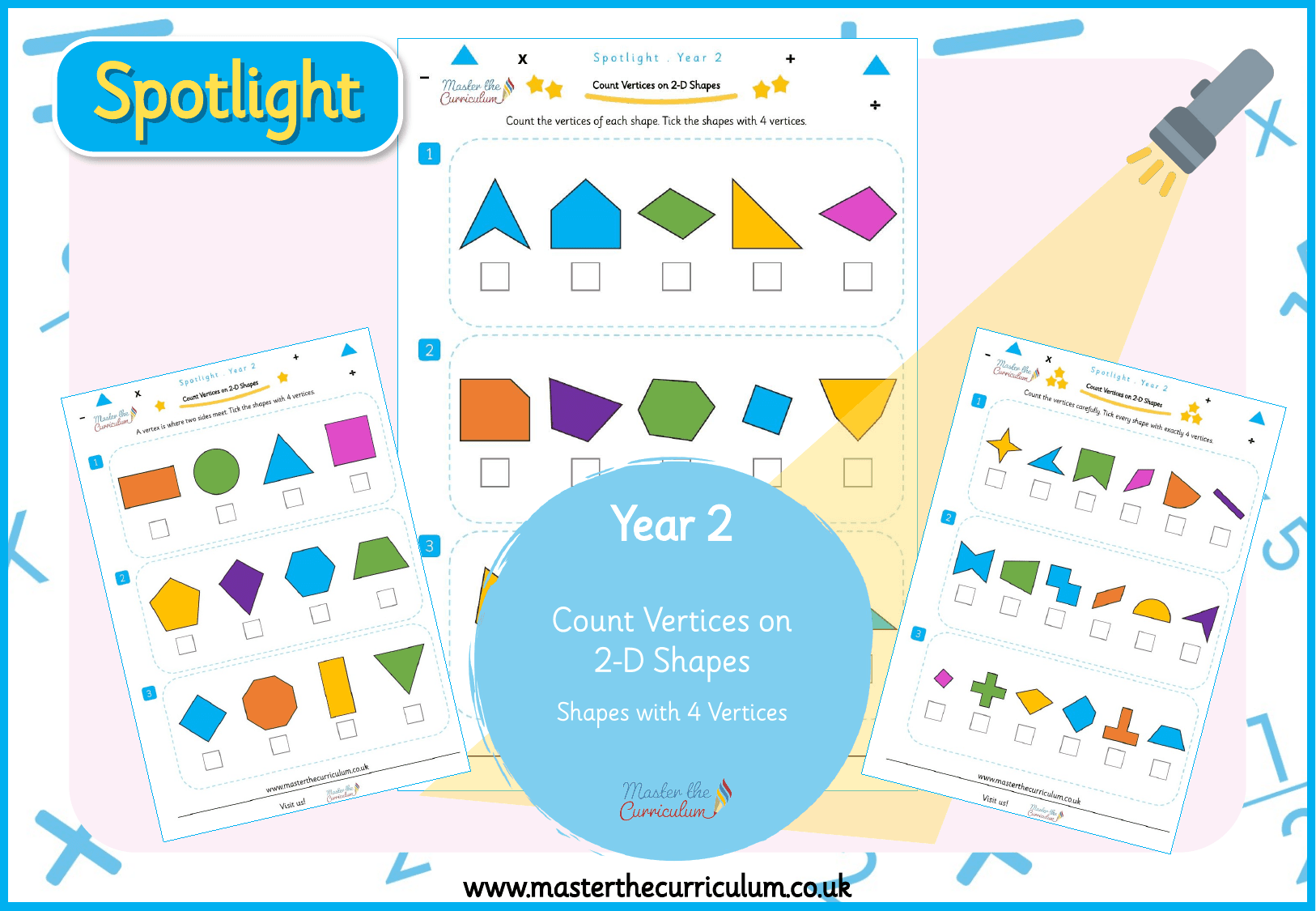
Geometry
masterthecurriculum.co.uk
3 levels
Geometry
masterthecurriculum.co.uk
3 levels
Geometry
masterthecurriculum.co.uk
3 levels
Geometry
masterthecurriculum.co.uk
3 levels