Skip to content

Year 6Addition & Subtraction

Year 6: Four Operations: Lesson 14 – Square and Cube Numbers

Curriculum-aligned Year 6 lesson: explore square and cube numbers with structured planning, differentiated worksheets, and reasoning tasks to build number sense.

CoverCover and first page

Preview only. The download is 4 files, listed in full below.

Every page is shown before you download. The files themselves come with membership, or sign in if you already have one.

Included with membership

Unlock with membership

Already a member? Sign in and it downloads from this page.

Keep it for later and group it with the rest of the block. No account needed to start.

  • Print it as it is, or as many as you need
  • Differentiated three ways
  • Instant download, no watermark

About this resource

Year 6: Four Operations: Lesson 14 – Square and Cube Numbers Support your Year 6 pupils in mastering key number theory concepts with this curriculum-aligned lesson on square and cube numbers. Packed with detailed teacher planning, differentiated worksheets, and reasoning tasks, this resource provides a structured journey from recognition to confident use of squares and cubes. Pupils will: Identify and understand square numbers (e.g., 1², 2², …, 10²) and cube numbers (1³, 2³, 3³), including spotting patterns in the sequences. Use visual and practical strategies (like array models or cubes) to grasp the concepts. Build mathematical reasoning by answering questions such as “Which number is both a square and a cube?” or justifying why a number isn't a square/cube. Access differentiated tasks, from fluency drills to deeper challenges, to support varied learning needs. Ideal for guided lessons, independent practice, or mastery sessions, this lesson helps pupils consolidate fluency in number facts and deepen their understanding of numerical structure and relationships.Read more

Year 6: Four Operations: Lesson 14 – Square and Cube Numbers Support your Year 6 pupils in mastering key number theory concepts with this curriculum-aligned lesson on square and cube numbers. Packed with detailed teacher planning, differentiated worksheets, and reasoning tasks, this resource provides a structured journey from recognition to confident use of squares and cubes. Pupils will: Identify and understand square numbers (e.g., 1², 2², …, 10²) and cube numbers (1³, 2³, 3³), including spotting patterns in the sequences. Use visual and practical strategies (like array models or cubes) to grasp the concepts. Build mathematical reasoning by answering questions such as “Which number is both a square and a cube?” or justifying why a number isn't a square/cube. Access differentiated tasks, from fluency drills to deeper challenges, to support varied learning needs. Ideal for guided lessons, independent practice, or mastery sessions, this lesson helps pupils consolidate fluency in number facts and deepen their understanding of numerical structure and relationships.

What you get, 4 files

  • PDFPlanning
  • PDFTeaching slides
  • PDFWorksheets
  • ZIPThe whole pack

This pack is listed as editable, so the editable copy comes with it. We do not print page counts here, because our catalogue does not publish them and a guessed number is worse than none.

★★★ Differentiated three ways
  • Working towardsScaffolded, with the model or the bar already drawn.
  • Working withinThe expected standard for the year group.
  • Greater depthReasoning and explaining, not just more of the same.

Our own system, with the star count repeated in every worksheet header so a child can be handed the right sheet without a word.

The rest of this block

Addition & Subtraction, Year 610 numbered lessons

  1. Lesson 2Year 6: Four Operations: Lesson 2 – Add and Subtract Integers
  2. Lesson 12Year 6: Fractions: Lesson 12 – Mixed Addition and Subtraction
  3. Lesson 14 · you are hereYear 6: Four Operations: Lesson 14 – Square and Cube Numbers
  4. Lesson 15Year 6: Four Operations: Lesson 15 – Square and Cube Numbers
  5. Lesson 16Year 6: Four Operations: Lesson 16 – Order of Operations

More addition & subtraction for Year 6

Y6

Multiplication & Division

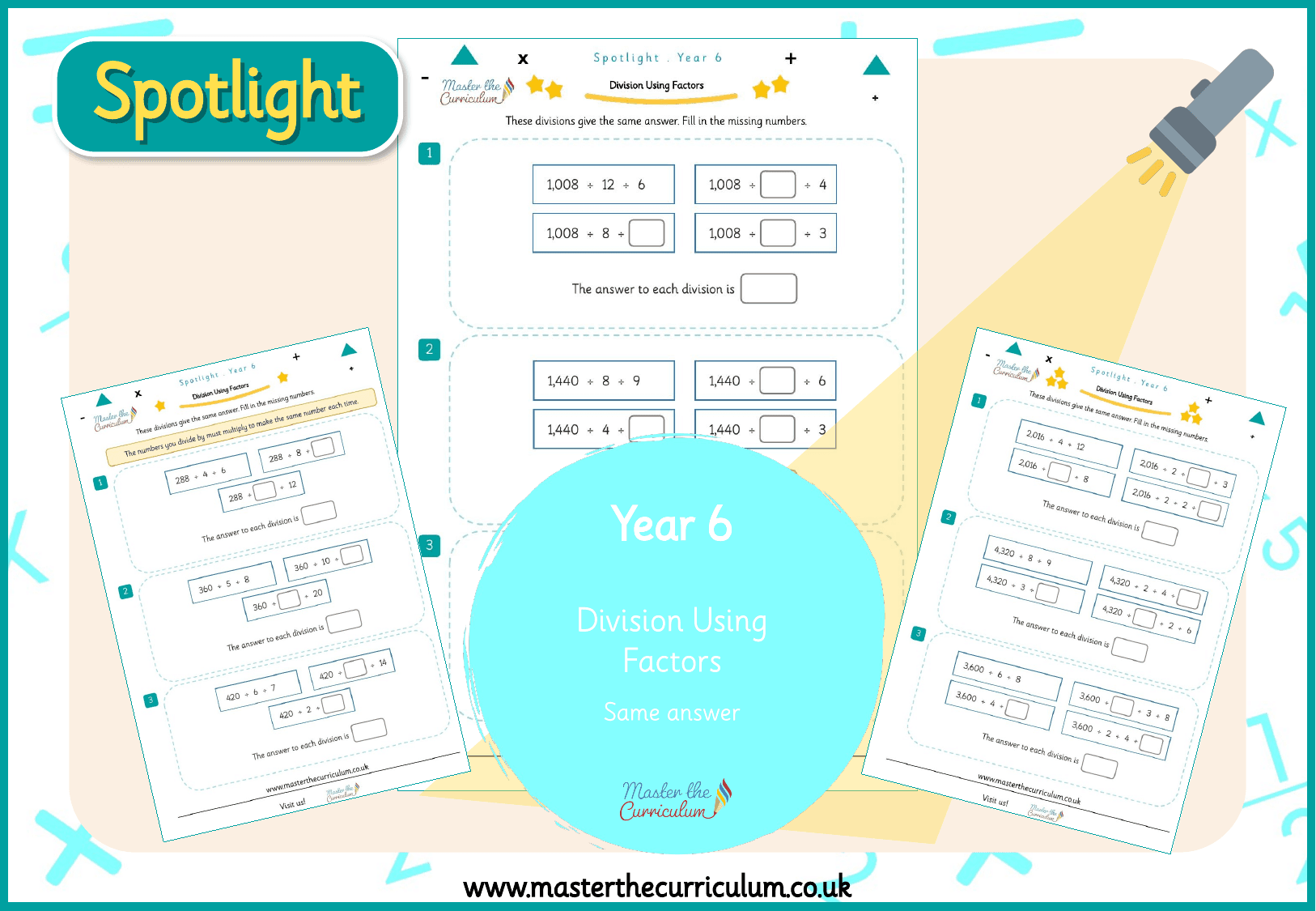
Spotlight Yr6 Division Using Factors: Same Answer

masterthecurriculum.co.uk

3 levels
Included with membership
Y6

Addition & Subtraction

Spotlight Y6 Find the Missing Number in Equivalent Calculations

masterthecurriculum.co.uk

3 levels
Included with membership
Y6

Multiplication & Division

Spotlight Y6 Long Division with Decimals

masterthecurriculum.co.uk

3 levels
Included with membership
Y6

Multiplication & Division

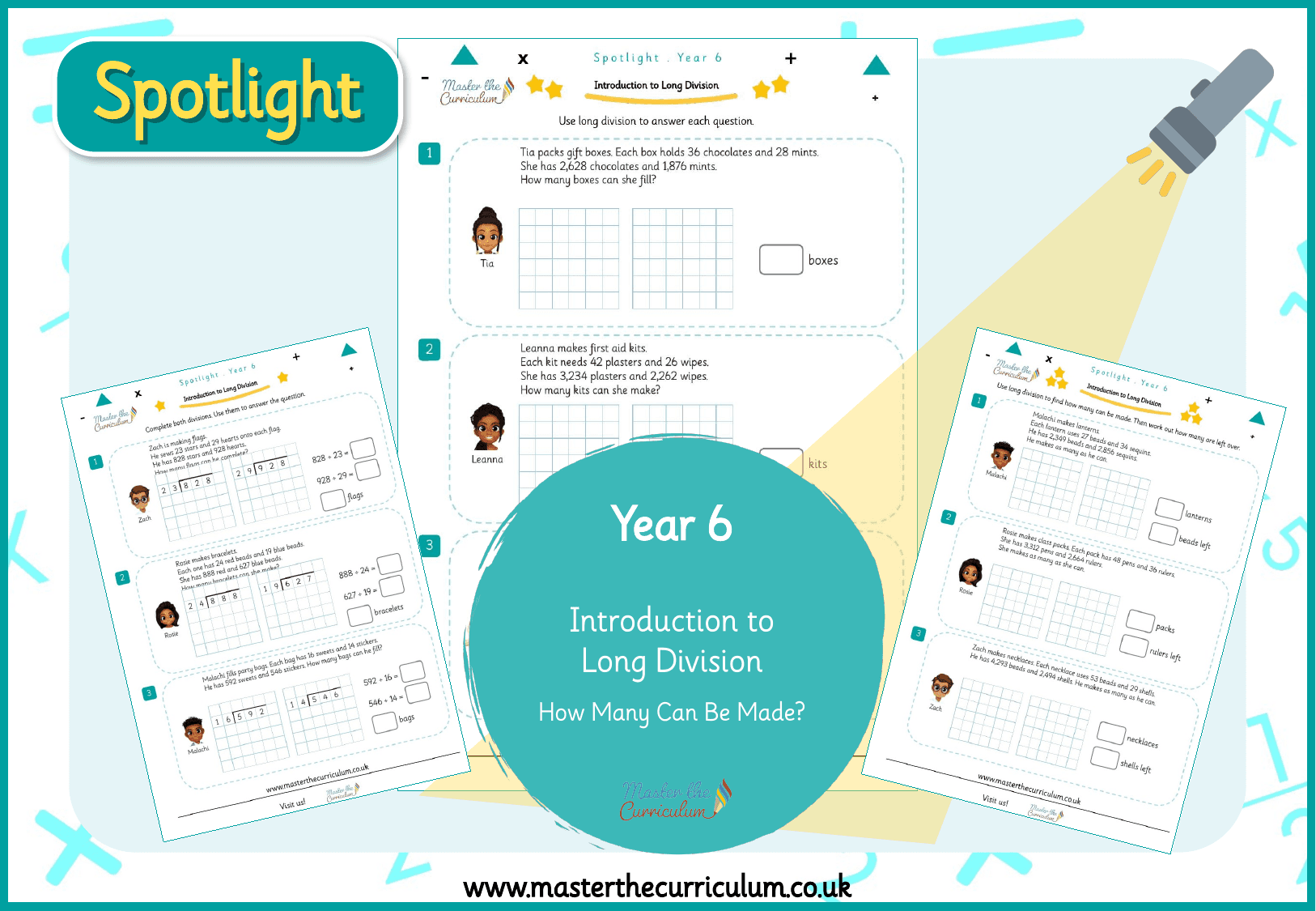
Spotlight Y6 Long Division Word Problems: How Many Can Be Made?

masterthecurriculum.co.uk

3 levels
Included with membership
Y6

Multiplication & Division

Spotlight Y6 Long Division Calculations with the Same Answer

masterthecurriculum.co.uk

3 levels
Included with membership
Y6

Multiplication & Division

Spotlight Y6 Find the Missing Length Using Area and Long Division

masterthecurriculum.co.uk

3 levels
Included with membership
Y6

Multiplication & Division

Spotlight Y6 Write Multiples for Long Division

masterthecurriculum.co.uk

3 levels
Included with membership
Y6

Multiplication & Division

Spotlight Y6 Long Division Using Multiples

masterthecurriculum.co.uk

3 levels
Included with membership

Got a question about this resource?

Leave a message and we’ll get back to you.

Editable resourcesOpens in PowerPoint so you can edit to suit your classWhite Rose supportingFollows the small steps you already plan fromKey eventsSeasonal and cultural resources for the moments in the school yearReasoning Maths HubReasoning and problem solving, by year group

Sign up to keep updated on new resources

An email when there is something new for the year group you actually teach. Unsubscribe in a click.

Year group you teach

We keep your address, and the year group you teach, so we can tell you when there is something new for it. Here is how we look after it: privacy policy.