“place value”
126 resources · narrowed by what you typed, not just matched on words
Narrow it
More ways to narrow▾
Know that 10 hundreds are equivalent to 1000 (3)

Know that 10 hundreds are equivalent to 1000 (4)

Know that 10 hundreds are equivalent to 1000 (5)

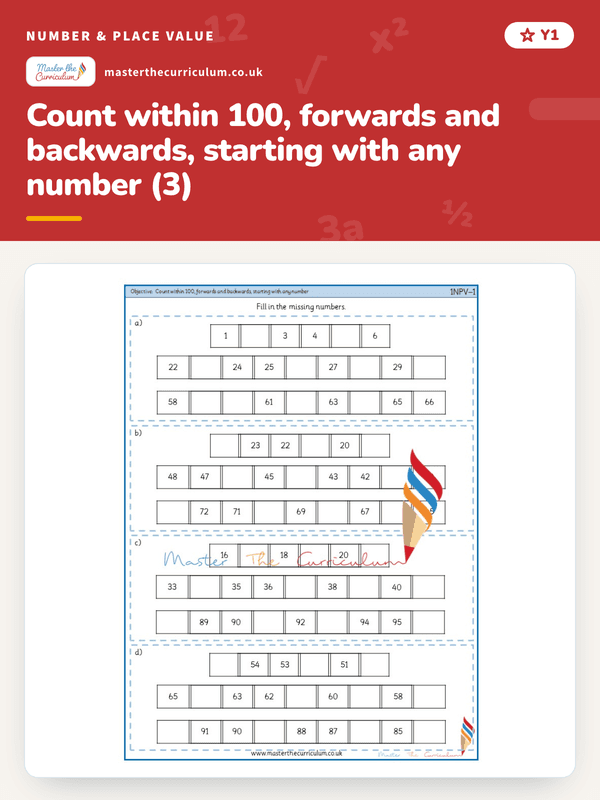
Count within 100, forwards and backwards, starting with any number (3)
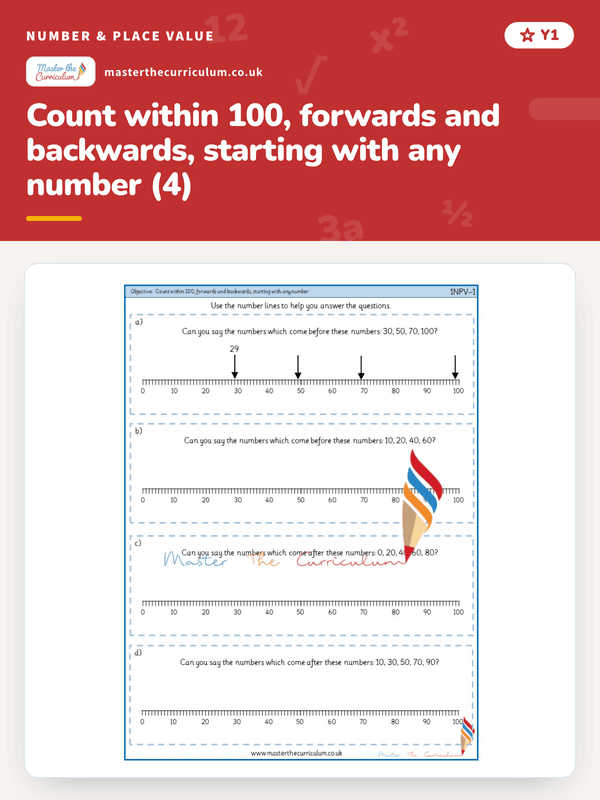
Count within 100, forwards and backwards, starting with any number (4)
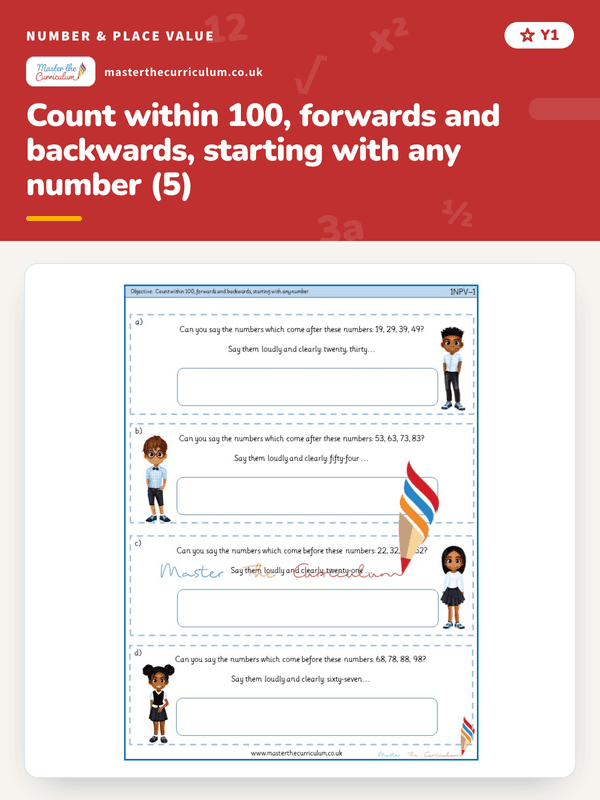
Count within 100, forwards and backwards, starting with any number (5)
Count within 100, forwards and backwards, starting with any number (6)
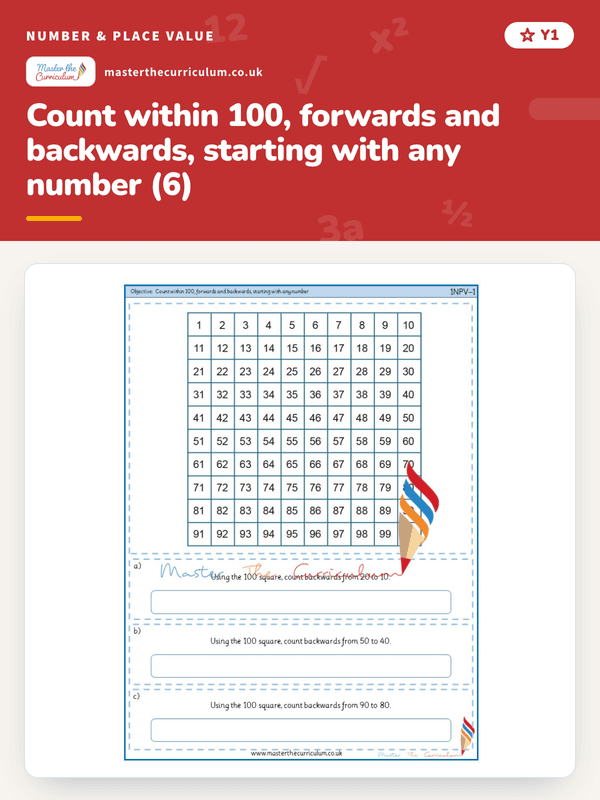
Count within 100, forwards and backwards, starting with any number (7)

Divide 100 into 2, 4, 5 and 10 equal parts (1)

Convert between units of measure, including using common decimals and fractions (1)
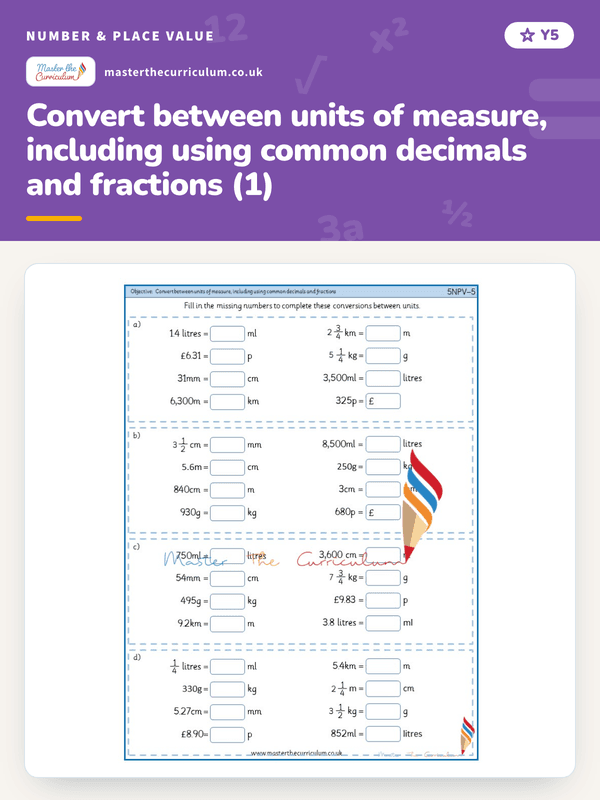
Convert between units of measure, including using common decimals and fractions (2)

Convert between units of measure, including using common decimals and fractions (3)
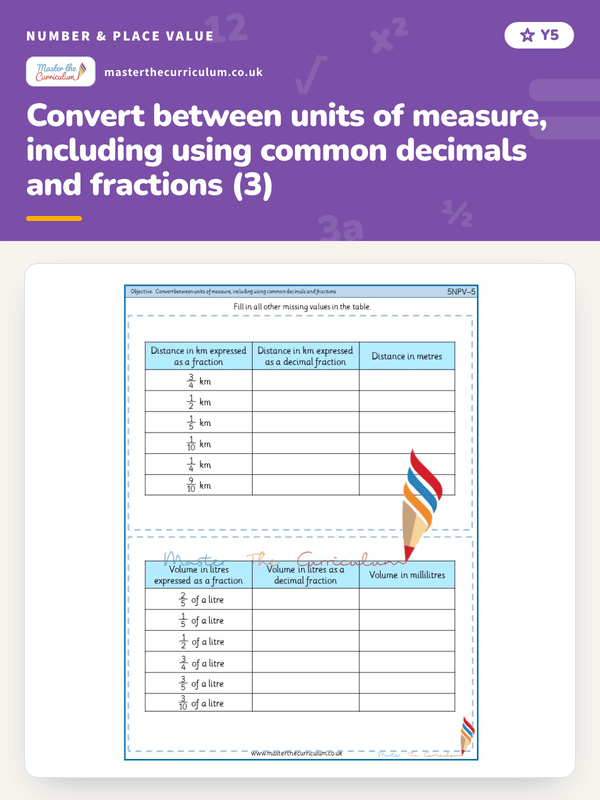
Convert between units of measure, including using common decimals and fractions (4)
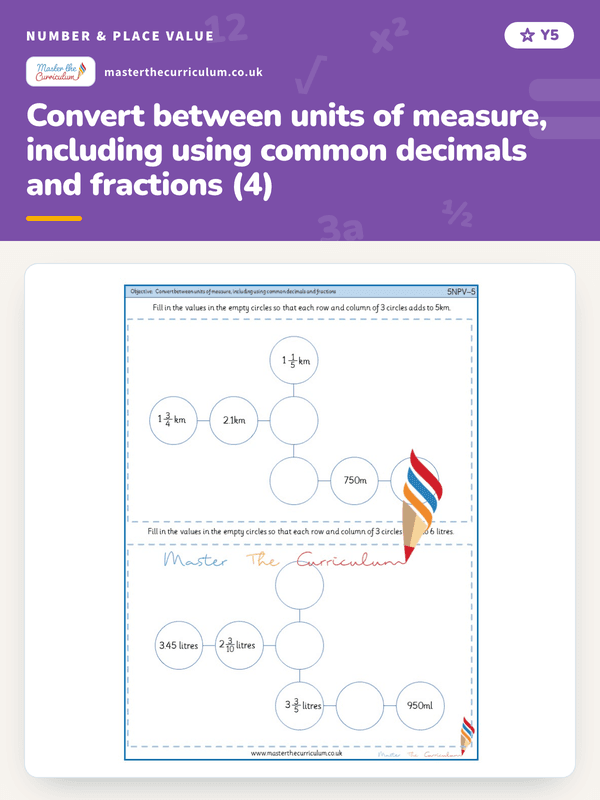
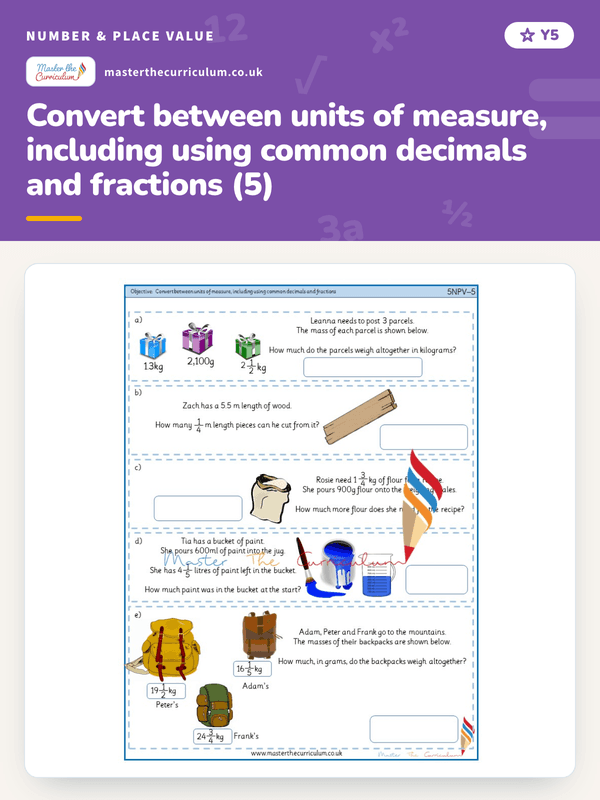
Convert between units of measure, including using common decimals and fractions (5)
Secure fluency in addition and subtraction facts within 10, through continued practice (1)

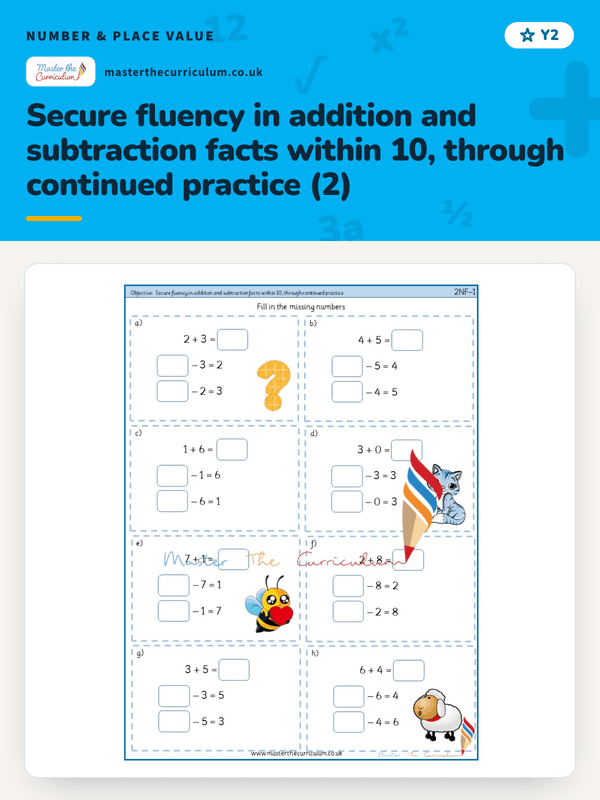
Secure fluency in addition and subtraction facts within 10, through continued practice (2)
Year 3: Divide 100 into 2, 4, 5 and 10 equal parts (2)

Reason about the location of numbers to 20 within the linear number system (1)

Reason about the location of numbers to 20 within the linear number system (2)

Reason about the location of numbers to 20 within the linear number system (3)

Reason about the location of numbers to 20 within the linear number system (4)

Reason about the location of numbers to 20 within the linear number system (5)

Reason about the location of numbers to 20 within the linear number system (6)

Reason about the location of numbers to 20 within the linear number system (7)

Understand the relationship between powers of 10 from 1 hundredth to 10 million (1)

Understand the relationship between powers of 10 from 1 hundredth to 10 million (10)

Understand the relationship between powers of 10 from 1 hundredth to 10 million (2)

Understand the relationship between powers of 10 from 1 hundredth to 10 million (3)

Understand the relationship between powers of 10 from 1 hundredth to 10 million (4)

Understand the relationship between powers of 10 from 1 hundredth to 10 million (5)

Understand the relationship between powers of 10 from 1 hundredth to 10 million (6)

Understand the relationship between powers of 10 from 1 hundredth to 10 million (7)

Understand the relationship between powers of 10 from 1 hundredth to 10 million (8)

Understand the relationship between powers of 10 from 1 hundredth to 10 million (9)

Reason about the location of any two-digit number in the linear number system (1)

Identify the previous and next multiple of 100 or 10 a given three-digit number is between (1)

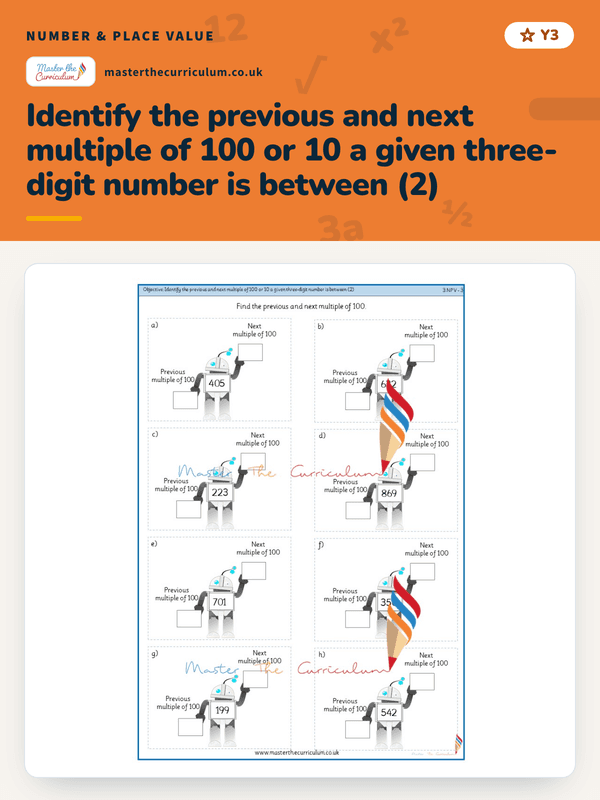
Identify the previous and next multiple of 100 or 10 a given three-digit number is between (2)
Year 3: Identify the previous and next multiple of 100 or 10 a given three-digit number is between (3)

Divide 1,000 into 2,4,5 and 10 equal parts, and read scales/number lines marked in multiples of 1,000 with 2,4,5 and 10 equal parts (1)
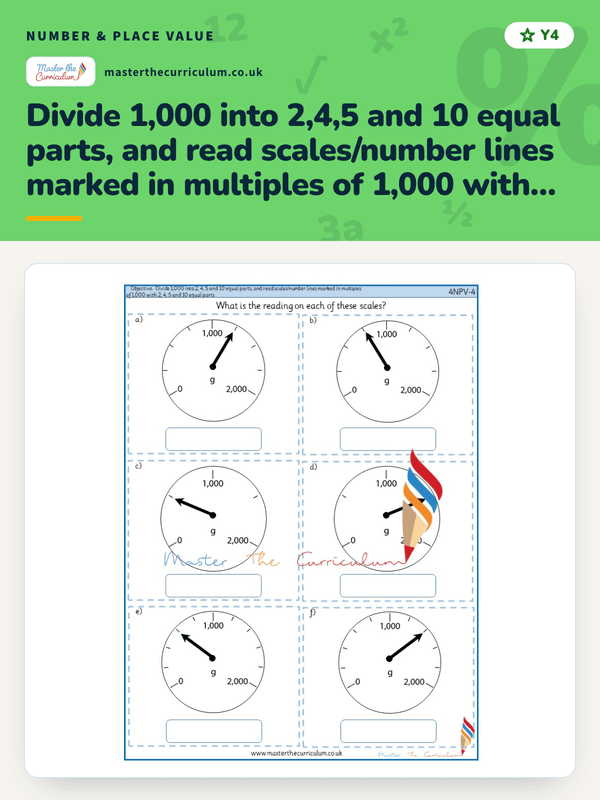
Divide 1,000 into 2,4,5 and 10 equal parts, and read scales/number lines marked in multiples of 1,000 with 2,4,5 and 10 equal parts (2)
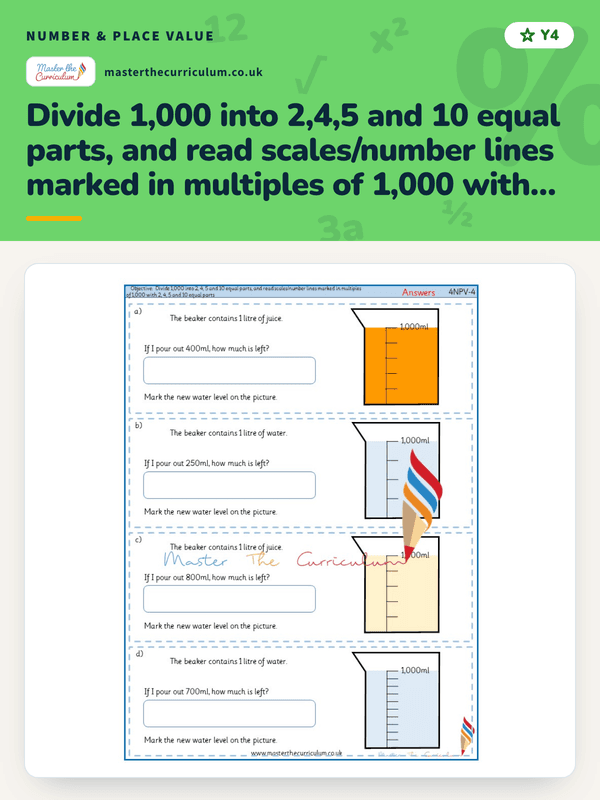
Divide 1,000 into 2,4,5 and 10 equal parts, and read scales/number lines marked in multiples of 1,000 with 2,4,5 and 10 equal parts (3)
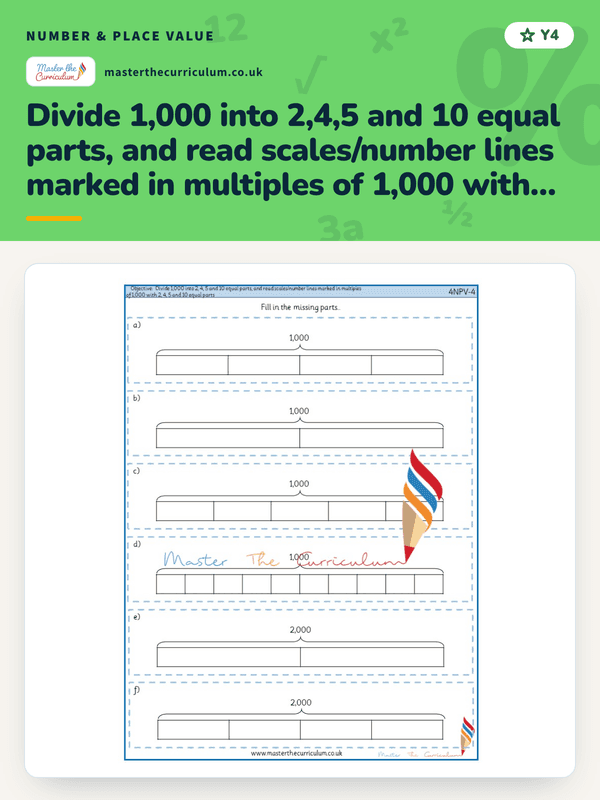
Divide 1,000 into 2,4,5 and 10 equal parts, and read scales/number lines marked in multiples of 1,000 with 2,4,5 and 10 equal parts (4)
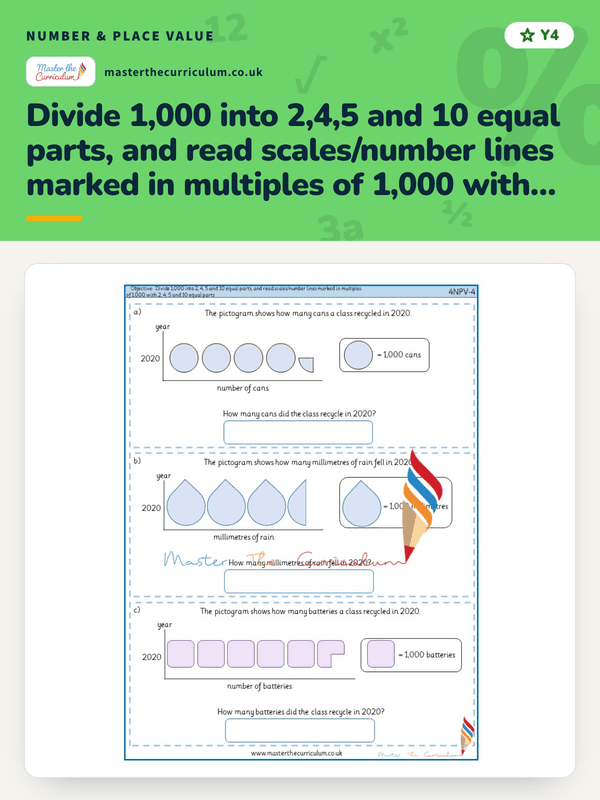
Divide 1,000 into 2,4,5 and 10 equal parts, and read scales/number lines marked in multiples of 1,000 with 2,4,5 and 10 equal parts (5)
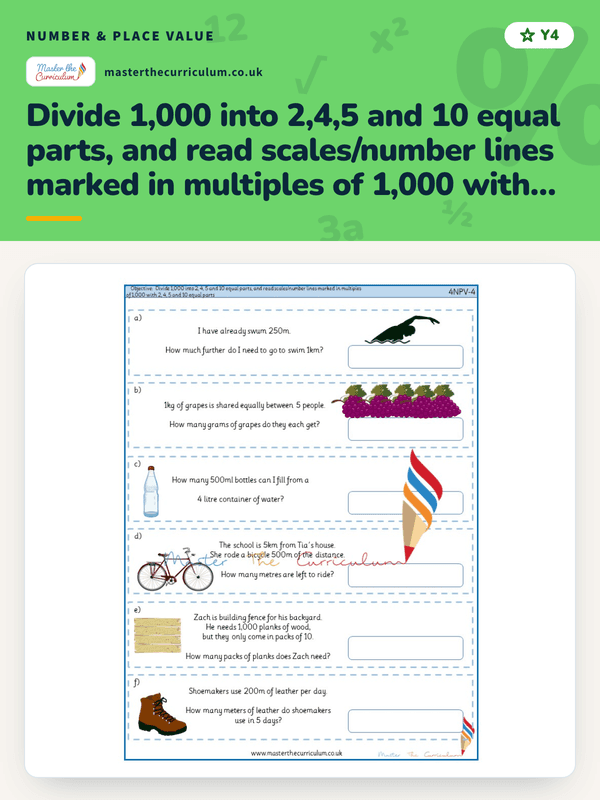
Reason about the location of any four-digit number in the linear number system, including identifying the previous and next multiple of 1,000 and 100, and rounding to the nearest of each (1)
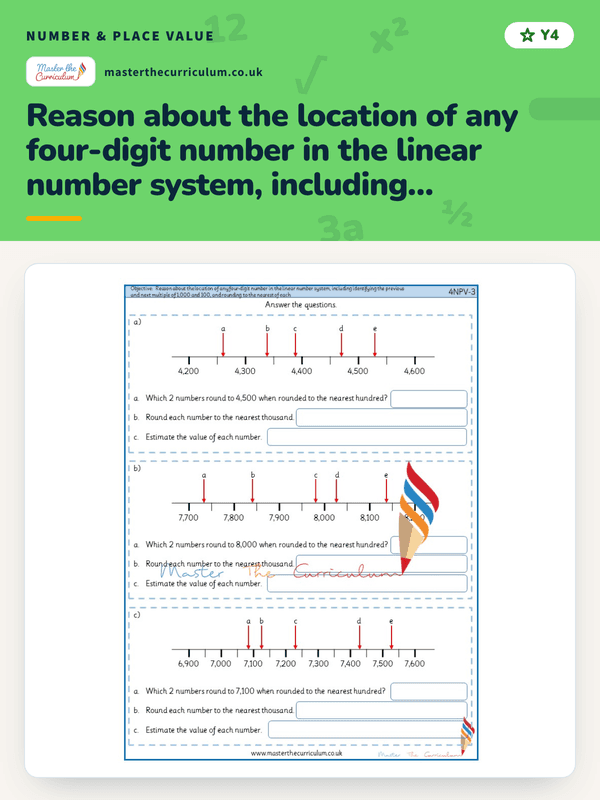
Reason about the location of any four-digit number in the linear number system, including identifying the previous and next multiple of 1,000 and 100, and rounding to the nearest of each (2)
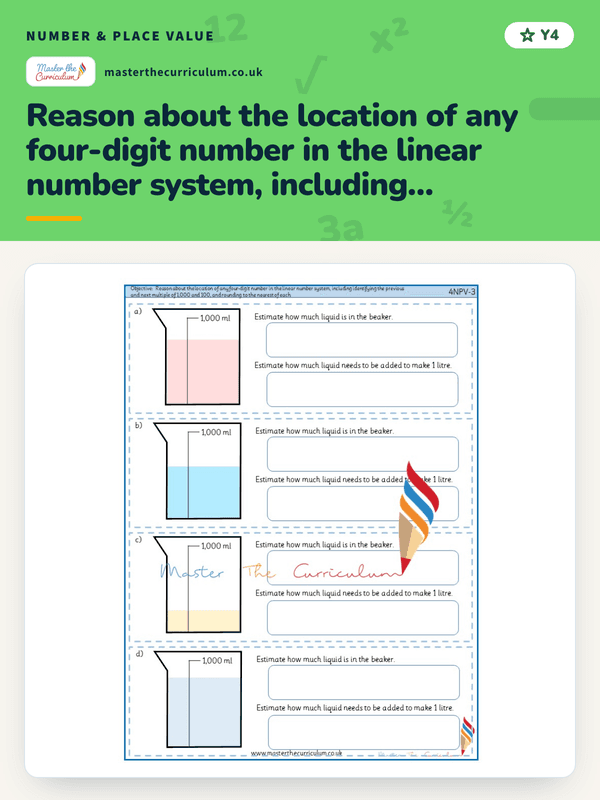
Reason about the location of any four-digit number in the linear number system, including identifying the previous and next multiple of 1,000 and 100, and rounding to the nearest of each (3)
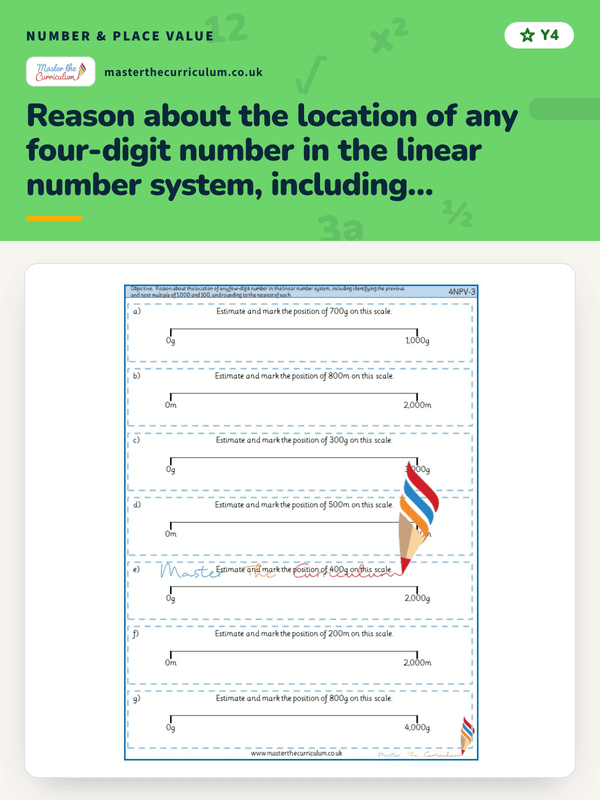
Reason about the location of any four-digit number in the linear number system, including identifying the previous and next multiple of 1,000 and 100, and rounding to the nearest of each (4)
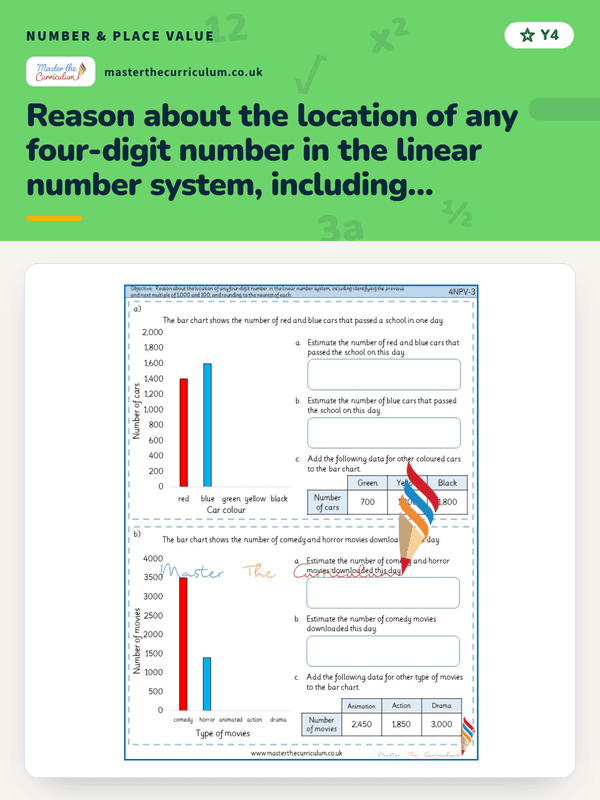
Reason about the location of any four-digit number in the linear number system, including identifying the previous and next multiple of 1,000 and 100, and rounding to the nearest of each (5)