Sharing Using Tens Frames
Included with membership
Trusted by primary teachers across the UK · New resources every week
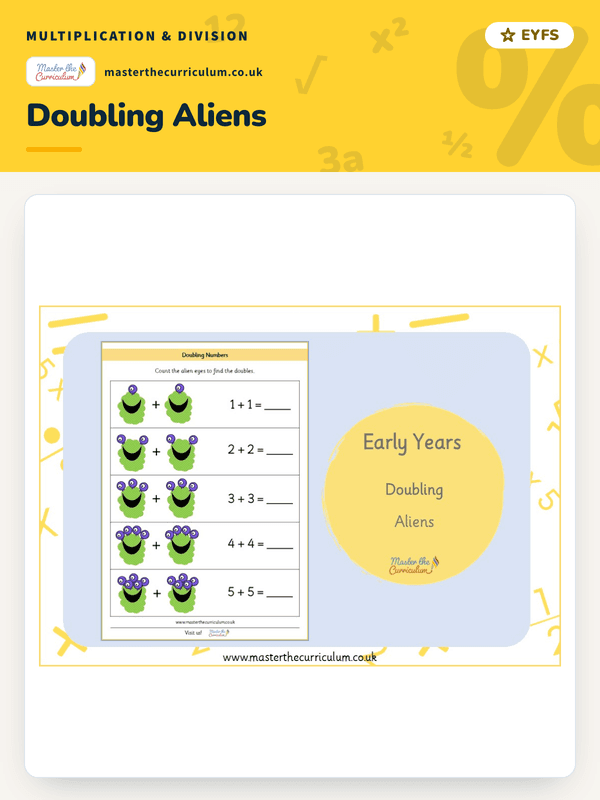
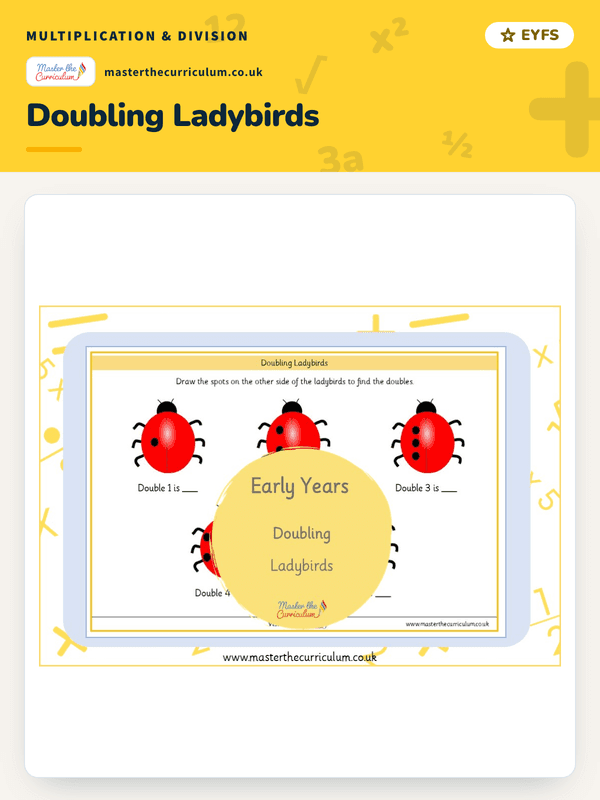
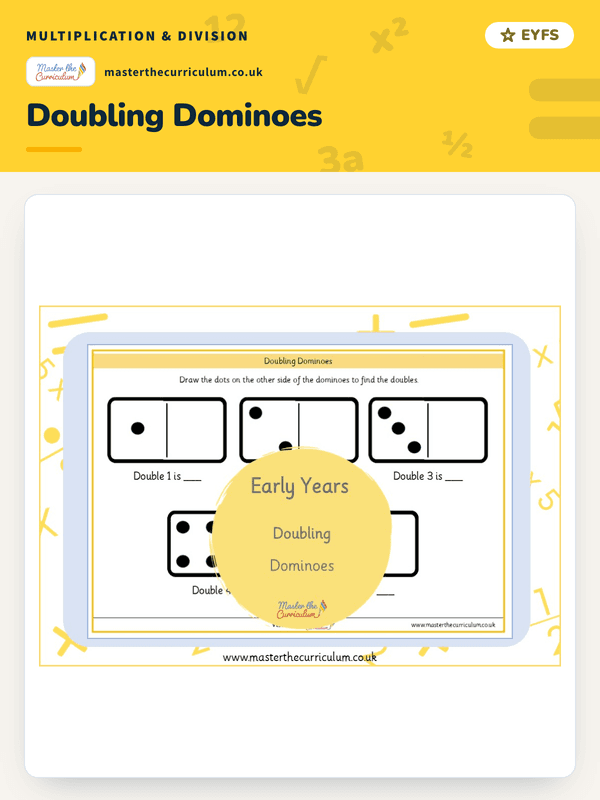
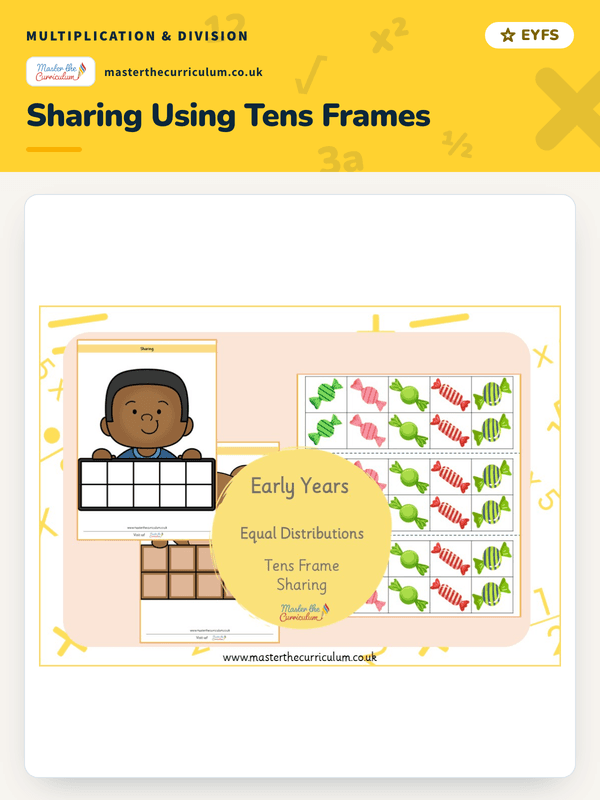
Help children learn double facts from 1 to 5 with this practical shapes maths activity. Children use the shapes to explore equal groups and doubles, with plastic shapes providing a hands-on way to count and find the totals.
Preview only. The download is one file, listed in full below.
Every page is shown before you download. The files themselves come with membership, or sign in if you already have one.
Included with membership
Unlock with membershipAlready a member? Sign in and it downloads from this page.
Keep it for later and group it with the rest of the block. No account needed to start.
Help children develop their understanding of double facts from 1 to 5 with this practical shapes maths activity. Using the shapes as a visual and hands-on resource helps children explore doubling, equal groups and early addition in an engaging way. Children can use the shapes on the activity to help them work out each double. Encourage them to look carefully at the shapes, identify the number in each group and count the shapes together to find the total. For an additional practical element, provide children with plastic shapes that they can fit together. Children can make two equal groups and then carefully count the holes in the shapes to work out the corresponding double fact. This activity is ideal for Early Years and KS1, giving children opportunities to develop a concrete understanding of doubling before moving towards recording double facts as number sentences. Children can practise: Double facts from 1 to 5 Counting accurately Recognising equal groups Understanding doubling as adding the same amount Developing early addition skills Using practical resources to solve mathematical problems Explaining their mathematical thinking Encourage children to use mathematical language while they work. Questions such as “How many are in each group?”, “Are the groups equal?”, “How many altogether?” and “What double have you found?” can help children explain their reasoning. The activity can be used as part of a teacher-led focus group, independent maths provision or a practical continuous provision activity. Plastic shapes, counters or other manipulatives can be provided so children can physically build the two equal groups before counting the total. For an extension, ask children to record the doubles they have found as number sentences, such as 3 + 3 = 6 or 5 + 5 = 10. Children could also be challenged to make their own equal groups and ask a partner to identify the double. This practical shapes activity supports children in making connections between equal groups, doubl
This pack is print and go. Our catalogue does not list an editable copy of it, so none is offered here rather than promising a file nobody has opened. Page counts are not printed either, because we do not publish them and a guessed number is worse than none.