Skip to content

Early YearsMultiplication & Division

Sharing African Animals

Help children explore sharing equally with this practical fruit and animals maths activity. Children share fruit between the animals, check that each has the same amount and explain how they have shared it.

CoverCover and first page

Preview only. The download is one file, listed in full below.

Every page is shown before you download. The files themselves come with membership, or sign in if you already have one.

Included with membership

Unlock with membership

Already a member? Sign in and it downloads from this page.

Keep it for later and group it with the rest of the block. No account needed to start.

  • Print it as it is, or as many as you need
  • Differentiated three ways
  • Instant download, no watermark

About this resource

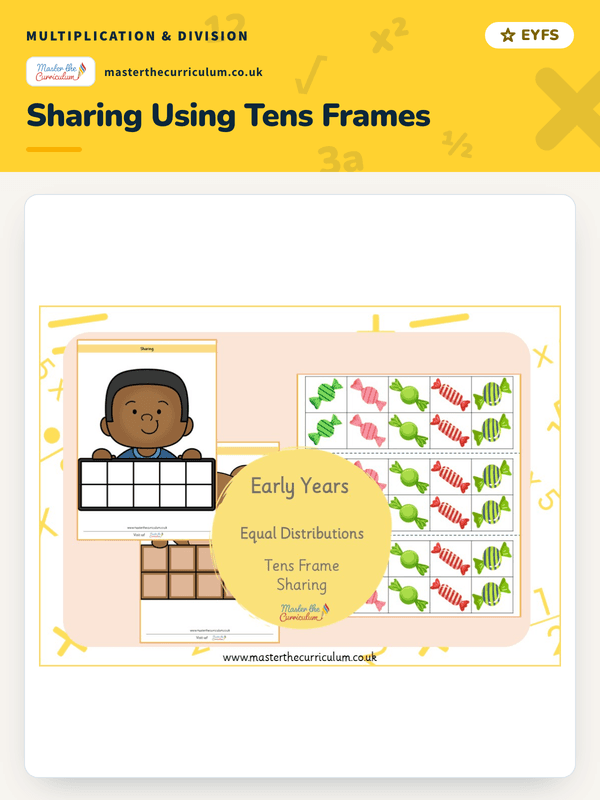
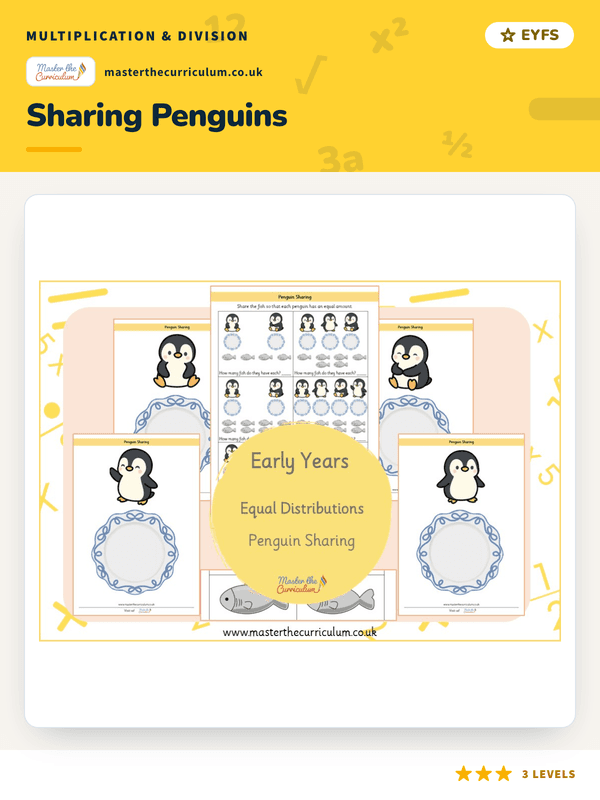
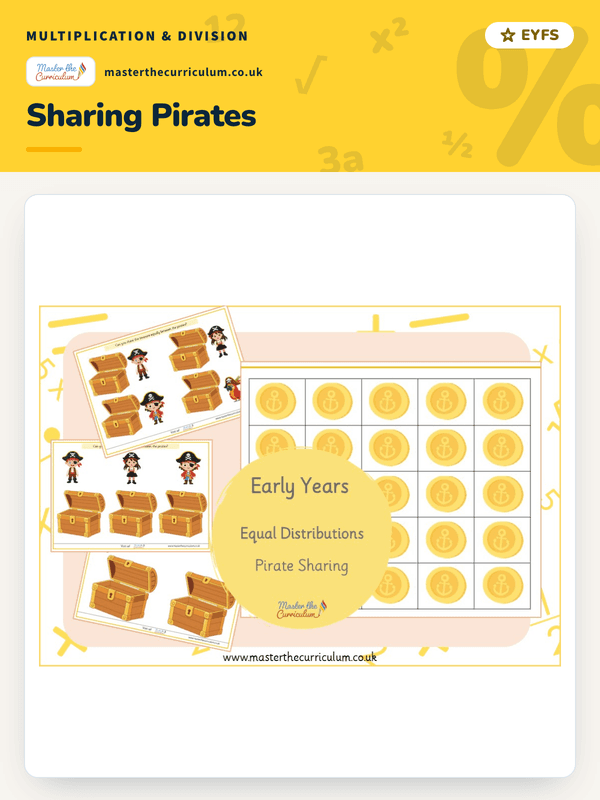
Help children develop their understanding of sharing equally with this engaging fruit and animals maths activity. Children explore how quantities can be distributed between groups so that each animal receives the same amount. To prepare the resource, laminate each of the animal mats and cut them in half. The fruit can also be laminated and cut out individually, creating durable, reusable resources that children can use for practical maths activities. Provide children with a selection of fruit and ask them to share it equally between the animals, dealing out the pieces one at a time. Encourage children to explain how they have shared the fruit and carefully check whether each animal has received the same amount. This activity is ideal for Early Years and KS1, providing children with a practical introduction to equal sharing and the early concepts that underpin division. Physically moving the fruit between the animals helps children see how a quantity can be distributed fairly between groups. Children can practise: Sharing quantities equally Recognising equal groups Counting accurately Comparing quantities Developing an understanding of early division Using mathematical language Explaining their reasoning Developing problem-solving skills Encourage children to use mathematical language while they work. Useful questions include: “How much fruit did you have?” “How many pieces do they have each?” “Do they have an equal amount?” “How do you know they have the same?” “Can you share the fruit in a different way?” The laminated mats and individual pieces of fruit make this resource ideal for hands-on maths provision. Children can physically deal the fruit out between the animals, supporting those who benefit from a concrete approach to mathematical learning. The activity can be used as a teacher-led focus group or provided for children to explore independently as part of continuous provision. You can differentiate by changing the number of pieces of fruit or the number of aRead more

Help children develop their understanding of sharing equally with this engaging fruit and animals maths activity. Children explore how quantities can be distributed between groups so that each animal receives the same amount. To prepare the resource, laminate each of the animal mats and cut them in half. The fruit can also be laminated and cut out individually, creating durable, reusable resources that children can use for practical maths activities. Provide children with a selection of fruit and ask them to share it equally between the animals, dealing out the pieces one at a time. Encourage children to explain how they have shared the fruit and carefully check whether each animal has received the same amount. This activity is ideal for Early Years and KS1, providing children with a practical introduction to equal sharing and the early concepts that underpin division. Physically moving the fruit between the animals helps children see how a quantity can be distributed fairly between groups. Children can practise: Sharing quantities equally Recognising equal groups Counting accurately Comparing quantities Developing an understanding of early division Using mathematical language Explaining their reasoning Developing problem-solving skills Encourage children to use mathematical language while they work. Useful questions include: “How much fruit did you have?” “How many pieces do they have each?” “Do they have an equal amount?” “How do you know they have the same?” “Can you share the fruit in a different way?” The laminated mats and individual pieces of fruit make this resource ideal for hands-on maths provision. Children can physically deal the fruit out between the animals, supporting those who benefit from a concrete approach to mathematical learning. The activity can be used as a teacher-led focus group or provided for children to explore independently as part of continuous provision. You can differentiate by changing the number of pieces of fruit or the number of a

What you get, one file

  • PDFActivity

This pack is print and go. Our catalogue does not list an editable copy of it, so none is offered here rather than promising a file nobody has opened. Page counts are not printed either, because we do not publish them and a guessed number is worse than none.

★★★ Differentiated three ways
  • Working towardsScaffolded, with the model or the bar already drawn.
  • Working withinThe expected standard for the year group.
  • Greater depthReasoning and explaining, not just more of the same.

Our own system, with the star count repeated in every worksheet header so a child can be handed the right sheet without a word.
More multiplication & division for Early Years

Got a question about this resource?

Leave a message and we’ll get back to you.

Editable resourcesOpens in PowerPoint so you can edit to suit your classWhite Rose supportingFollows the small steps you already plan fromKey eventsSeasonal and cultural resources for the moments in the school yearReasoning Maths HubReasoning and problem solving, by year group

Sign up to keep updated on new resources

An email when there is something new for the year group you actually teach. Unsubscribe in a click.

Year group you teach

We keep your address, and the year group you teach, so we can tell you when there is something new for it. Here is how we look after it: privacy policy.