Same strand, other year groupsfor support and stretch
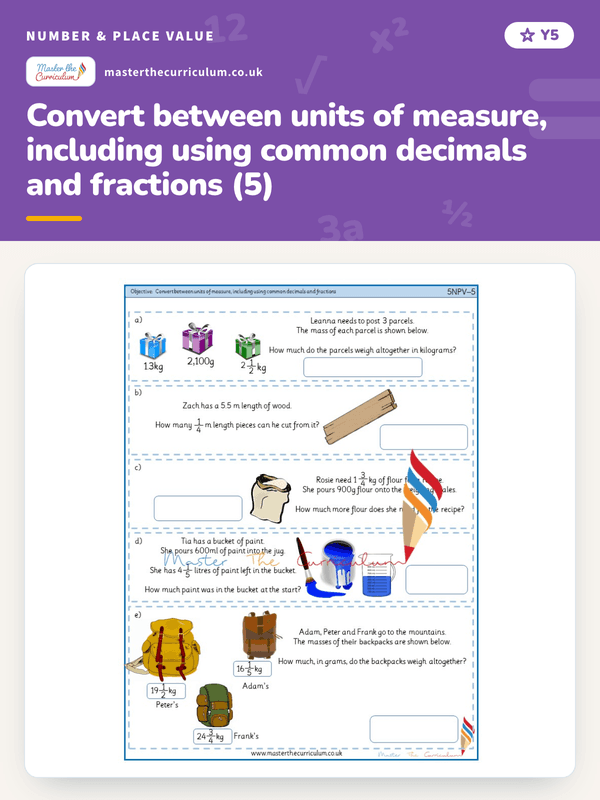
Convert between units of measure, including using common decimals and fractions (5)
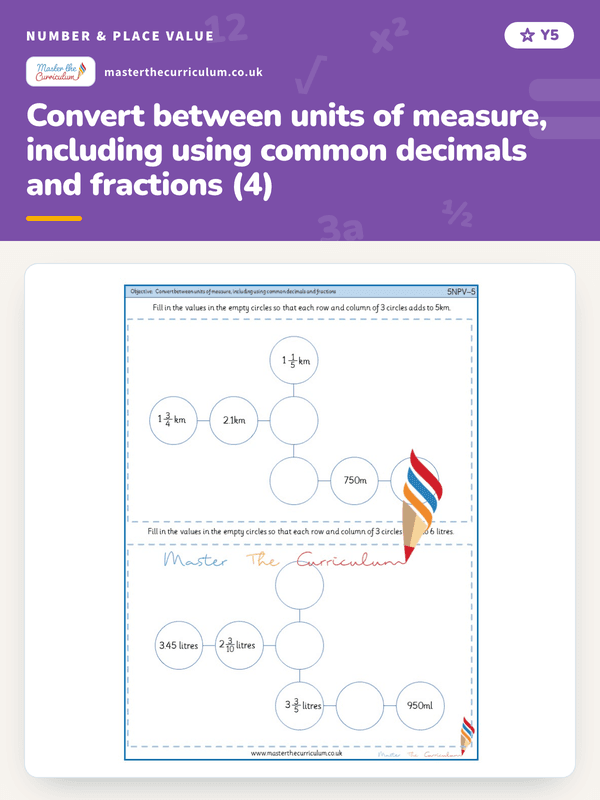
Convert between units of measure, including using common decimals and fractions (4)
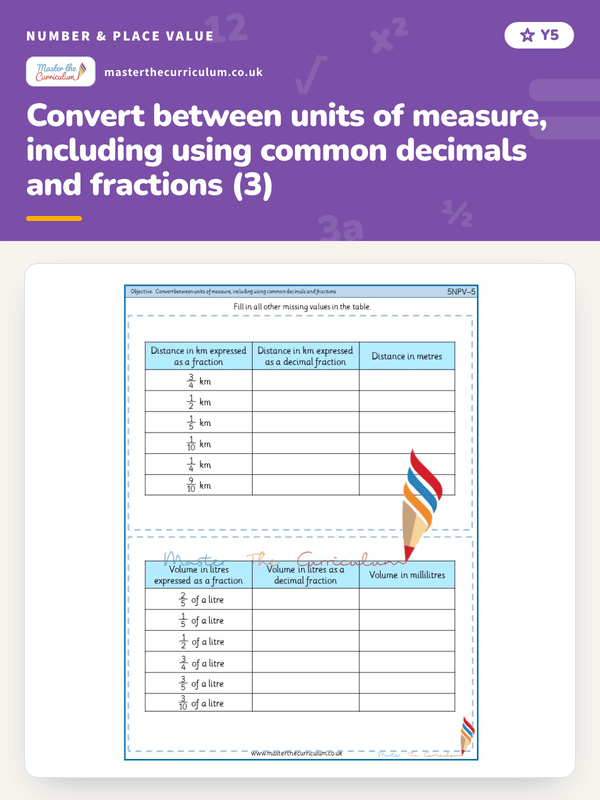
Convert between units of measure, including using common decimals and fractions (3)
Convert between units of measure, including using common decimals and fractions (2)

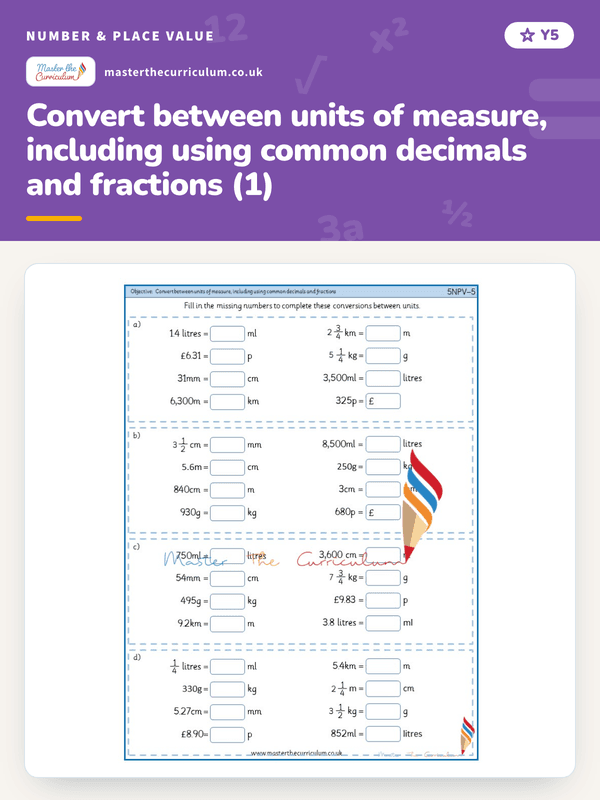
Convert between units of measure, including using common decimals and fractions (1)
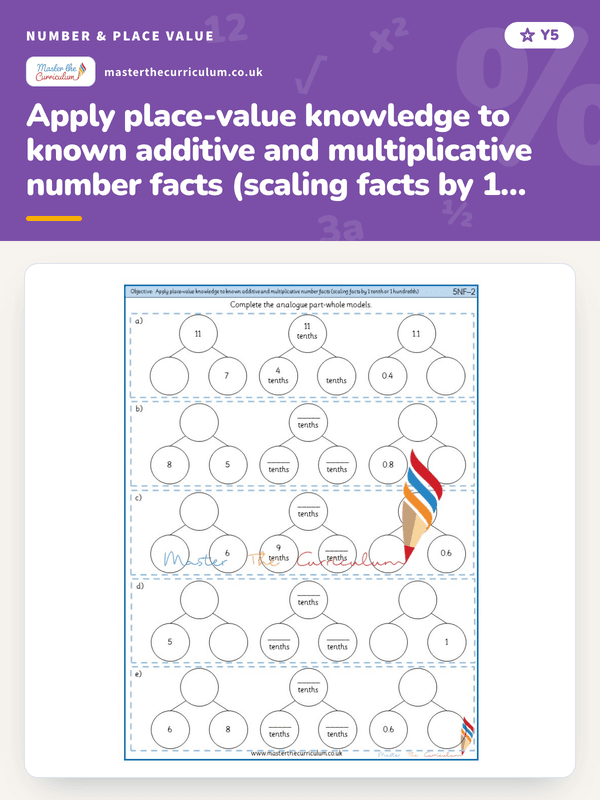
Apply place-value knowledge to known additive and multiplicative number facts (scaling facts by 1 tenth or 1 hundredth) (5)
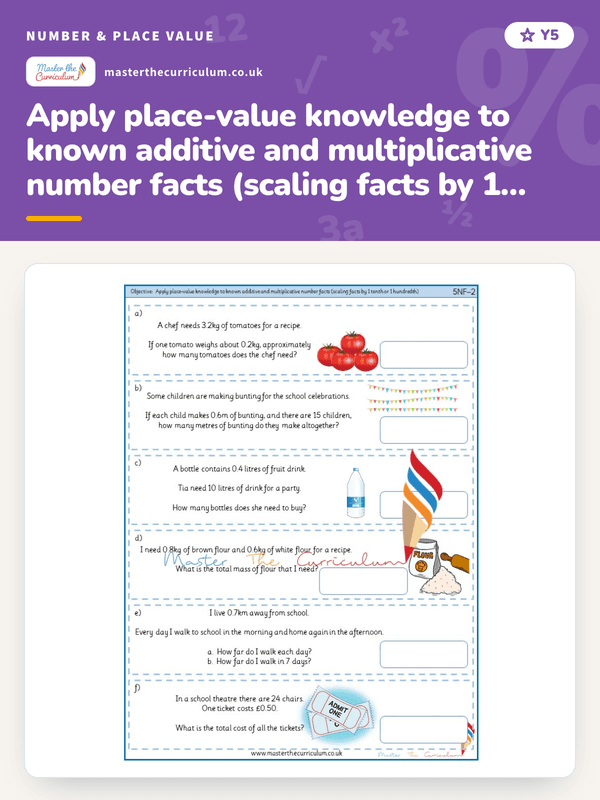
Apply place-value knowledge to known additive and multiplicative number facts (scaling facts by 1 tenth or 1 hundredth) (4)
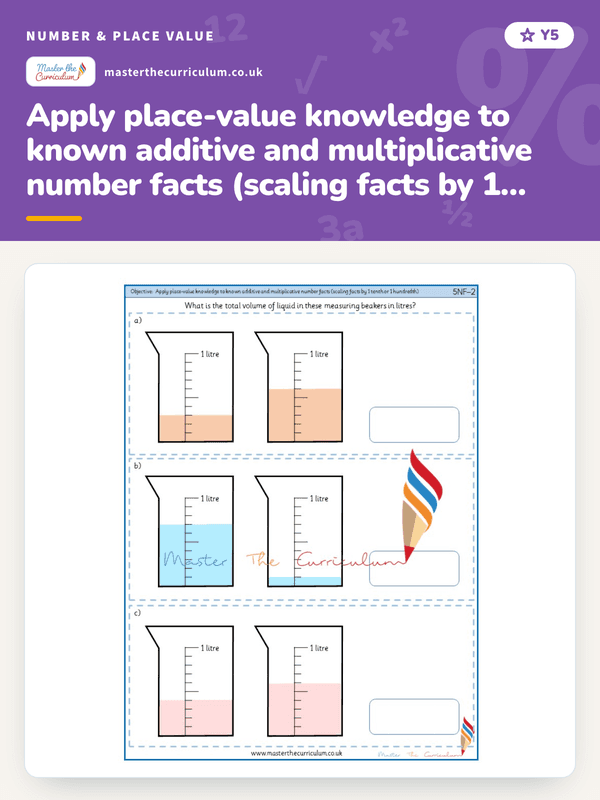
Apply place-value knowledge to known additive and multiplicative number facts (scaling facts by 1 tenth or 1 hundredth) (3)
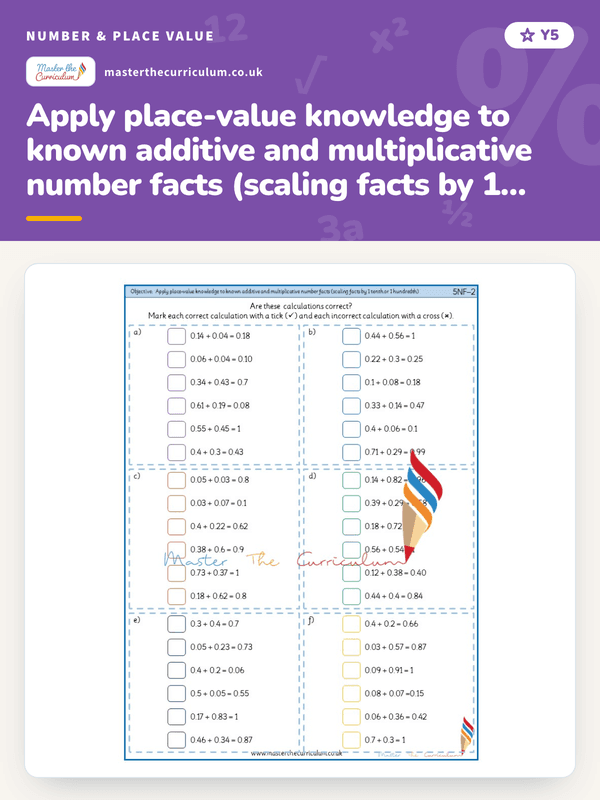
Apply place-value knowledge to known additive and multiplicative number facts (scaling facts by 1 tenth or 1 hundredth) (2)
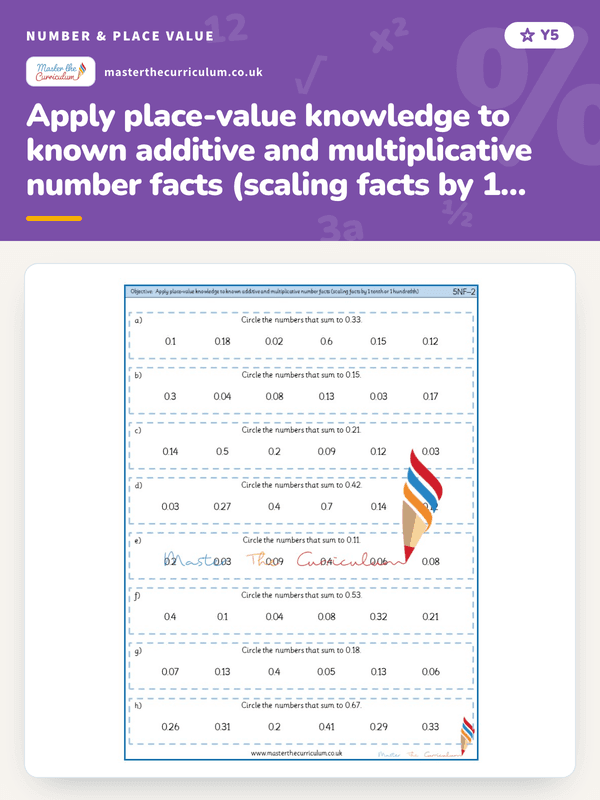
Apply place-value knowledge to known additive and multiplicative number facts (scaling facts by 1 tenth or 1 hundredth) (1)
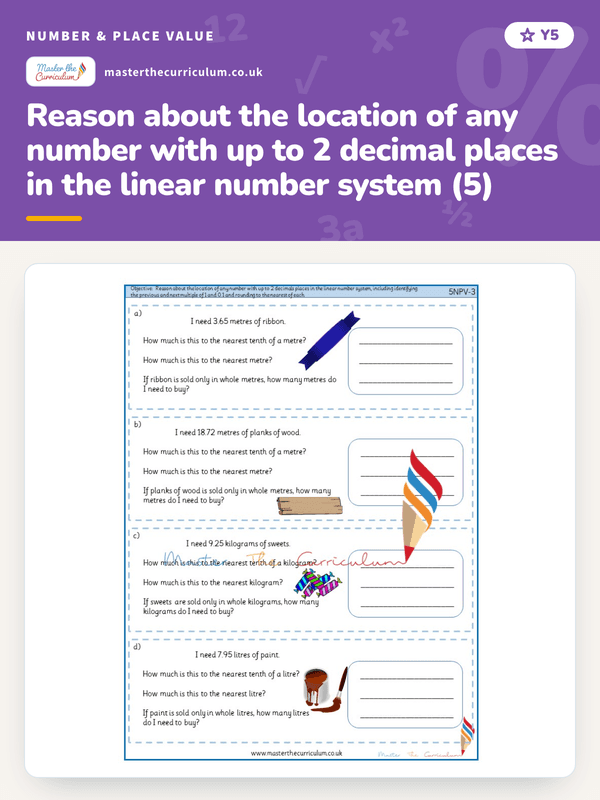
Reason about the location of any number with up to 2 decimal places in the linear number system (5)
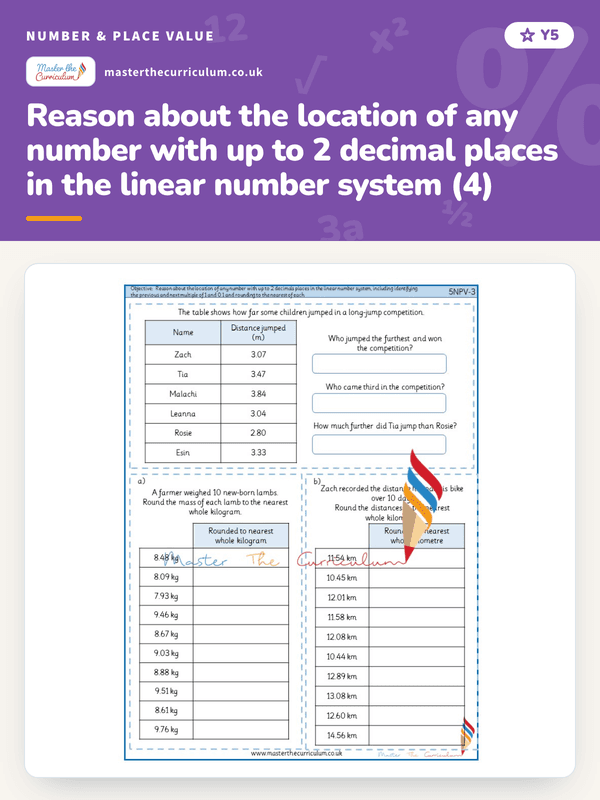
Reason about the location of any number with up to 2 decimal places in the linear number system (4)
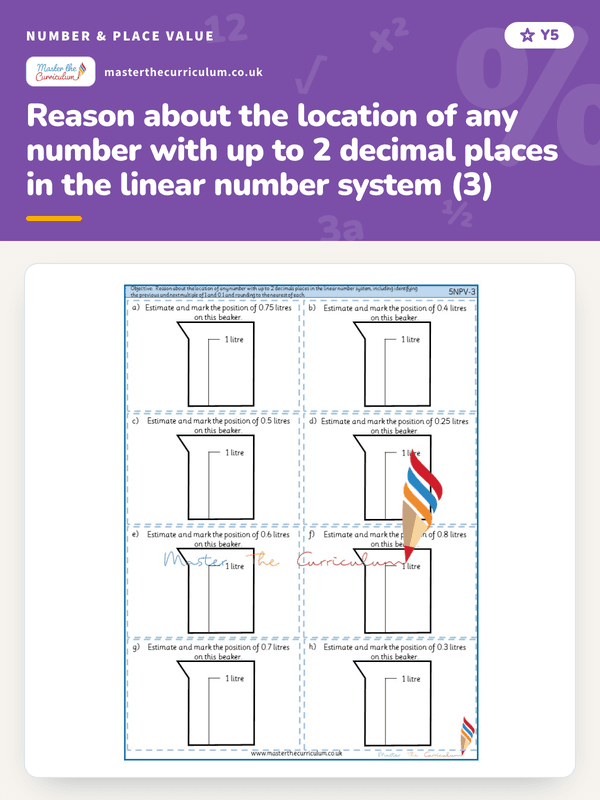
Reason about the location of any number with up to 2 decimal places in the linear number system (3)
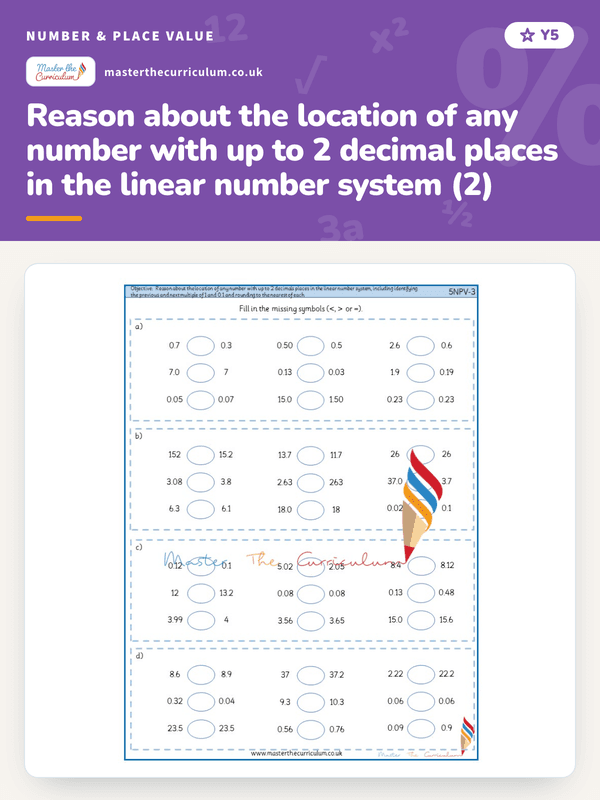
Reason about the location of any number with up to 2 decimal places in the linear number system (2)
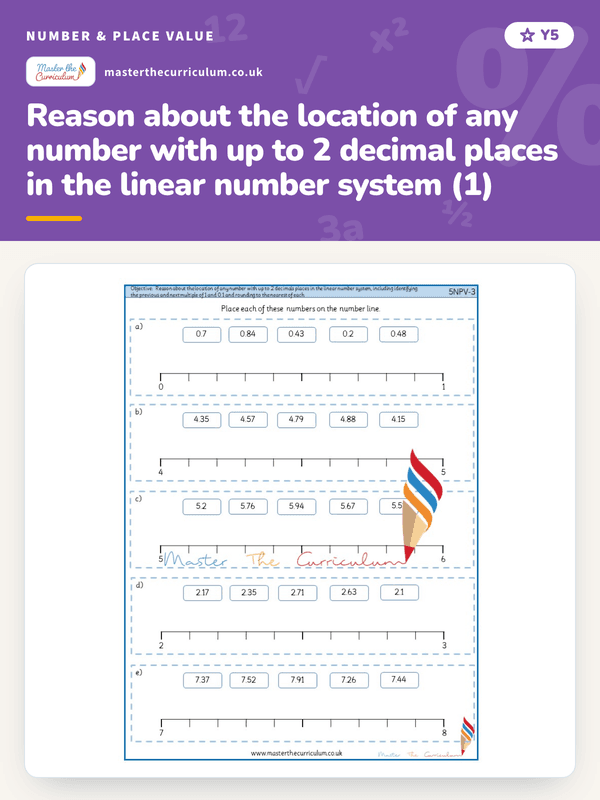
Reason about the location of any number with up to 2 decimal places in the linear number system (1)
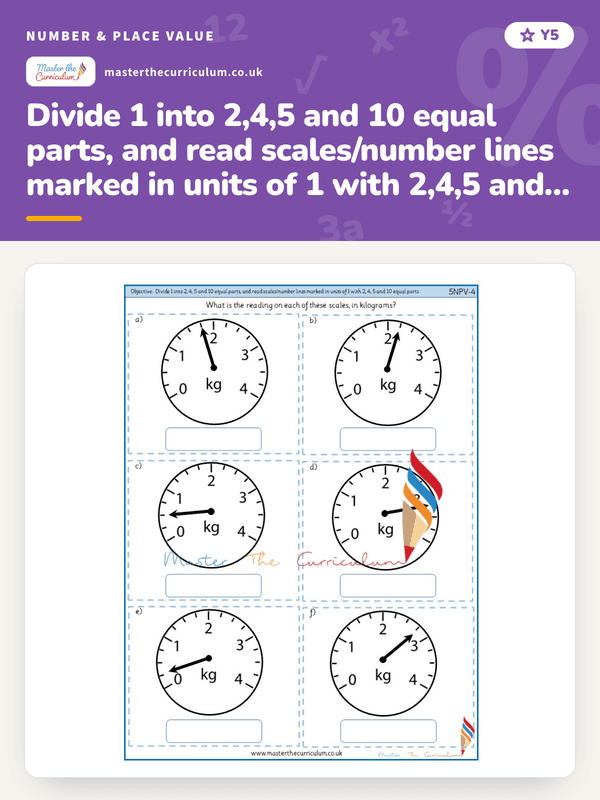
Divide 1 into 2,4,5 and 10 equal parts, and read scales/number lines marked in units of 1 with 2,4,5 and 10 equal parts (1)
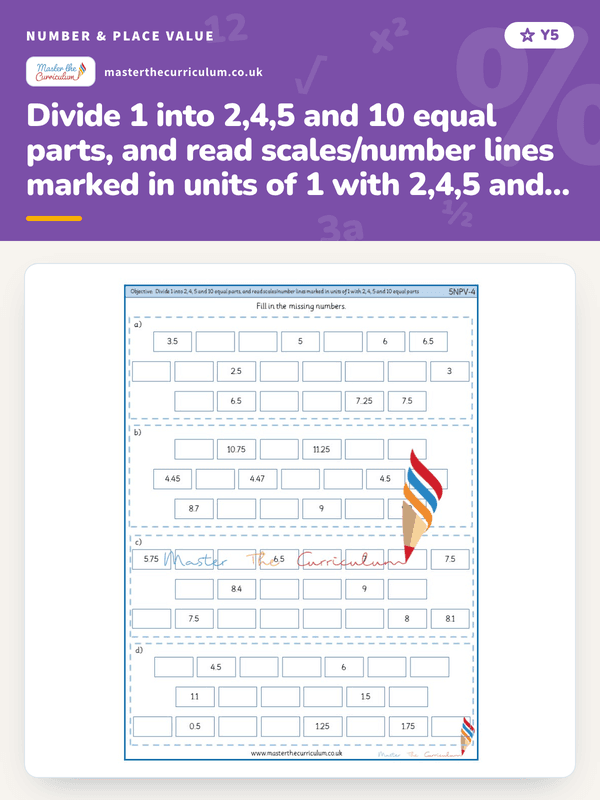
Divide 1 into 2,4,5 and 10 equal parts, and read scales/number lines marked in units of 1 with 2,4,5 and 10 equal parts (2)
Divide 1 into 2,4,5 and 10 equal parts, and read scales/number lines marked in units of 1 with 2,4,5 and 10 equal parts (3)
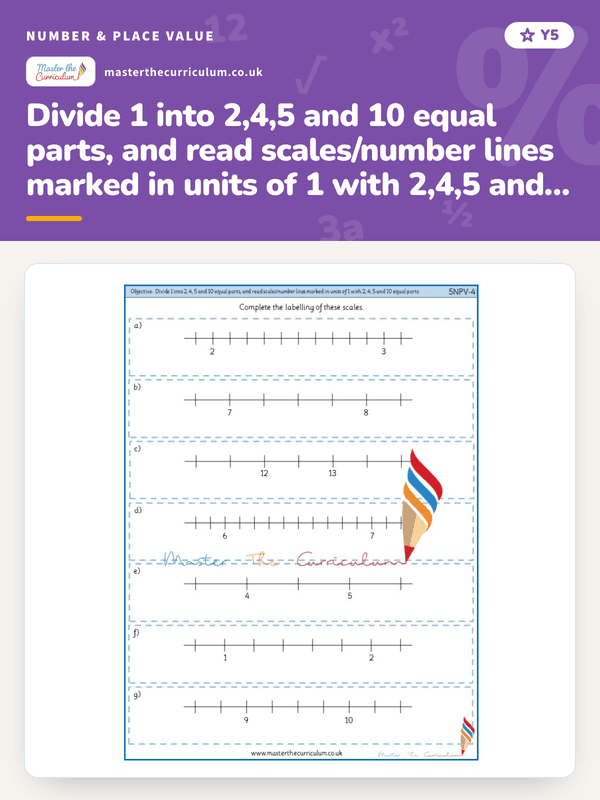
Divide 1 into 2,4,5 and 10 equal parts, and read scales/number lines marked in units of 1 with 2,4,5 and 10 equal parts (4)
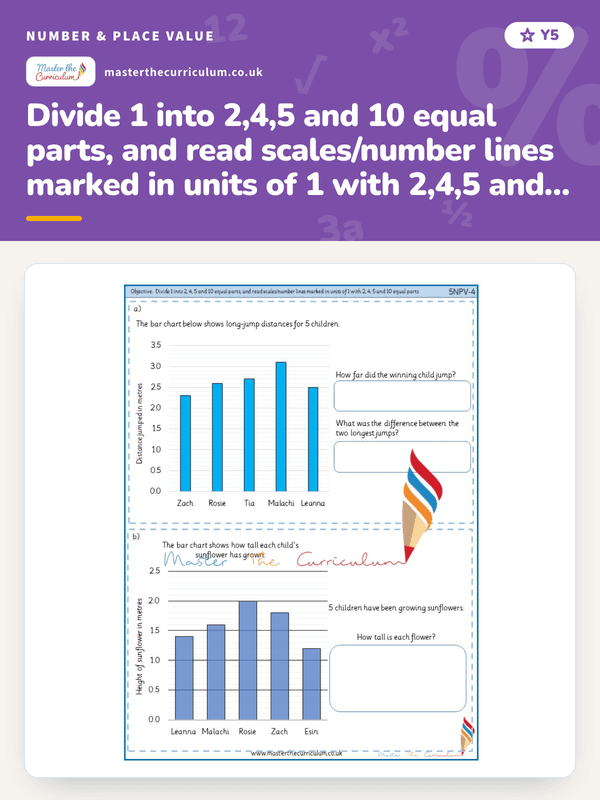
Divide 1 into 2,4,5 and 10 equal parts, and read scales/number lines marked in units of 1 with 2,4,5 and 10 equal parts (5)
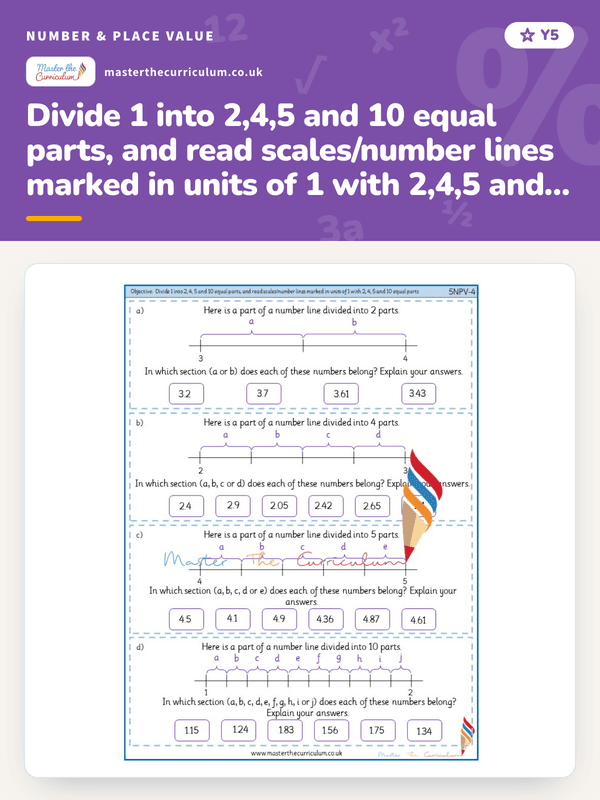
Know that 100 hundredths are equivalent to 1 one, and that 1 is 100 times the size of 0.01 (5)
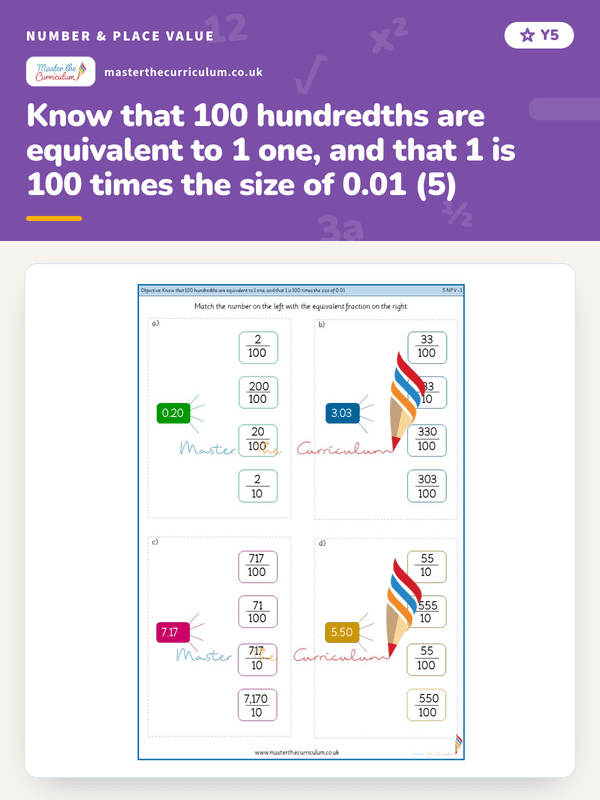
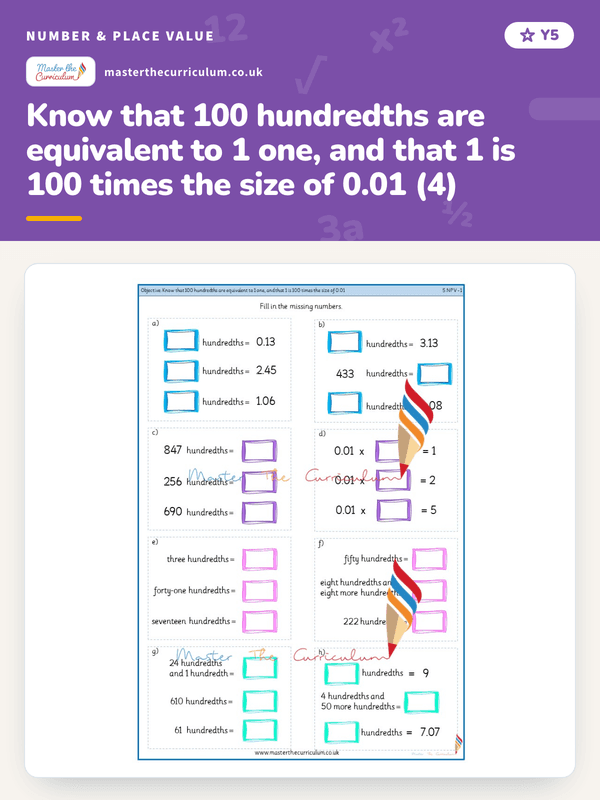
Know that 100 hundredths are equivalent to 1 one, and that 1 is 100 times the size of 0.01 (4)
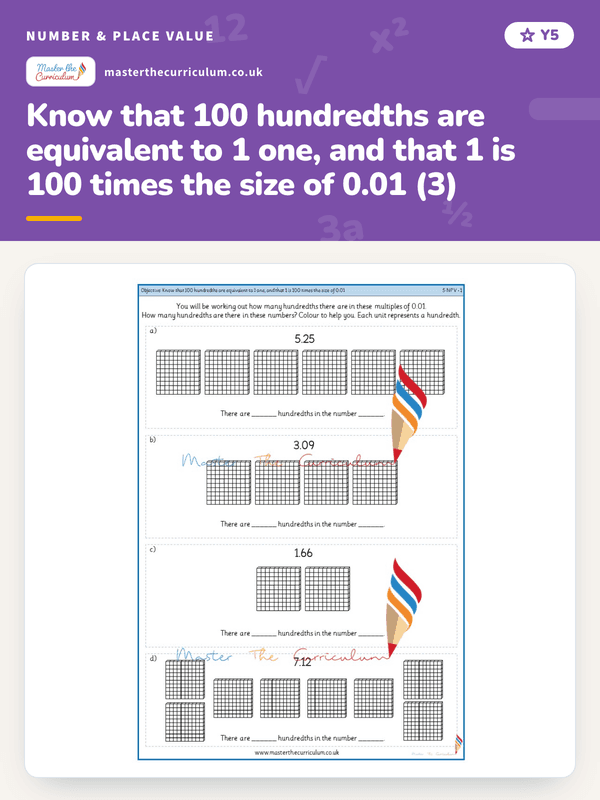
Know that 100 hundredths are equivalent to 1 one, and that 1 is 100 times the size of 0.01 (3)
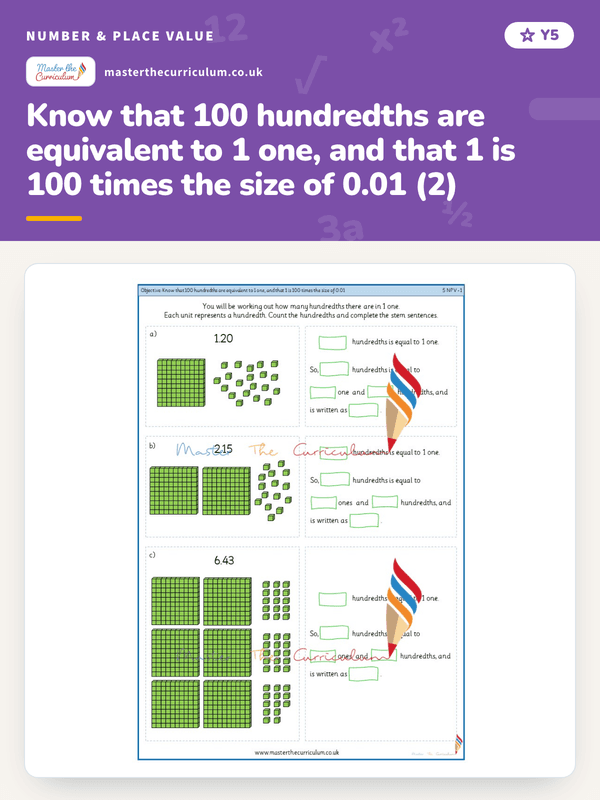
Know that 100 hundredths are equivalent to 1 one, and that 1 is 100 times the size of 0.01 (2)
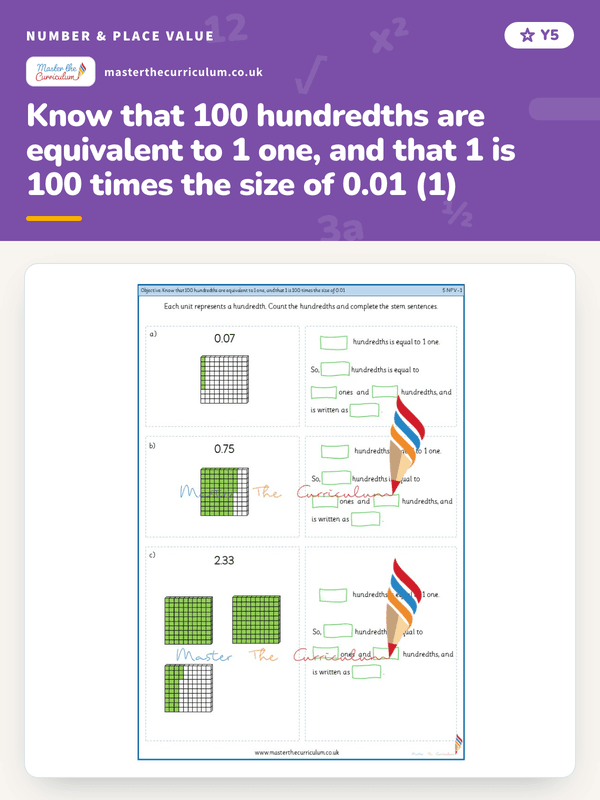
Know that 100 hundredths are equivalent to 1 one, and that 1 is 100 times the size of 0.01 (1)
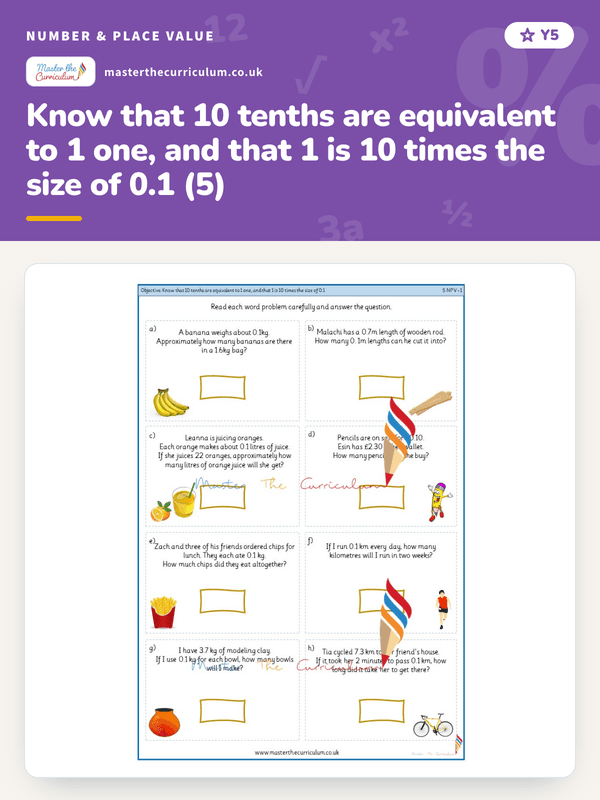
Know that 10 tenths are equivalent to 1 one, and that 1 is 10 times the size of 0.1 (5)
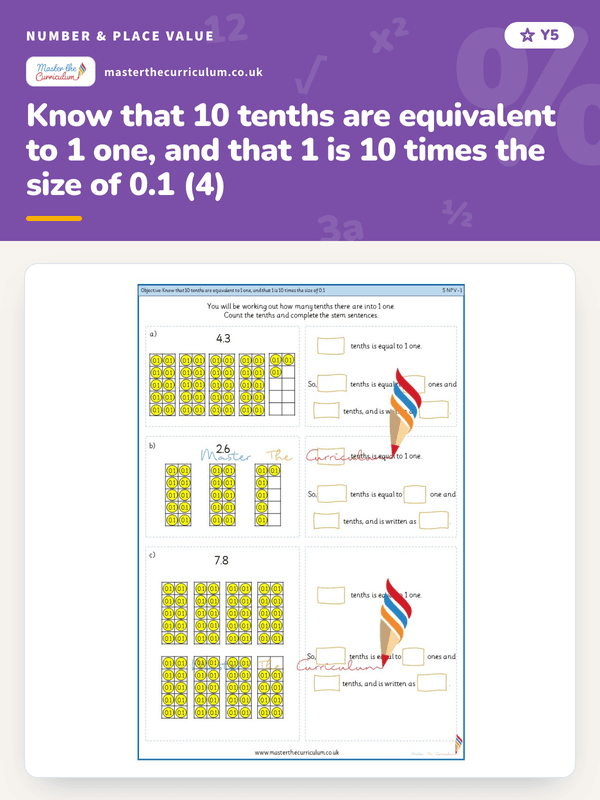
Know that 10 tenths are equivalent to 1 one, and that 1 is 10 times the size of 0.1 (4)
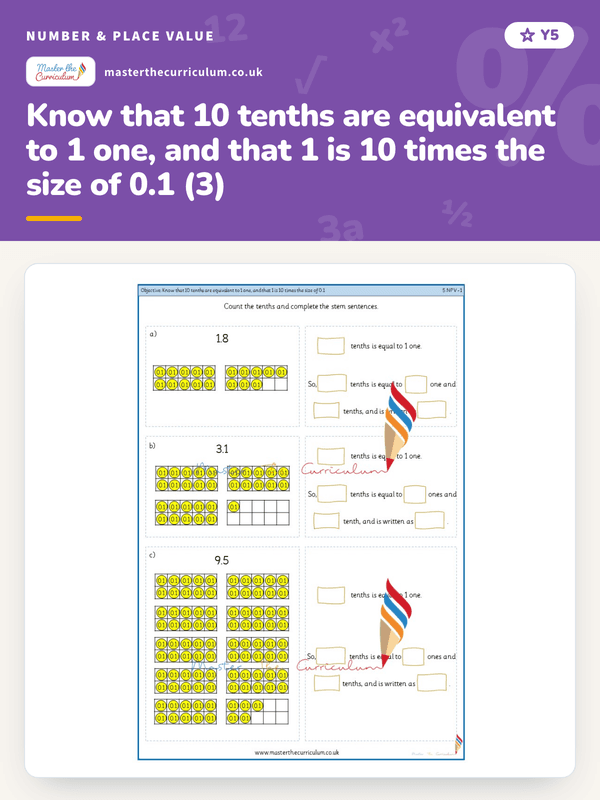
Know that 10 tenths are equivalent to 1 one, and that 1 is 10 times the size of 0.1 (3)
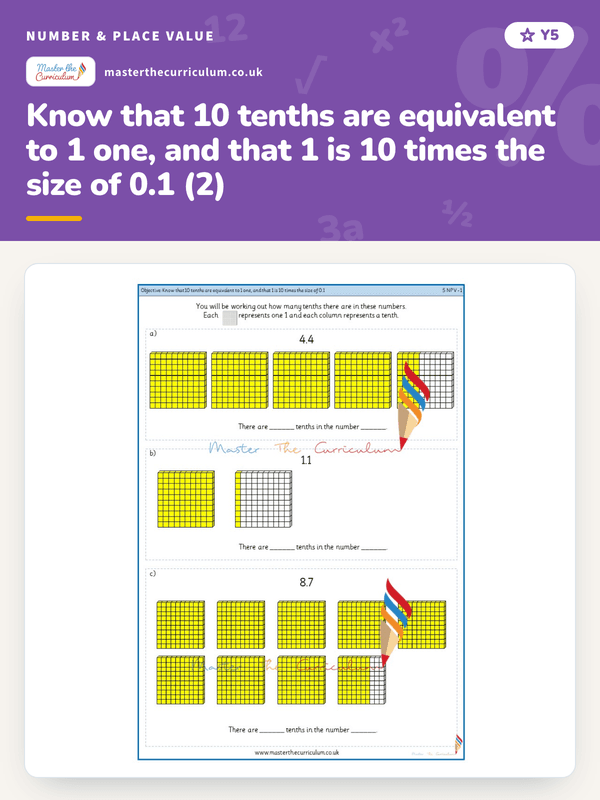
Know that 10 tenths are equivalent to 1 one, and that 1 is 10 times the size of 0.1 (2)
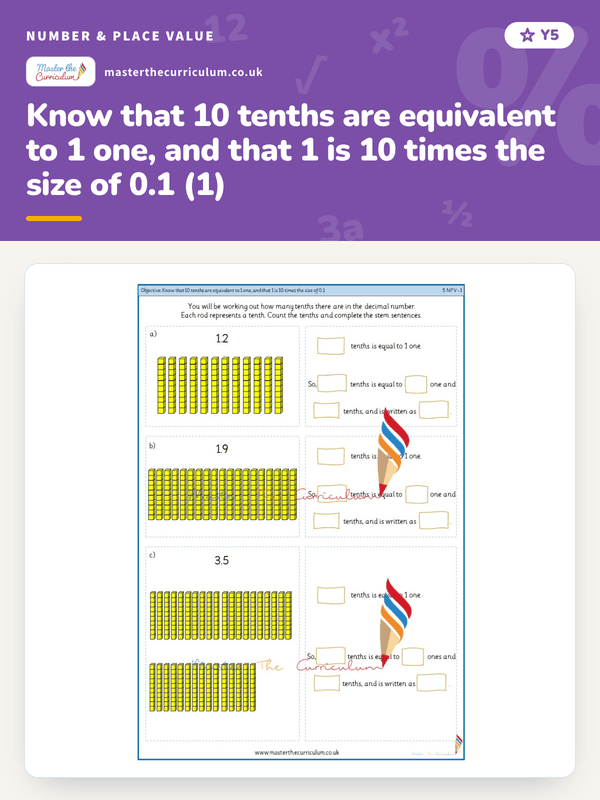
Know that 10 tenths are equivalent to 1 one, and that 1 is 10 times the size of 0.1 (1)
Showing 1 to 30 of 30 resources
