What are the Ready to Progress criteria?
The NCETM, the National Centre for Excellence in the Teaching of Mathematics, identified the key objectives children should meet by the end of each year. The criteria are the parts of the curriculum flagged as priority: get these secure and a child is ready for the next year group.
There are 384 resources filed against them across the whole primary range, 67 of them here.
Arriving from Year 4?
The Year 4 criteria are what a child should have secure before they start Year 5. There are 51 resources for checking.
Year 4 Ready to Progress →Number and Place Value
30 resources
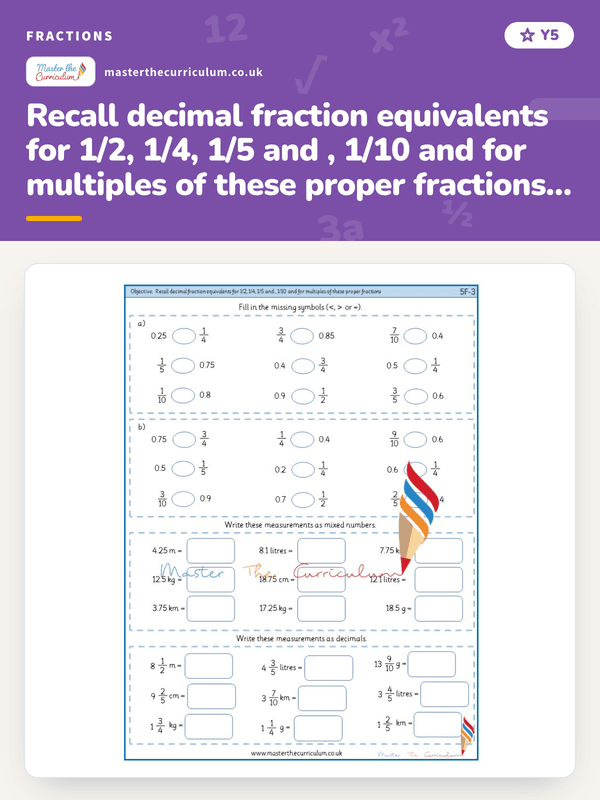
Convert between units of measure, including using common decimals and fractions (5)
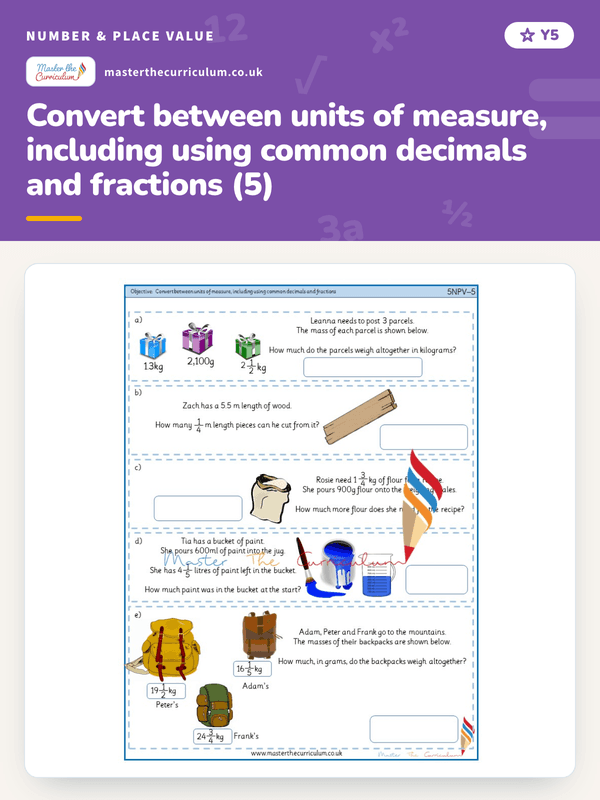
Convert between units of measure, including using common decimals and fractions (4)
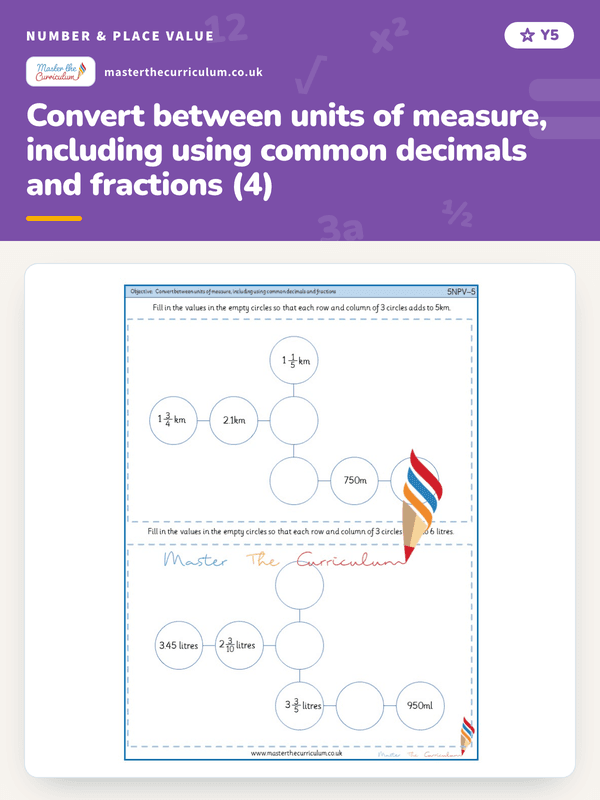
Convert between units of measure, including using common decimals and fractions (3)
Convert between units of measure, including using common decimals and fractions (2)

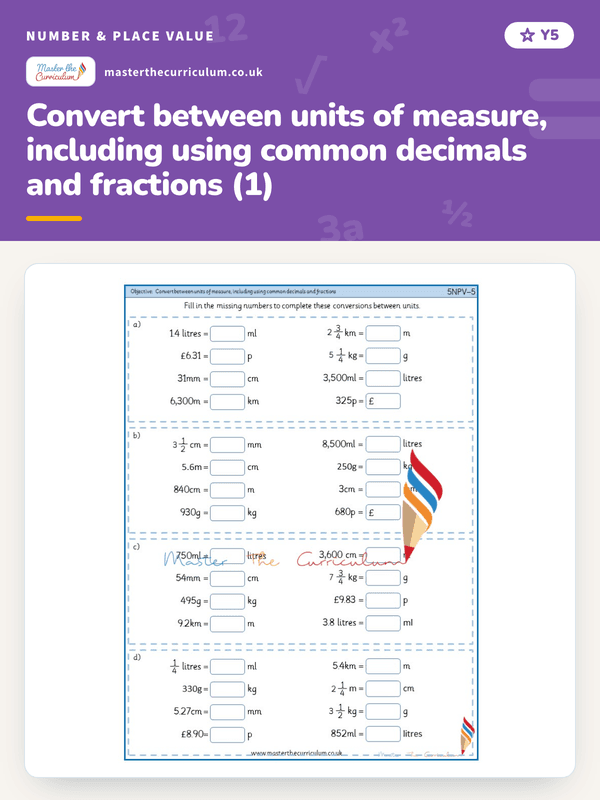
Convert between units of measure, including using common decimals and fractions (1)
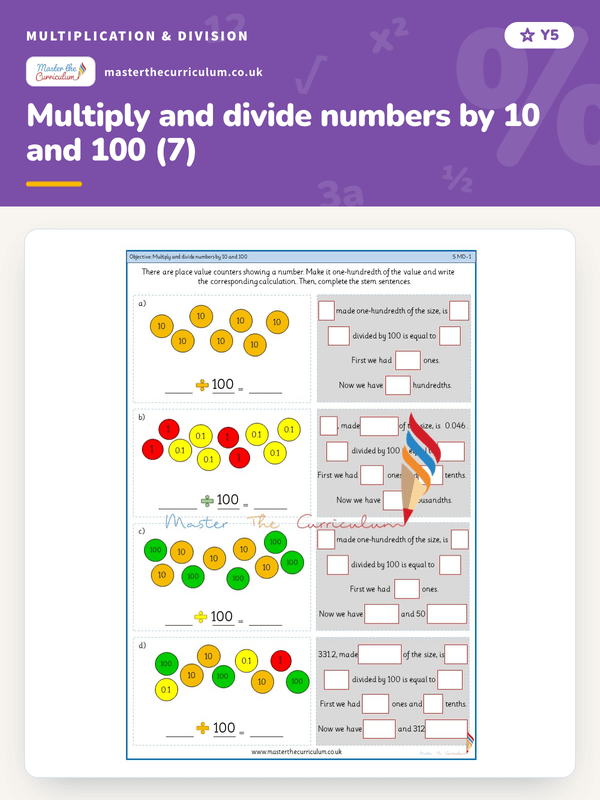
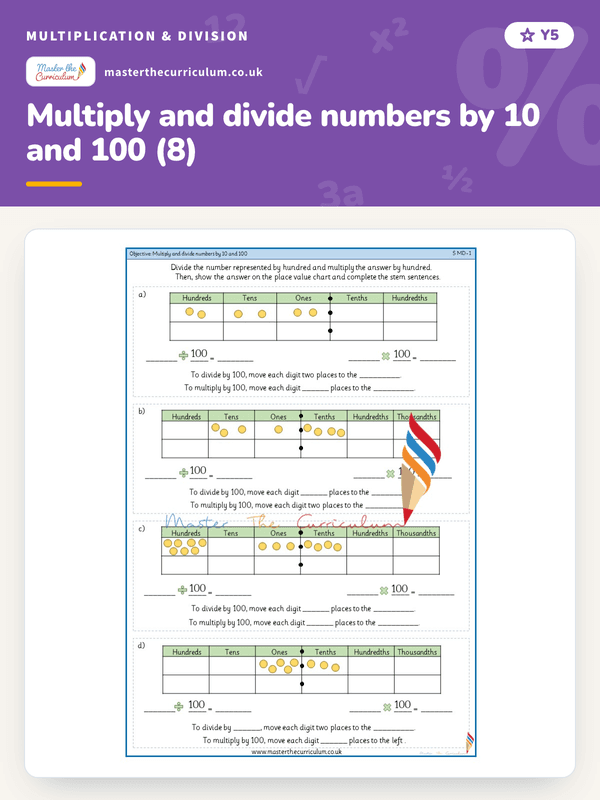
Apply place-value knowledge to known additive and multiplicative number facts (scaling facts by 1 tenth or 1 hundredth) (5)
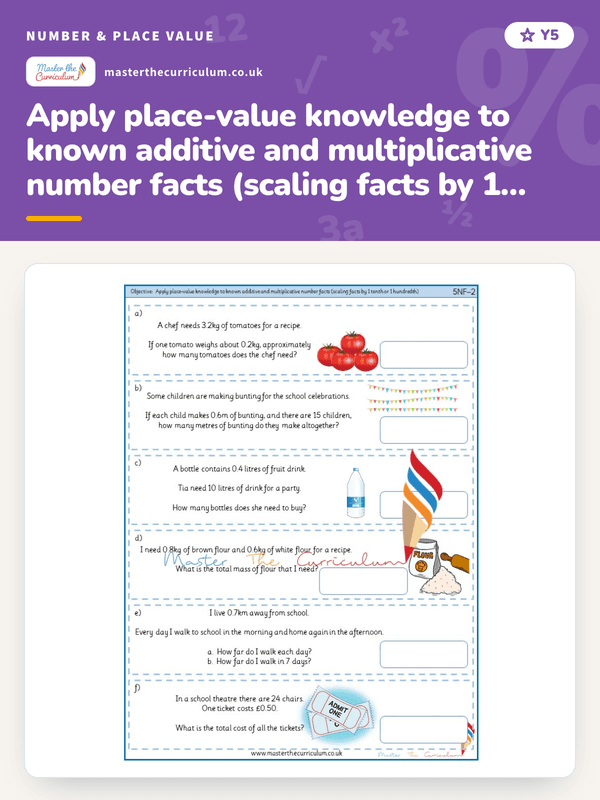
Apply place-value knowledge to known additive and multiplicative number facts (scaling facts by 1 tenth or 1 hundredth) (4)
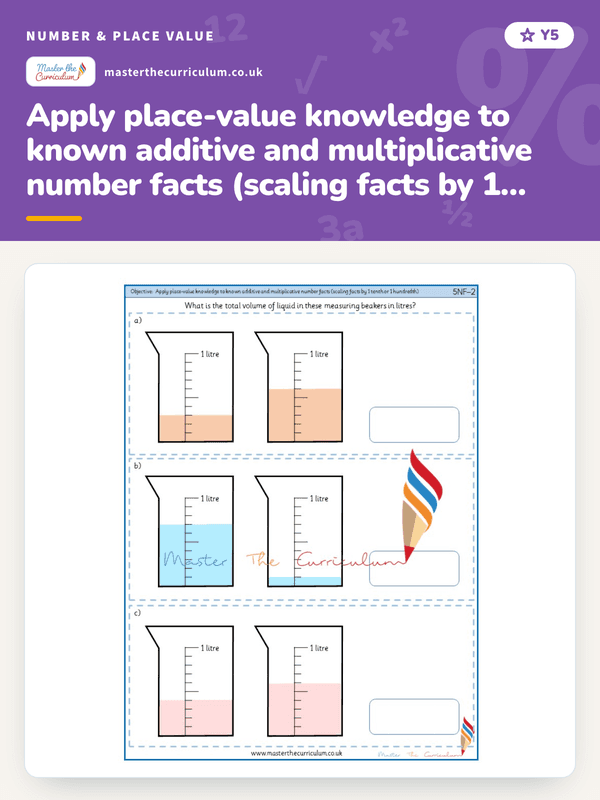
Apply place-value knowledge to known additive and multiplicative number facts (scaling facts by 1 tenth or 1 hundredth) (3)
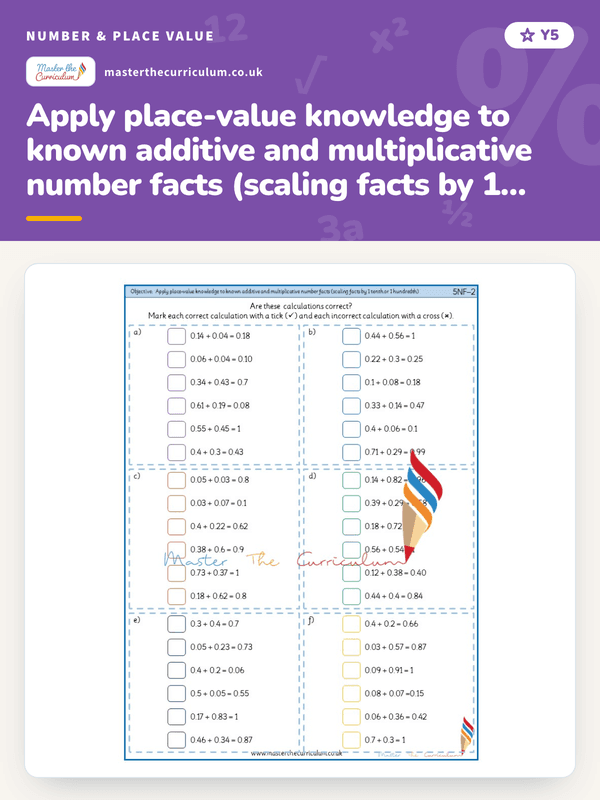
Apply place-value knowledge to known additive and multiplicative number facts (scaling facts by 1 tenth or 1 hundredth) (2)
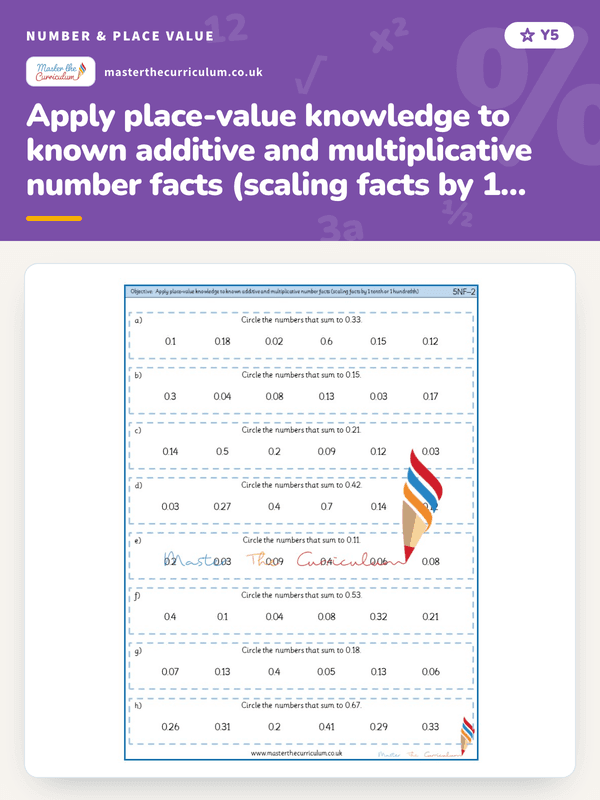
Apply place-value knowledge to known additive and multiplicative number facts (scaling facts by 1 tenth or 1 hundredth) (1)
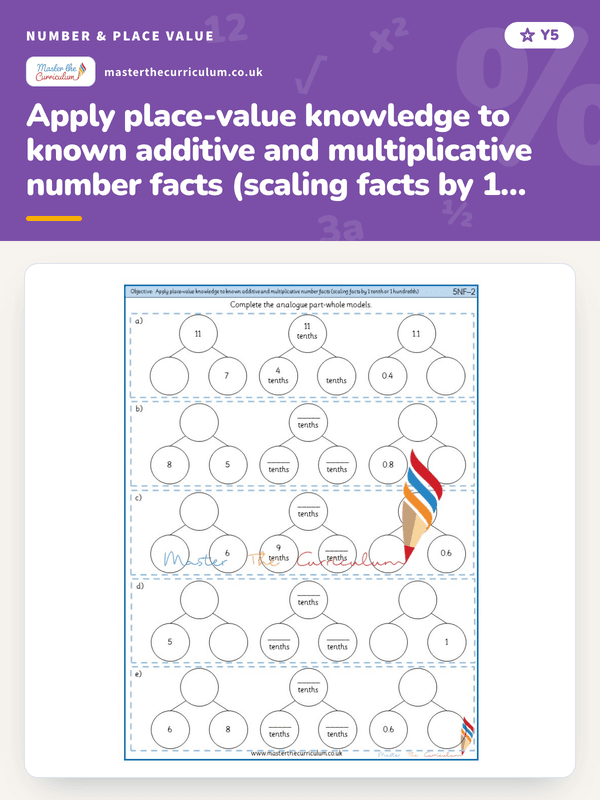
Reason about the location of any number with up to 2 decimal places in the linear number system (5)
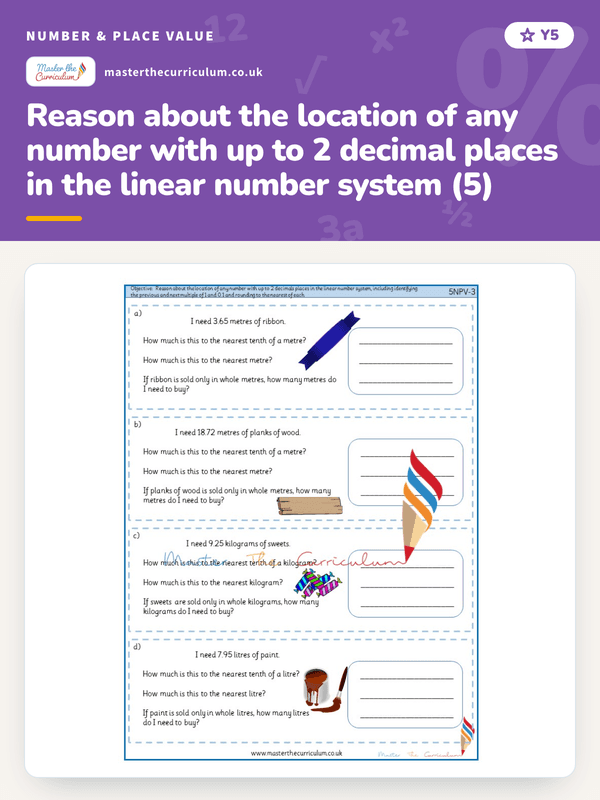
Reason about the location of any number with up to 2 decimal places in the linear number system (4)
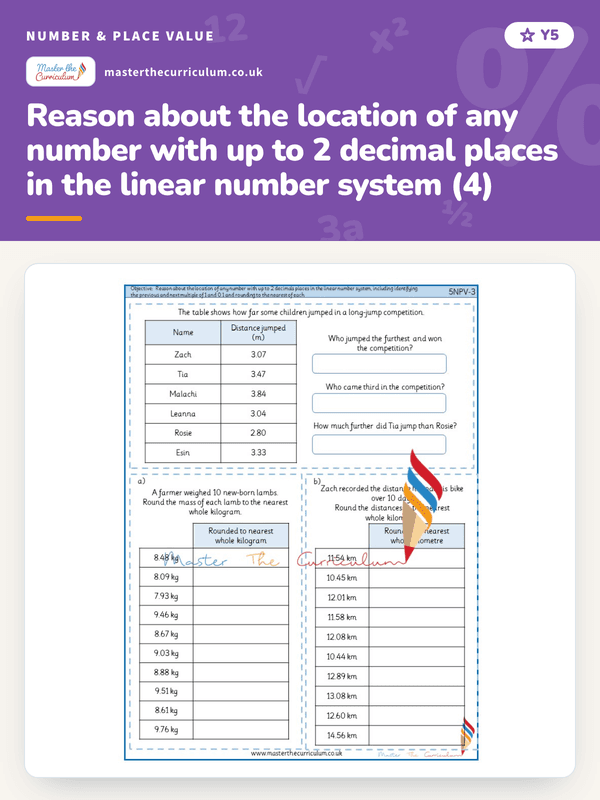
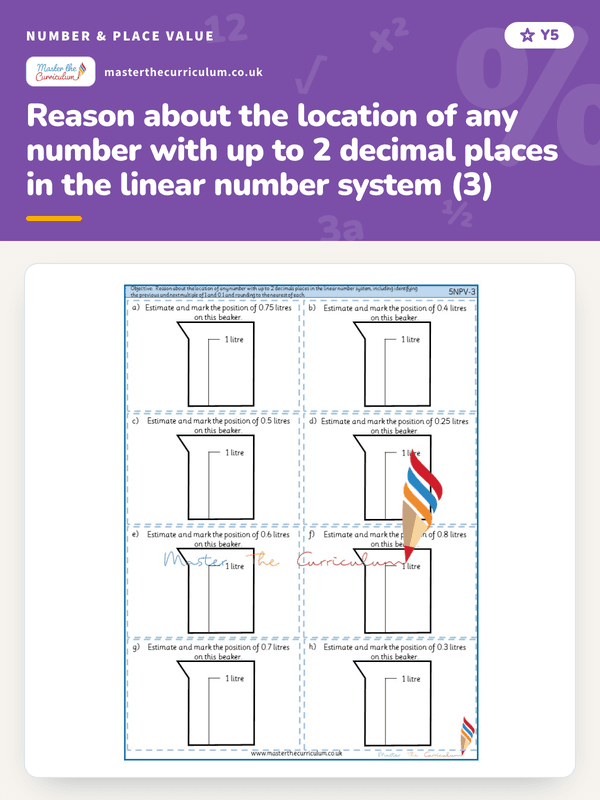
Reason about the location of any number with up to 2 decimal places in the linear number system (3)
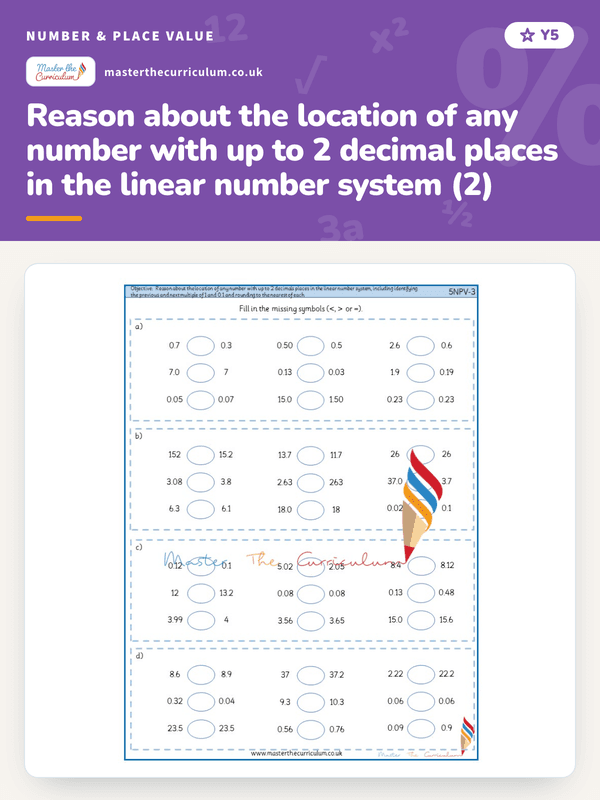
Reason about the location of any number with up to 2 decimal places in the linear number system (2)
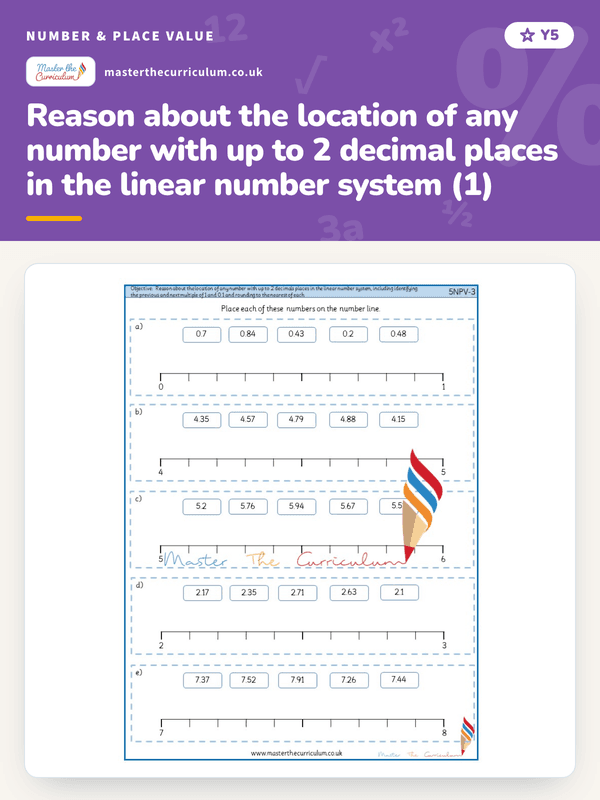
Reason about the location of any number with up to 2 decimal places in the linear number system (1)
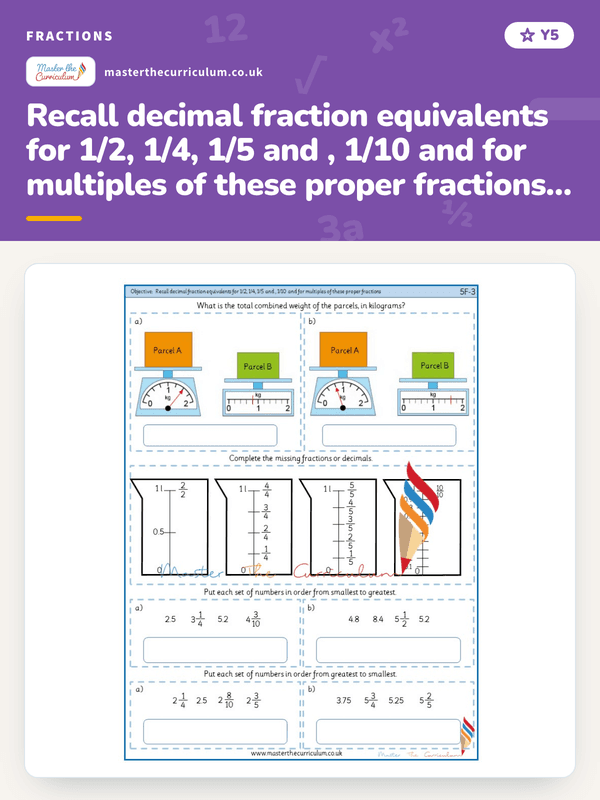
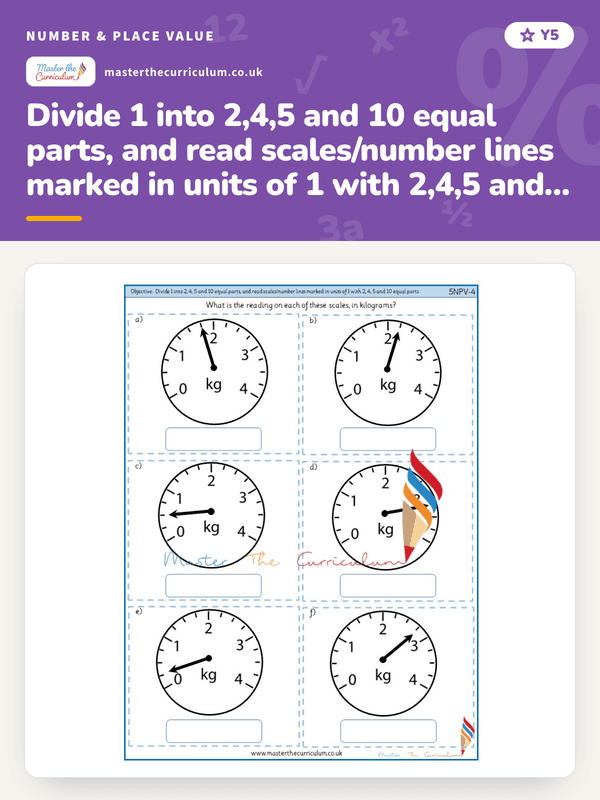
Divide 1 into 2,4,5 and 10 equal parts, and read scales/number lines marked in units of 1 with 2,4,5 and 10 equal parts (1)
Divide 1 into 2,4,5 and 10 equal parts, and read scales/number lines marked in units of 1 with 2,4,5 and 10 equal parts (2)
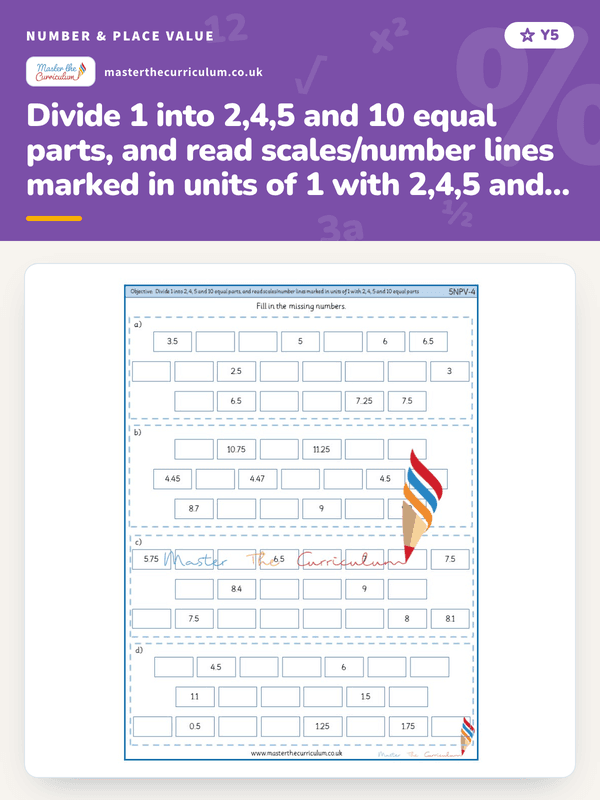
Divide 1 into 2,4,5 and 10 equal parts, and read scales/number lines marked in units of 1 with 2,4,5 and 10 equal parts (3)
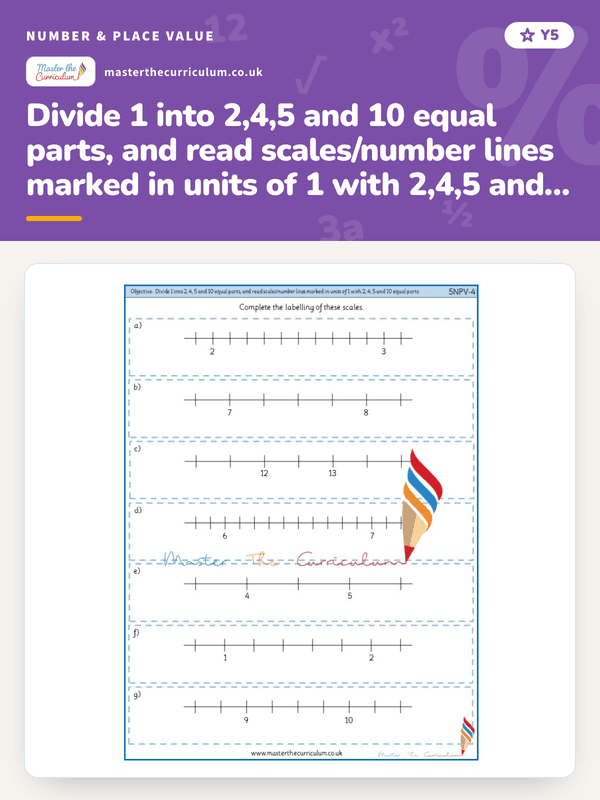
Divide 1 into 2,4,5 and 10 equal parts, and read scales/number lines marked in units of 1 with 2,4,5 and 10 equal parts (4)
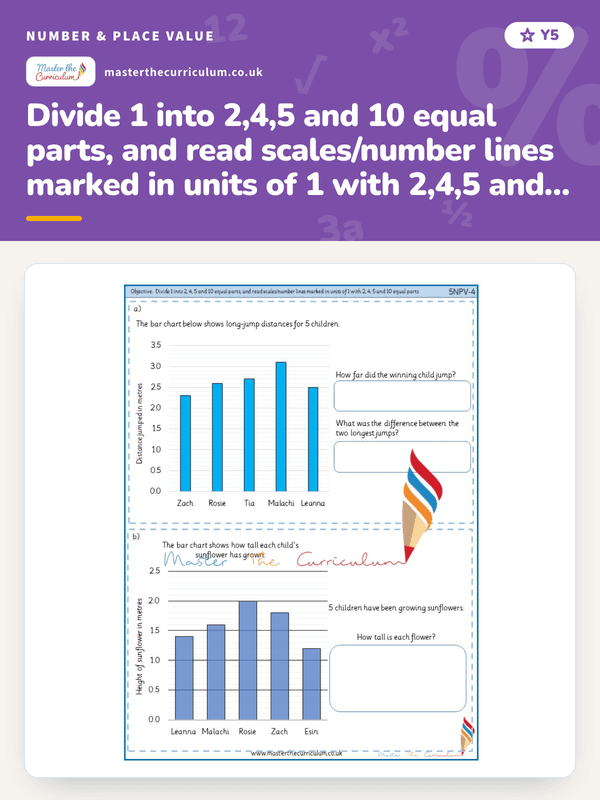
Divide 1 into 2,4,5 and 10 equal parts, and read scales/number lines marked in units of 1 with 2,4,5 and 10 equal parts (5)
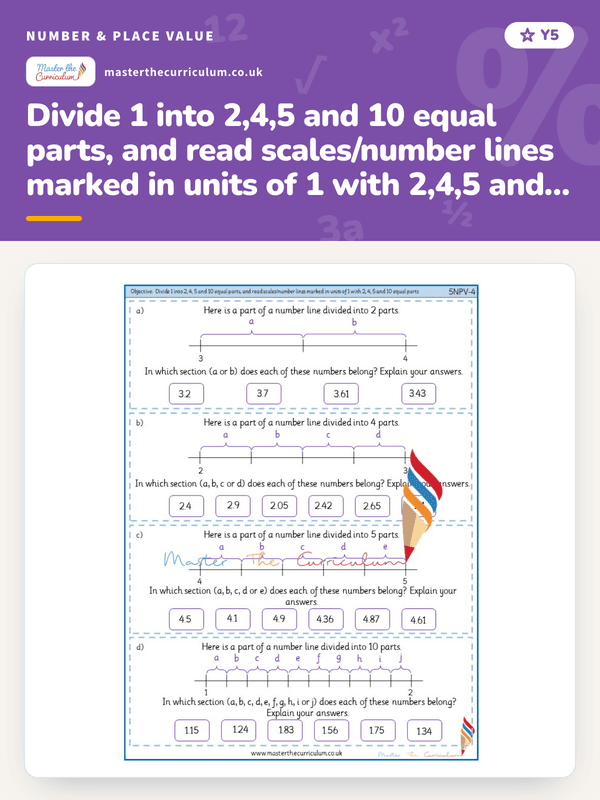
Know that 100 hundredths are equivalent to 1 one, and that 1 is 100 times the size of 0.01 (5)
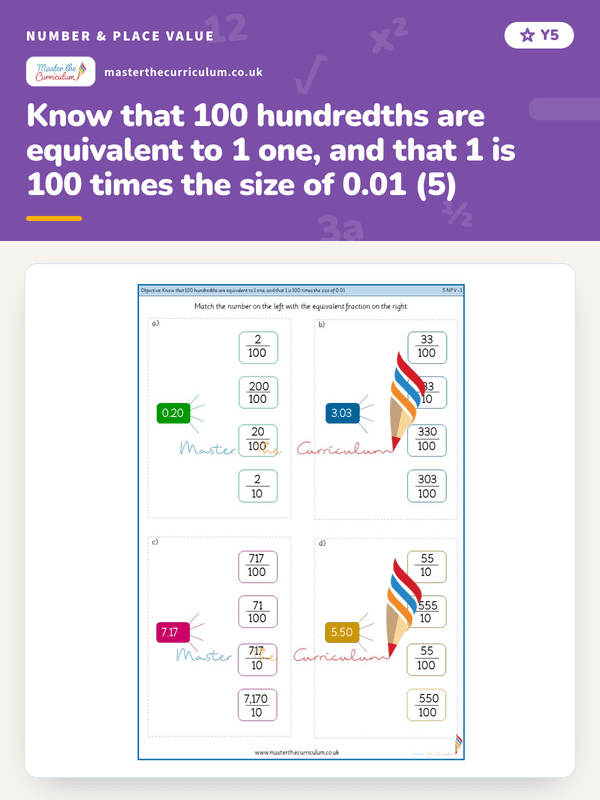
Know that 100 hundredths are equivalent to 1 one, and that 1 is 100 times the size of 0.01 (4)
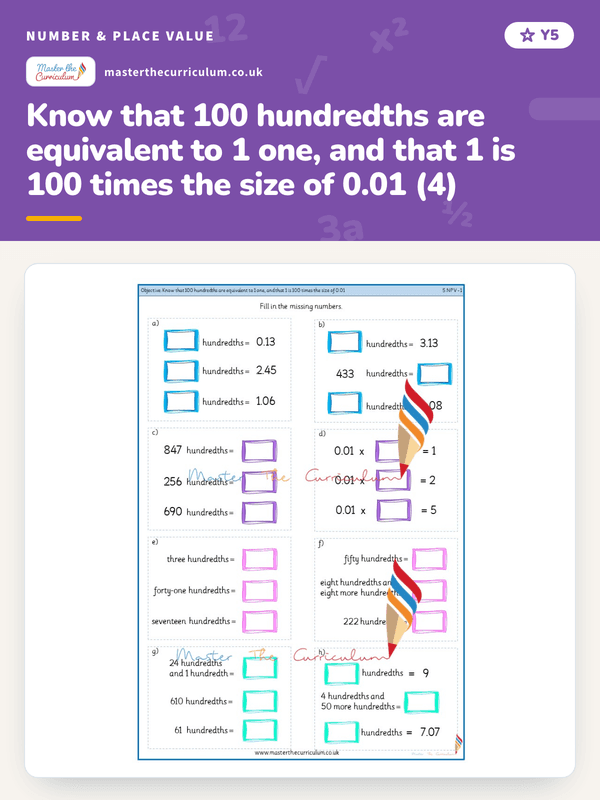
Know that 100 hundredths are equivalent to 1 one, and that 1 is 100 times the size of 0.01 (3)
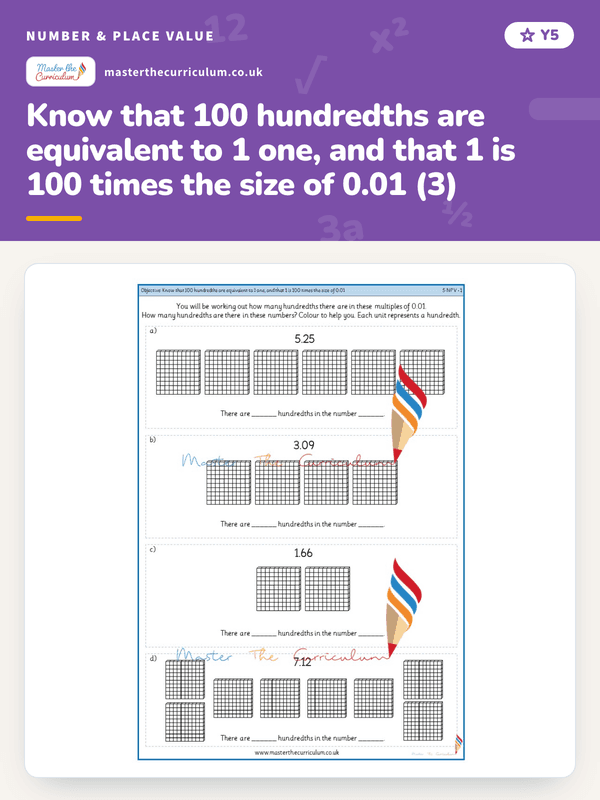
Know that 100 hundredths are equivalent to 1 one, and that 1 is 100 times the size of 0.01 (2)
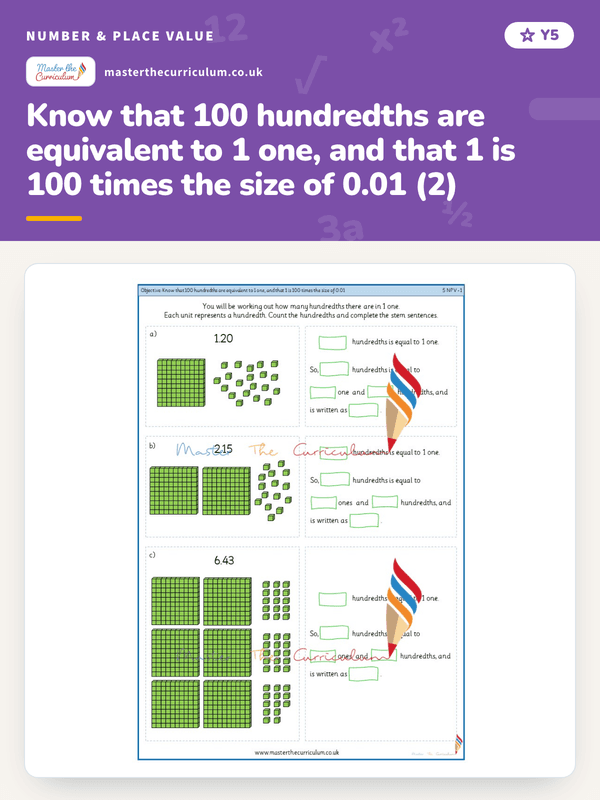
Know that 100 hundredths are equivalent to 1 one, and that 1 is 100 times the size of 0.01 (1)
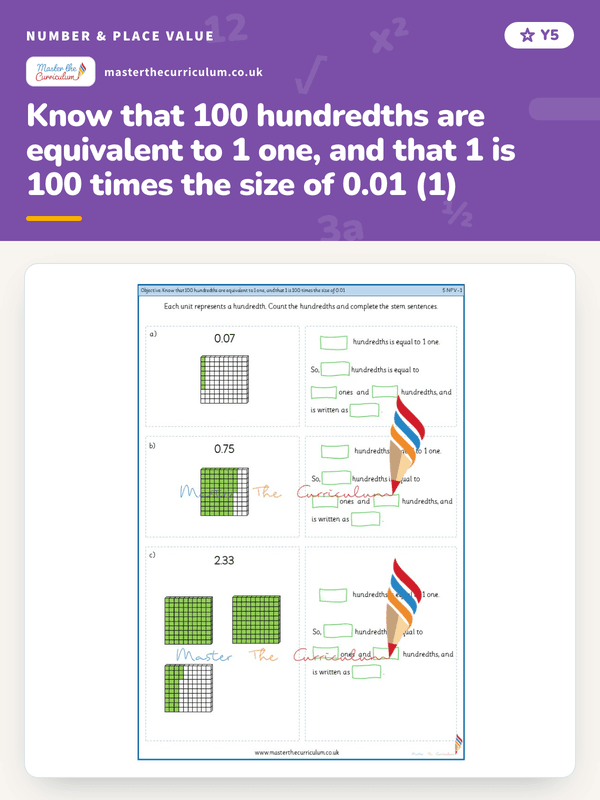
Know that 10 tenths are equivalent to 1 one, and that 1 is 10 times the size of 0.1 (5)
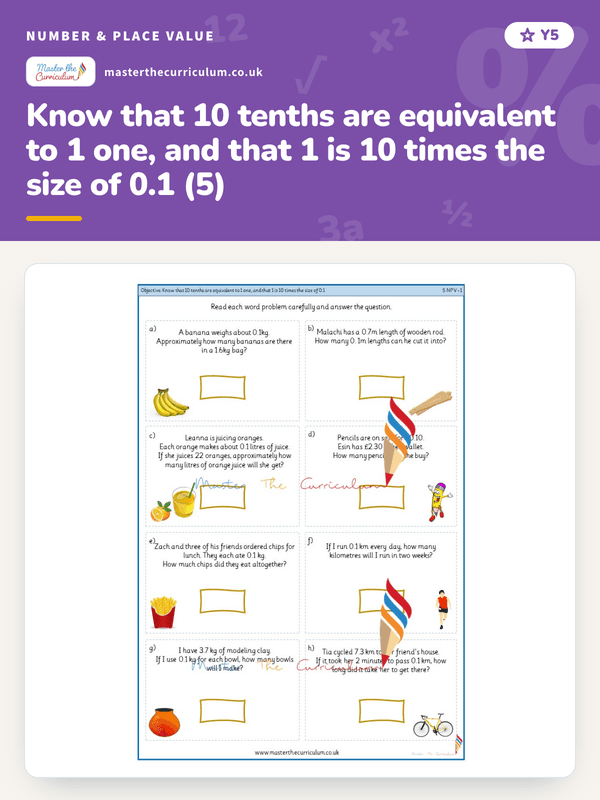
Know that 10 tenths are equivalent to 1 one, and that 1 is 10 times the size of 0.1 (4)
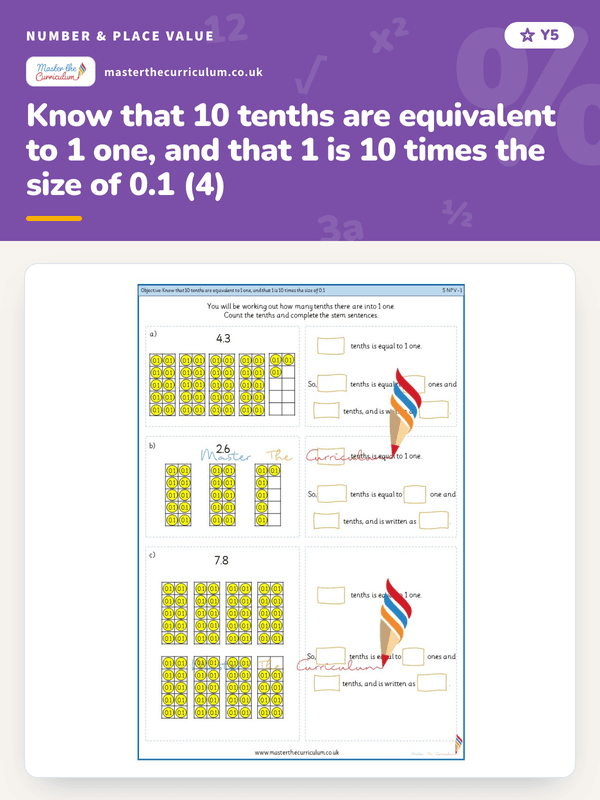
Know that 10 tenths are equivalent to 1 one, and that 1 is 10 times the size of 0.1 (3)
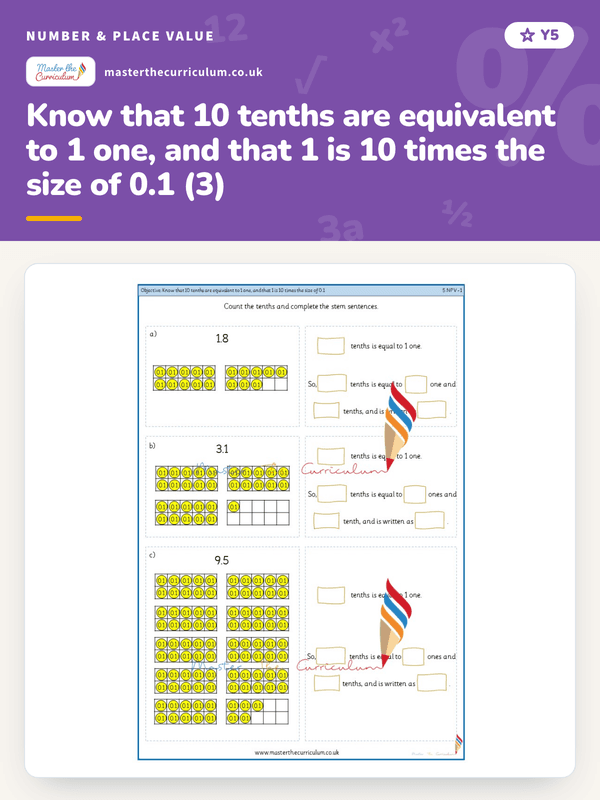
Know that 10 tenths are equivalent to 1 one, and that 1 is 10 times the size of 0.1 (2)
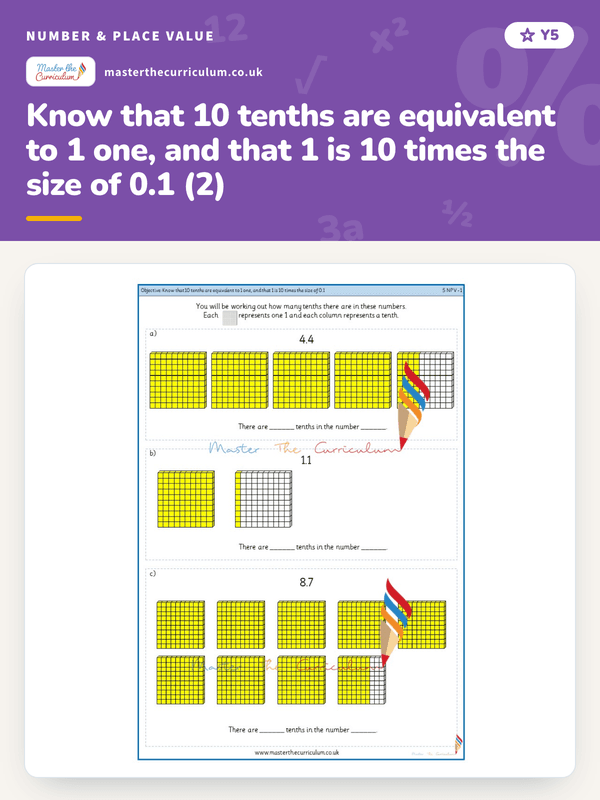
Know that 10 tenths are equivalent to 1 one, and that 1 is 10 times the size of 0.1 (1)
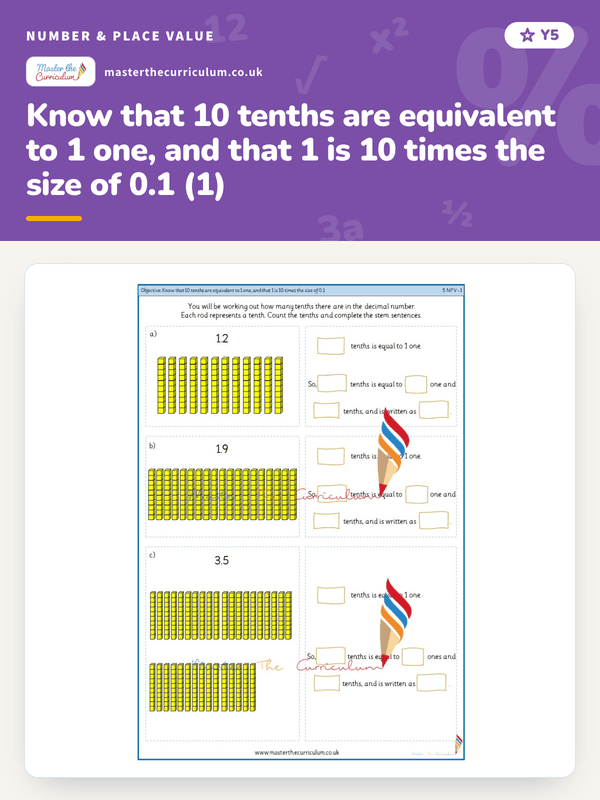
Secure Fluency in Multiplication Table Facts and Corresponding Division Facts, Through Continued Practice (10)

Secure Fluency in Multiplication Table Facts and Corresponding Division Facts, Through Continued Practice (9)

Secure Fluency in Multiplication Table Facts and Corresponding Division Facts, Through Continued Practice (8)

Secure Fluency in Multiplication Table Facts and Corresponding Division Facts, Through Continued Practice (7)

Secure fluency in multiplication table facts, and corresponding division facts through continued practice (6)
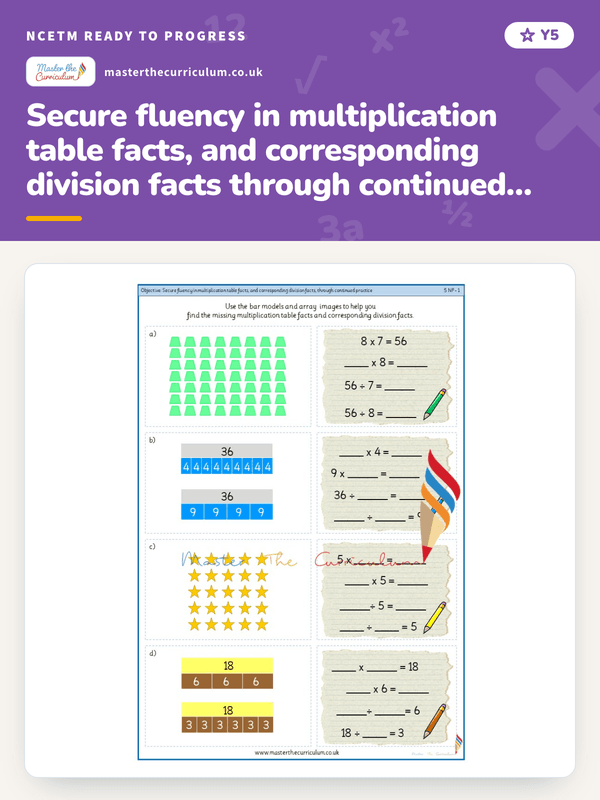
Secure fluency in multiplication table facts, and corresponding division facts through continued practice (5)
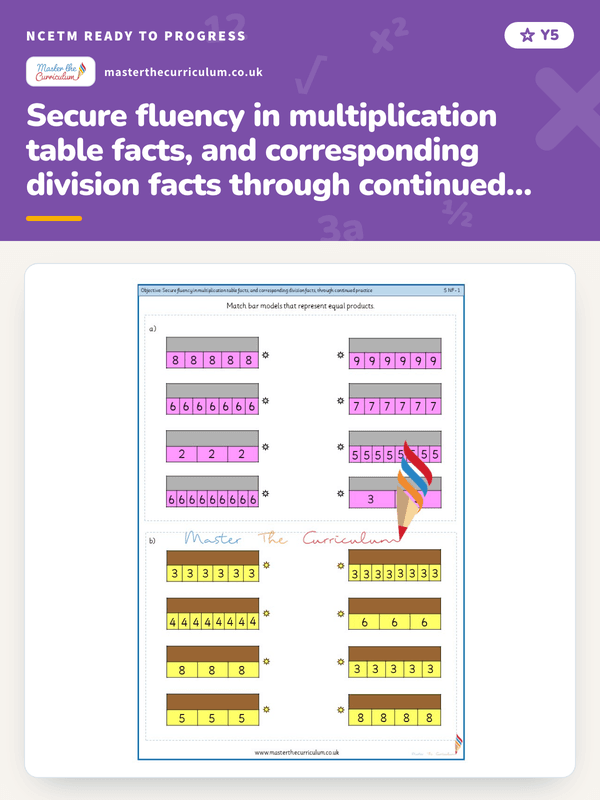
Secure fluency in multiplication table facts, and corresponding division facts through continued practice (4)
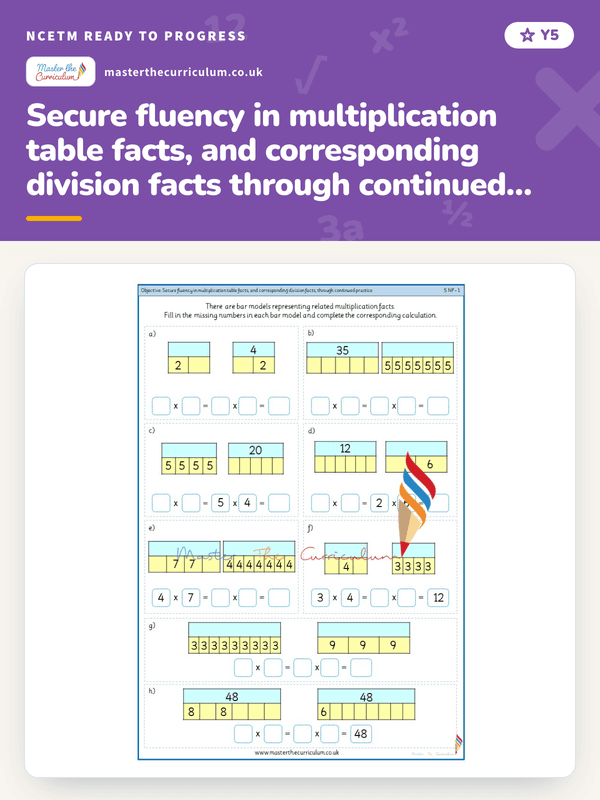
Secure fluency in multiplication table facts, and corresponding division facts through continued practice (3)
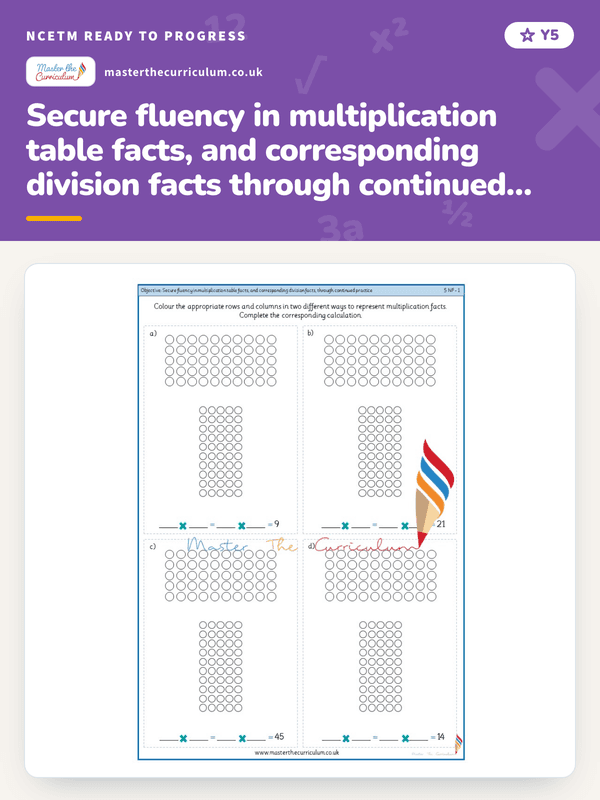
Secure fluency in multiplication table facts, and corresponding division facts through continued practice (2)
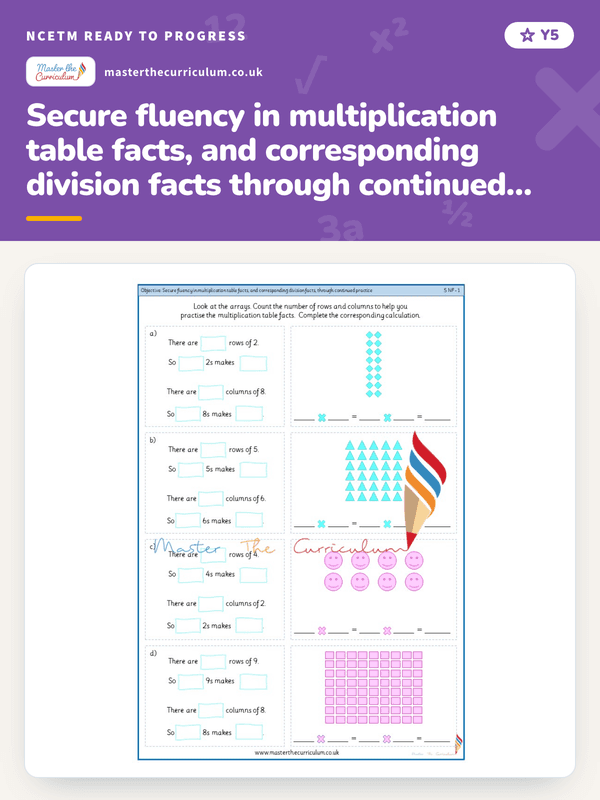
Secure fluency in multiplication table facts, and corresponding division facts through (1)
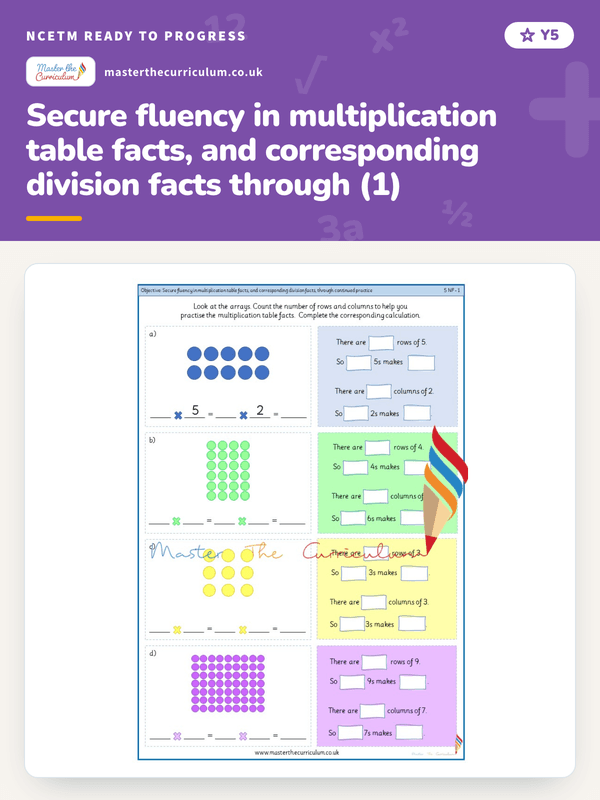
Multiplication and Division
8 resources
Next in the sequence: Year 6 Ready to Progress (56)