“Number 1”
2,938 resources · matched on the words you typed
Narrow it
More ways to narrow▾
Year 3 Maths Number and Place Value Recognise the place value of each digit in a three-digit number – 6

Year 3 Maths Number and Place Value Recognise the place value of each digit in a three-digit number – 7

Identify and represent numbers using objects and pictorial representations including the number line, and use the language of equal to, more than, less than (fewer), most, least – year 1 reasoning

Count in Steps (1) of 2, 3, and 5 From 0, and in Tens From Any Number, Forward and Backward.

Count in Steps (2) of 2, 3, and 5 From 0, and in Tens From Any Number, Forward and Backward.

Count in Steps (3) of 2, 3, and 5 From 0, and in Tens From Any Number, Forward and Backward.

Count in Steps (4) of 2, 3, and 5 From 0, and in Tens From Any Number, Forward and Backward.

Count in Steps (5) of 2, 3, and 5 From 0, and in Tens From Any Number, Forward and Backward.

Count in steps of 2, 3, and 5 from 0, and in tens from any number, forward and backward – year 2 reasoning

Partition a two-digit number into tens and ones to demonstrate an understanding of place value, though they may use structured resources to support them – 1

Partition a two-digit number into tens and ones to demonstrate an understanding of place value, though they may use structured resources to support them – 2

Partition a two-digit number into tens and ones to demonstrate an understanding of place value, though they may use structured resources to support them – 3

Partition any two-digit number into different combinations of tens and ones, explaining their thinking verbally, in pictures or using apparatus – 1

Partition any two-digit number into different combinations of tens and ones, explaining their thinking verbally, in pictures or using apparatus – 2

Partition any two-digit number into different combinations of tens and ones, explaining their thinking verbally, in pictures or using apparatus – 3

Year 3: Identify the previous and next multiple of 100 or 10 a given three-digit number is between (3)

Divide 1,000 into 2,4,5 and 10 equal parts, and read scales/number lines marked in multiples of 1,000 with 2,4,5 and 10 equal parts (1)
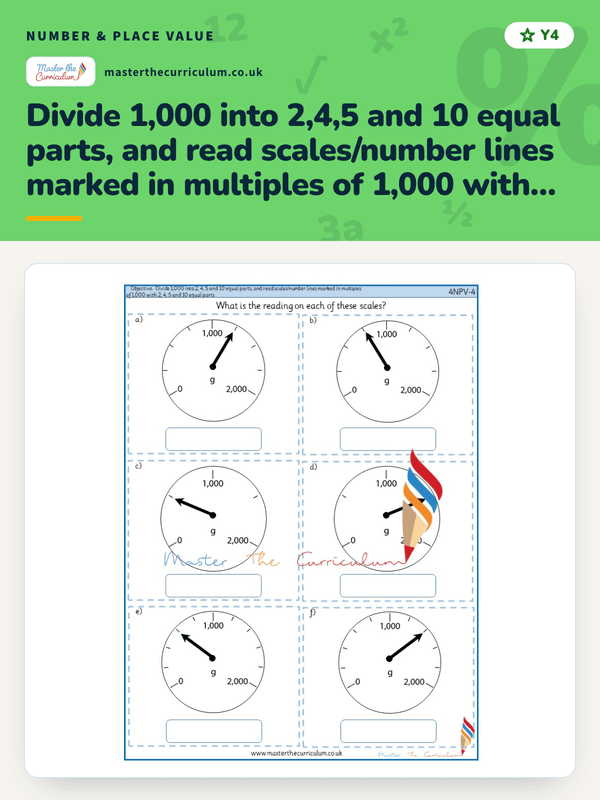
Divide 1,000 into 2,4,5 and 10 equal parts, and read scales/number lines marked in multiples of 1,000 with 2,4,5 and 10 equal parts (2)
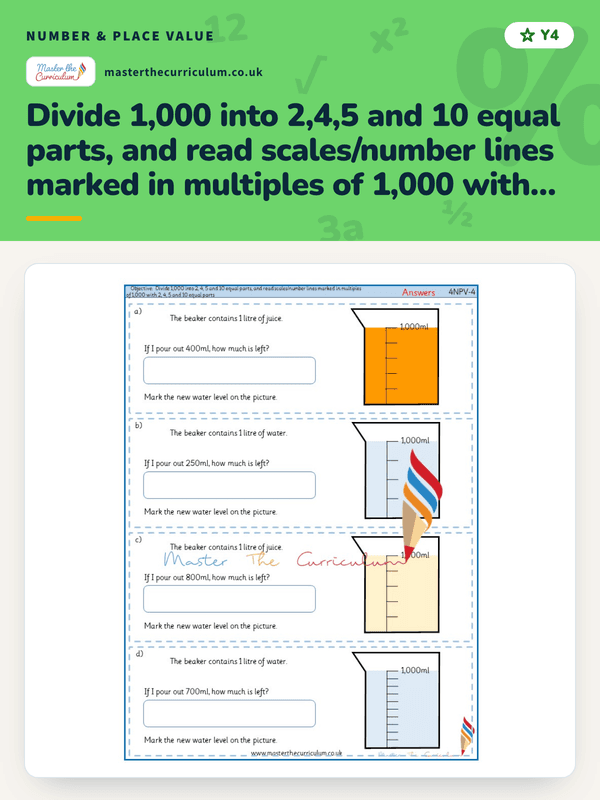
Divide 1,000 into 2,4,5 and 10 equal parts, and read scales/number lines marked in multiples of 1,000 with 2,4,5 and 10 equal parts (3)
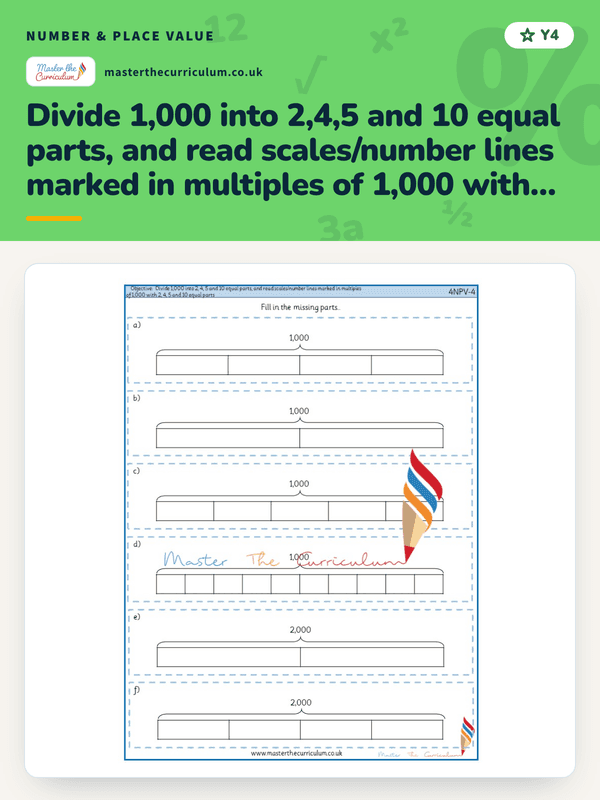
Divide 1,000 into 2,4,5 and 10 equal parts, and read scales/number lines marked in multiples of 1,000 with 2,4,5 and 10 equal parts (4)
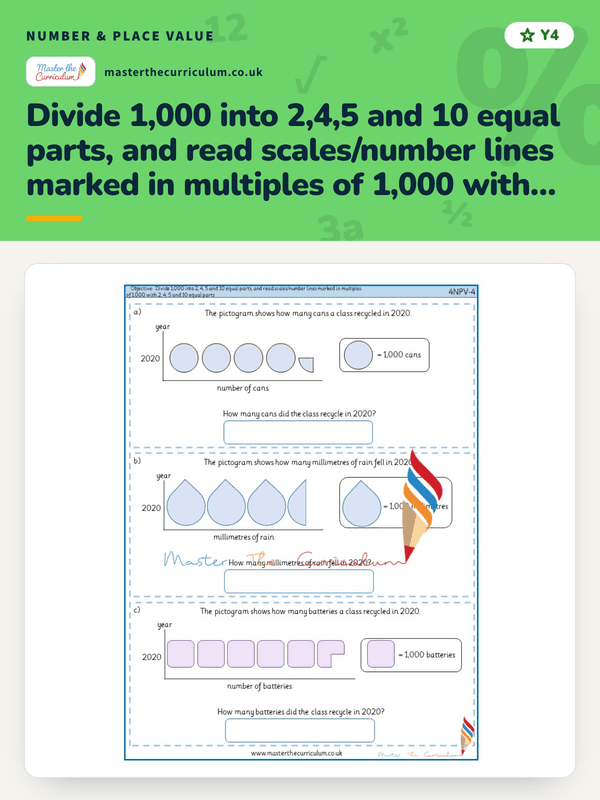
Divide 1,000 into 2,4,5 and 10 equal parts, and read scales/number lines marked in multiples of 1,000 with 2,4,5 and 10 equal parts (5)
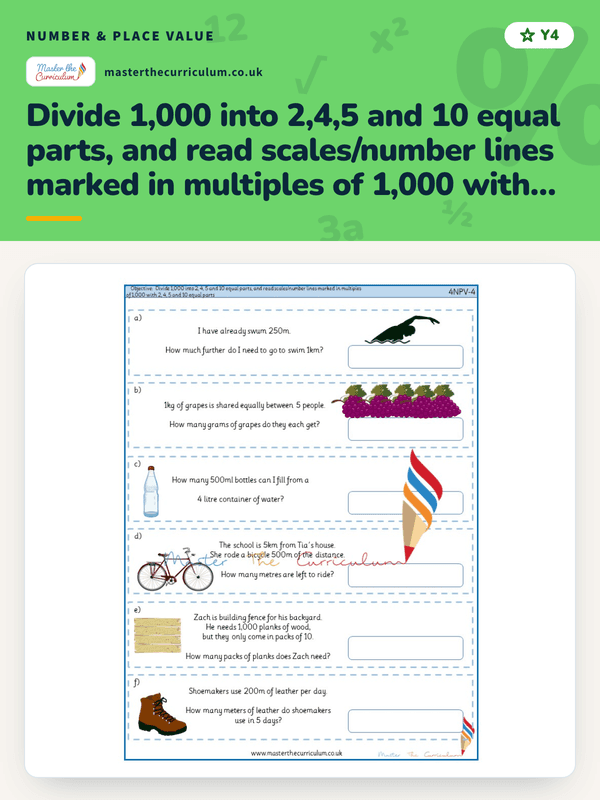
Reason about the location of any four-digit number in the linear number system, including identifying the previous and next multiple of 1,000 and 100, and rounding to the nearest of each (1)
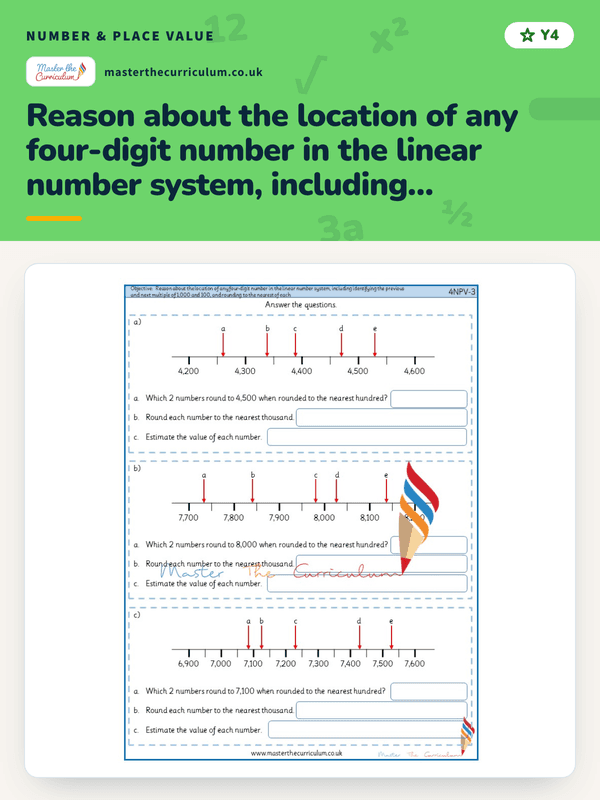
Reason about the location of any four-digit number in the linear number system, including identifying the previous and next multiple of 1,000 and 100, and rounding to the nearest of each (2)
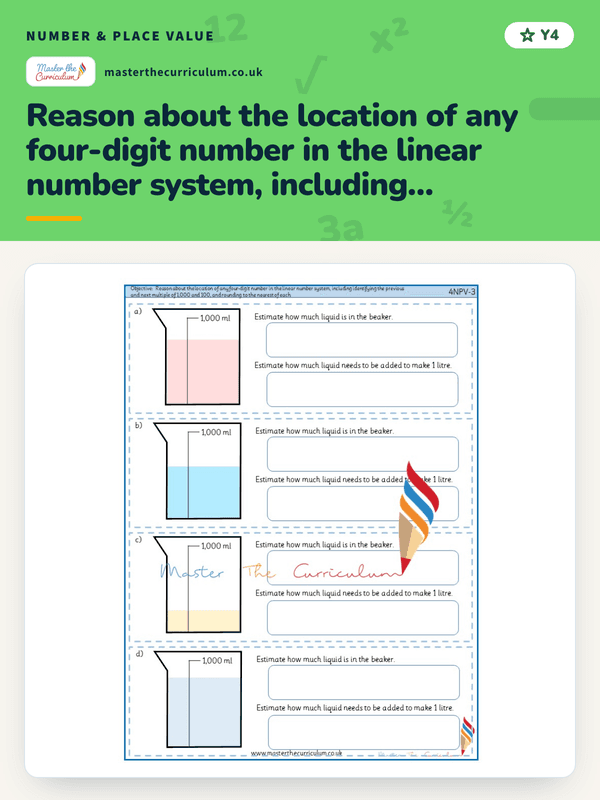
Reason about the location of any four-digit number in the linear number system, including identifying the previous and next multiple of 1,000 and 100, and rounding to the nearest of each (3)
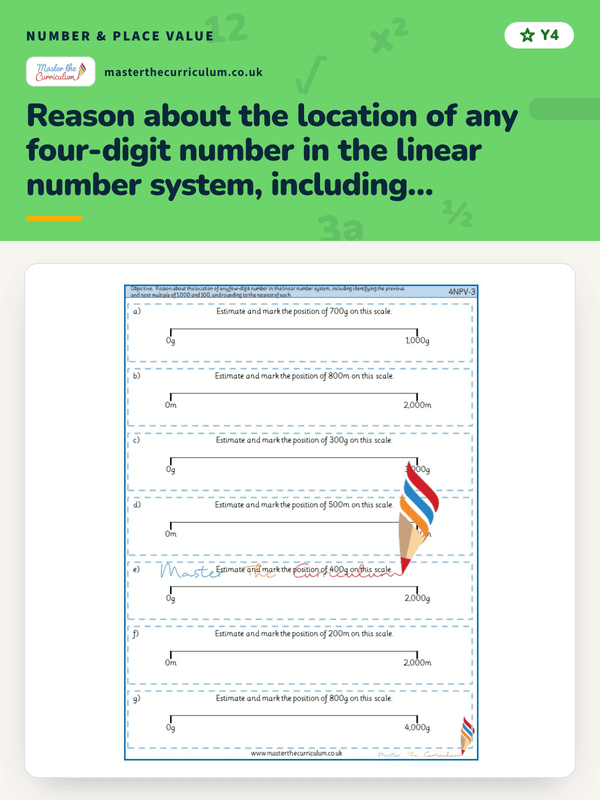
Reason about the location of any four-digit number in the linear number system, including identifying the previous and next multiple of 1,000 and 100, and rounding to the nearest of each (4)
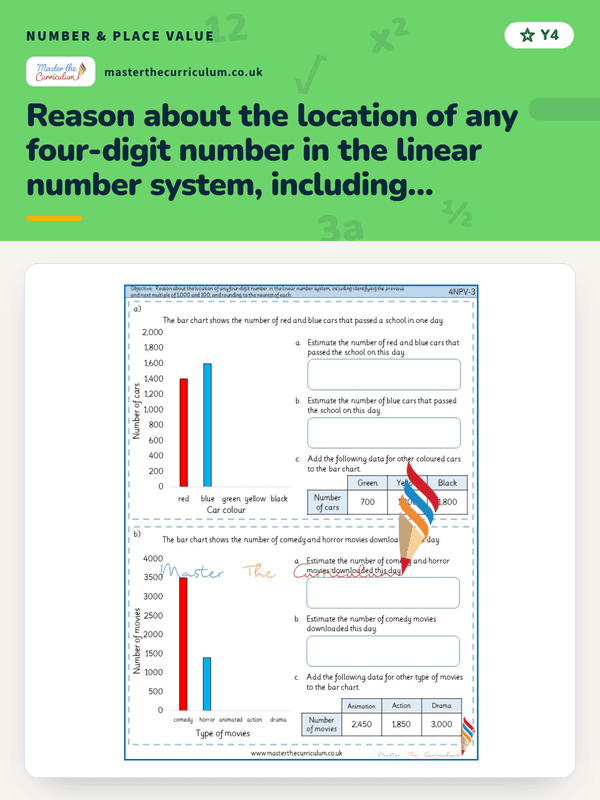
Reason about the location of any four-digit number in the linear number system, including identifying the previous and next multiple of 1,000 and 100, and rounding to the nearest of each (5)
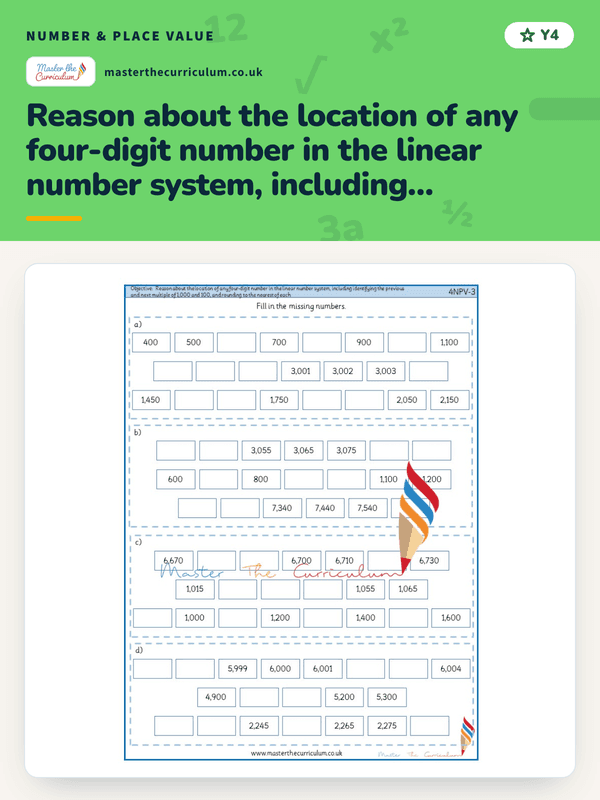
Apply place-value knowledge to known additive and multiplicative number facts (scaling facts by 1 tenth or 1 hundredth) (1)
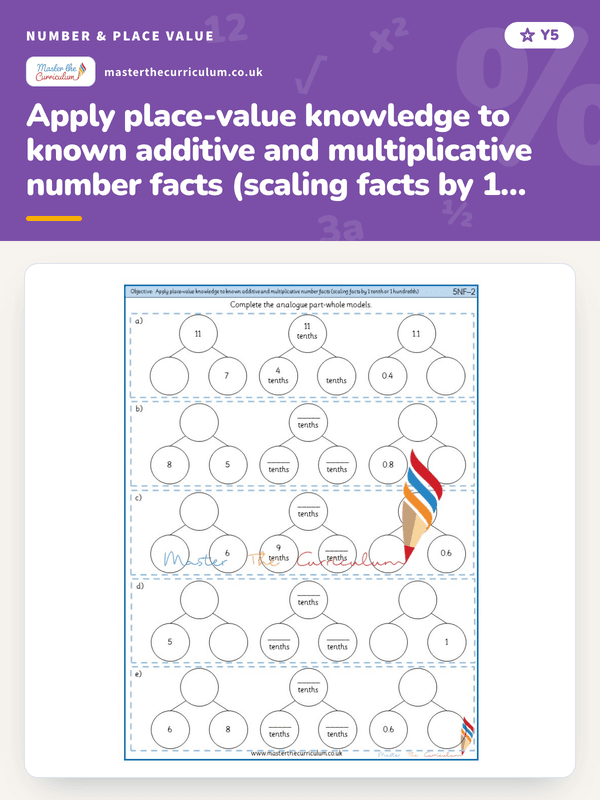
Apply place-value knowledge to known additive and multiplicative number facts (scaling facts by 1 tenth or 1 hundredth) (2)
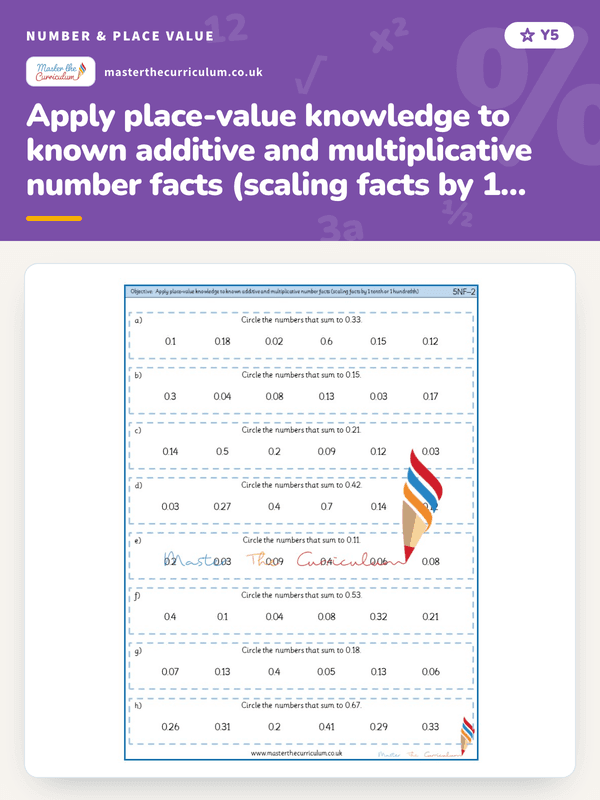
Apply place-value knowledge to known additive and multiplicative number facts (scaling facts by 1 tenth or 1 hundredth) (3)
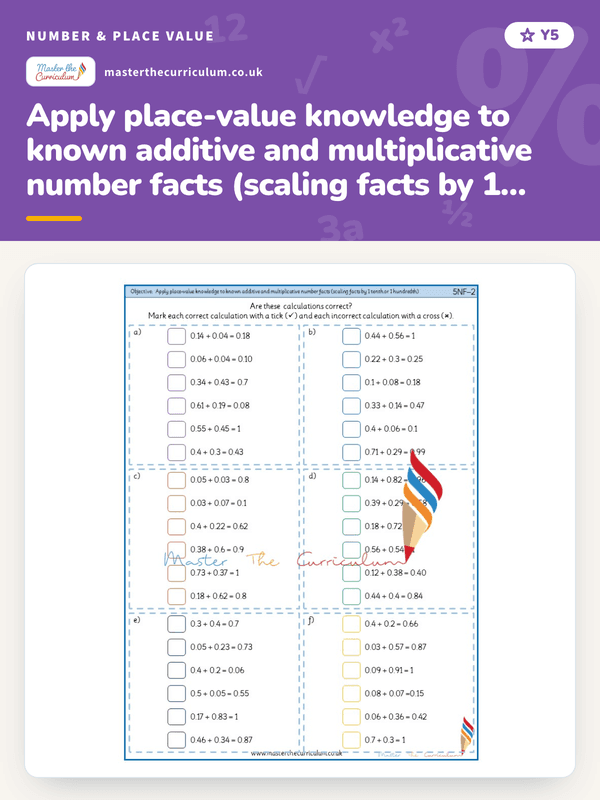
Apply place-value knowledge to known additive and multiplicative number facts (scaling facts by 1 tenth or 1 hundredth) (4)
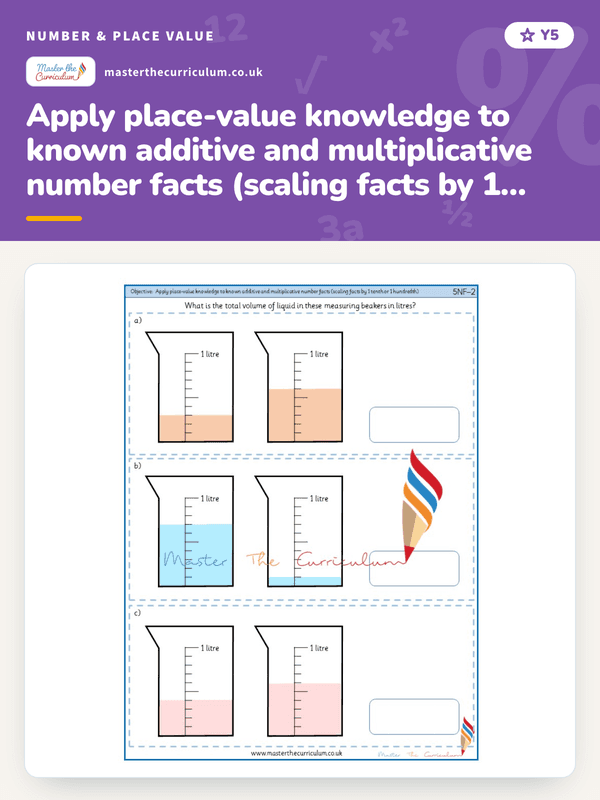
Apply place-value knowledge to known additive and multiplicative number facts (scaling facts by 1 tenth or 1 hundredth) (5)
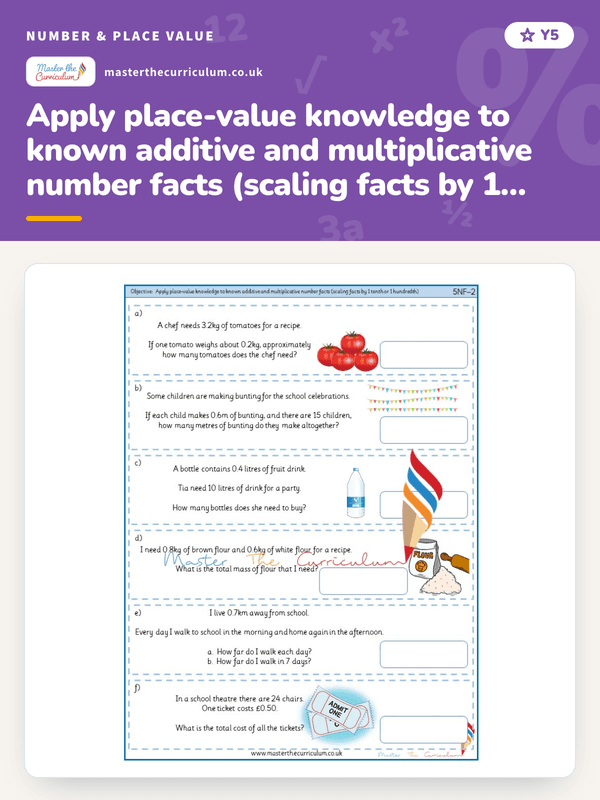
Divide 1 into 2,4,5 and 10 equal parts, and read scales/number lines marked in units of 1 with 2,4,5 and 10 equal parts (1)
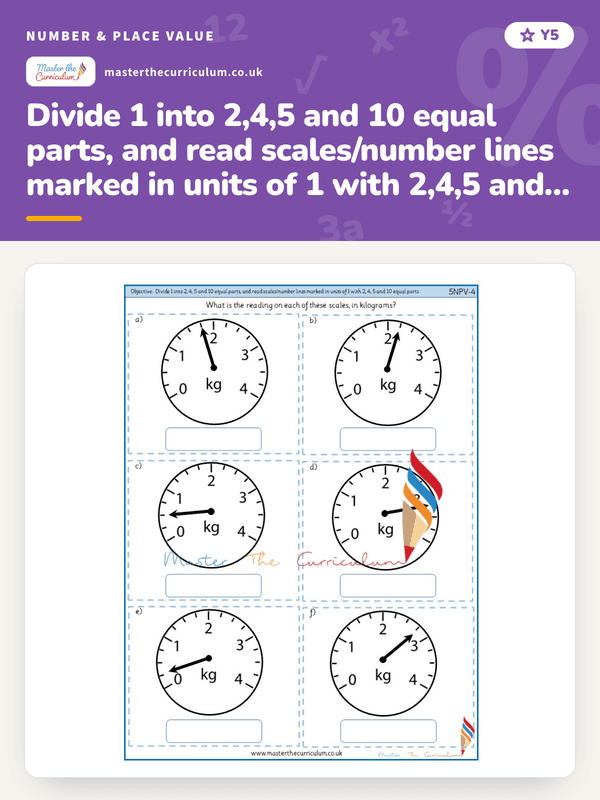
Divide 1 into 2,4,5 and 10 equal parts, and read scales/number lines marked in units of 1 with 2,4,5 and 10 equal parts (2)
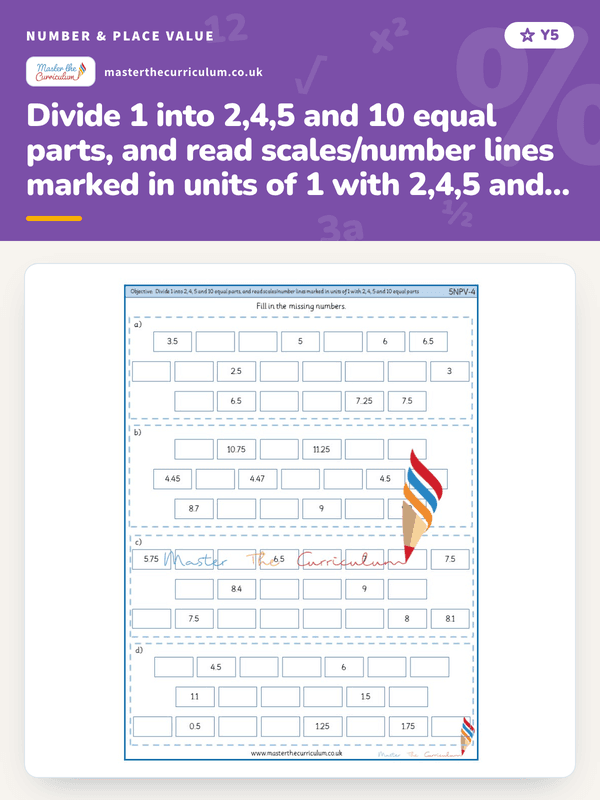
Divide 1 into 2,4,5 and 10 equal parts, and read scales/number lines marked in units of 1 with 2,4,5 and 10 equal parts (3)
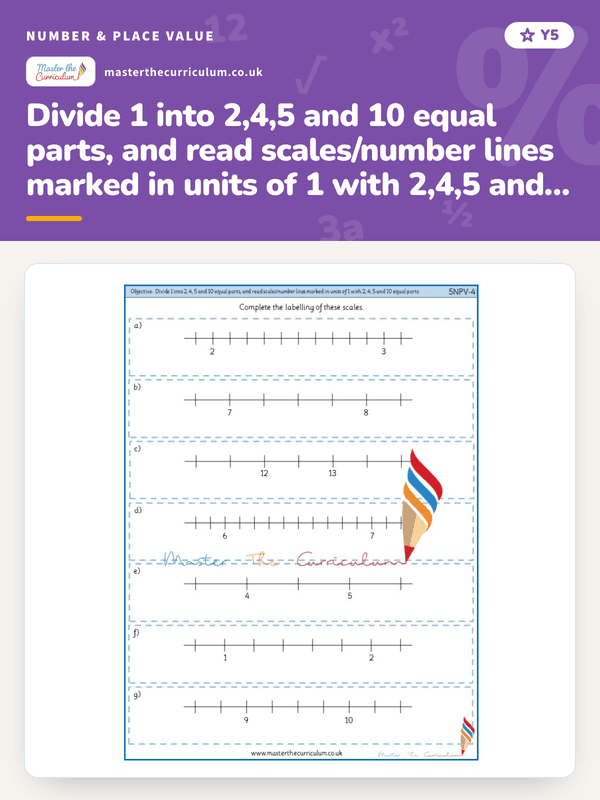
Divide 1 into 2,4,5 and 10 equal parts, and read scales/number lines marked in units of 1 with 2,4,5 and 10 equal parts (4)
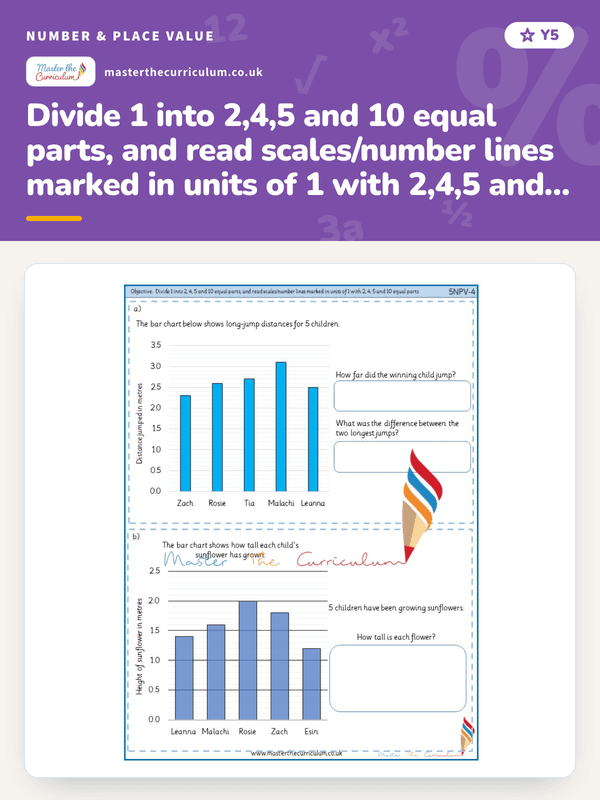
Divide 1 into 2,4,5 and 10 equal parts, and read scales/number lines marked in units of 1 with 2,4,5 and 10 equal parts (5)
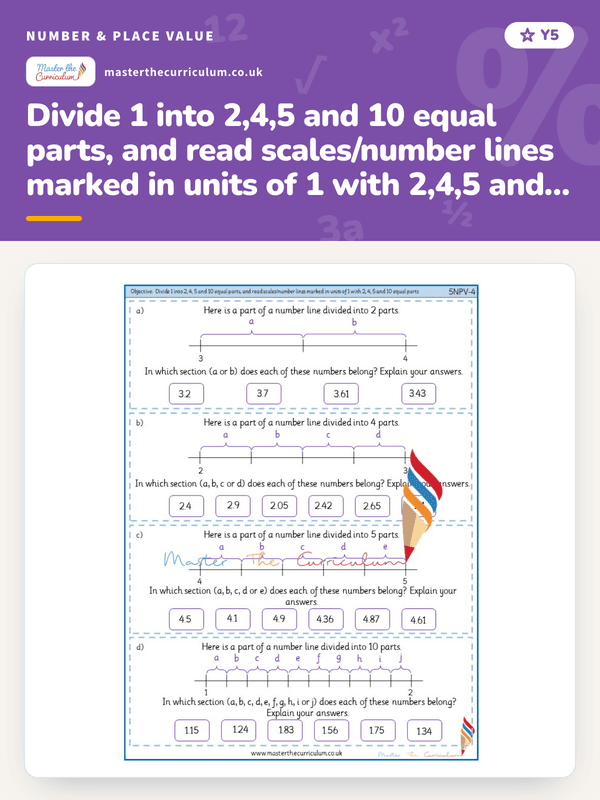
Divide powers of 10, from 1 hundredth to 10 million, into 2, 4, 5 and 10 equal parts, and read scales/number lines with labelled intervals divided into 2, 4, 5 and 10 equal parts (1)

Divide powers of 10, from 1 hundredth to 10 million, into 2, 4, 5 and 10 equal parts, and read scales/number lines with labelled intervals divided into 2, 4, 5 and 10 equal parts (2)

Divide powers of 10, from 1 hundredth to 10 million, into 2, 4, 5 and 10 equal parts, and read scales/number lines with labelled intervals divided into 2, 4, 5 and 10 equal parts (3)

Divide powers of 10, from 1 hundredth to 10 million, into 2, 4, 5 and 10 equal parts, and read scales/number lines with labelled intervals divided into 2, 4, 5 and 10 equal parts (4)

Reason about the location of any number up to 10 million, including decimal fractions, in the linear number system, and round numbers, as appropriate, including in contexts (1)

Reason about the location of any number up to 10 million, including decimal fractions, in the linear number system, and round numbers, as appropriate, including in contexts (2)

Reason about the location of any number up to 10 million, including decimal fractions, in the linear number system, and round numbers, as appropriate, including in contexts (3)

Reason about the location of any number up to 10 million, including decimal fractions, in the linear number system, and round numbers, as appropriate, including in contexts (4)

L5 – WWW – Y2 Recognise the place value of each digit in a 2-digit number

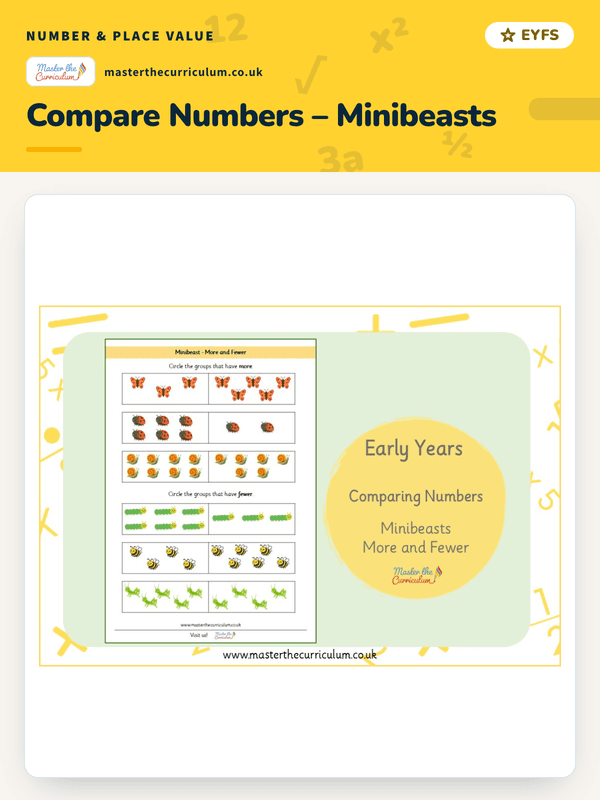
Compare Numbers – Minibeasts
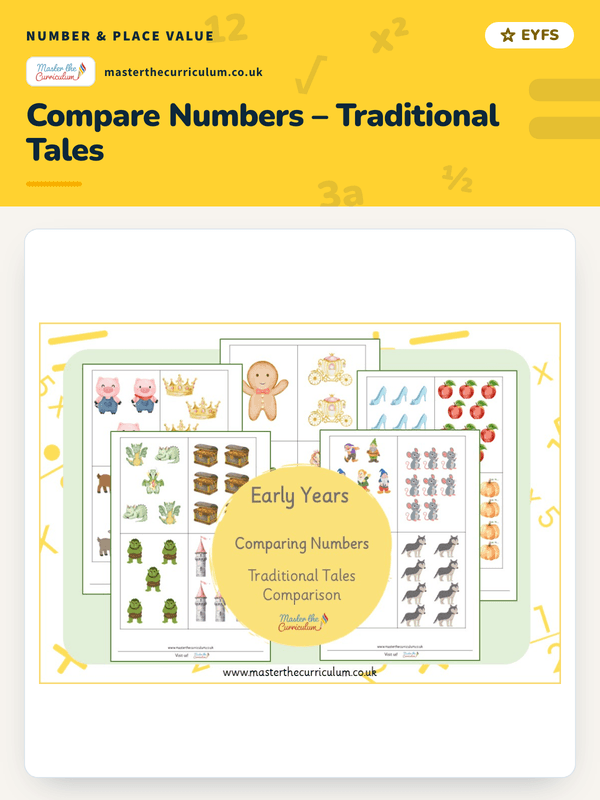
Compare Numbers – Traditional Tales
Compare Numbers – Toys and Numicon

