Recognise right angles as a property of shape or a description of a turn, and identify right angles in 2D shapes presented in different orientations (1)
Recognise right angles as a property of shape or a description of a turn, and identify right angles in 2D shapes presented in different orientations (2)
Recognise right angles as a property of shape or a description of a turn, and identify right angles in 2D shapes presented in different orientations (3)
Recognise right angles as a property of shape or a description of a turn, and identify right angles in 2D shapes presented in different orientations (4)
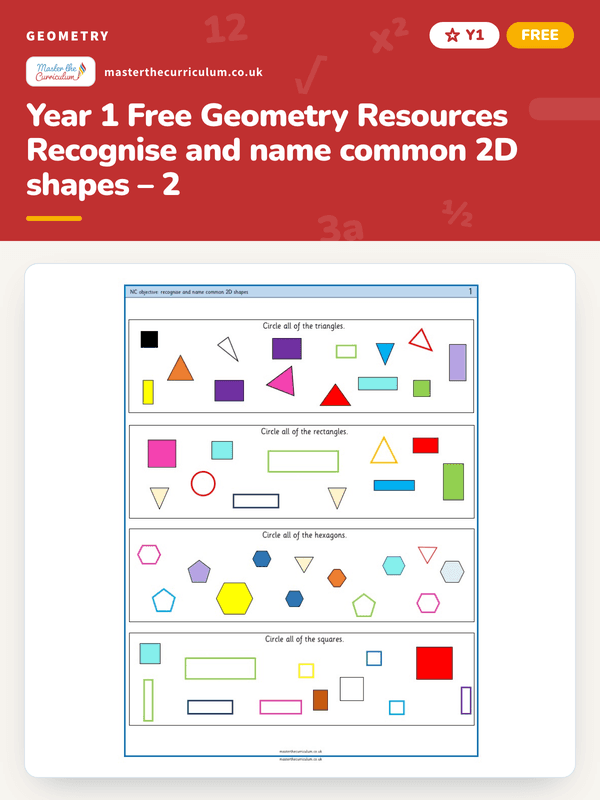
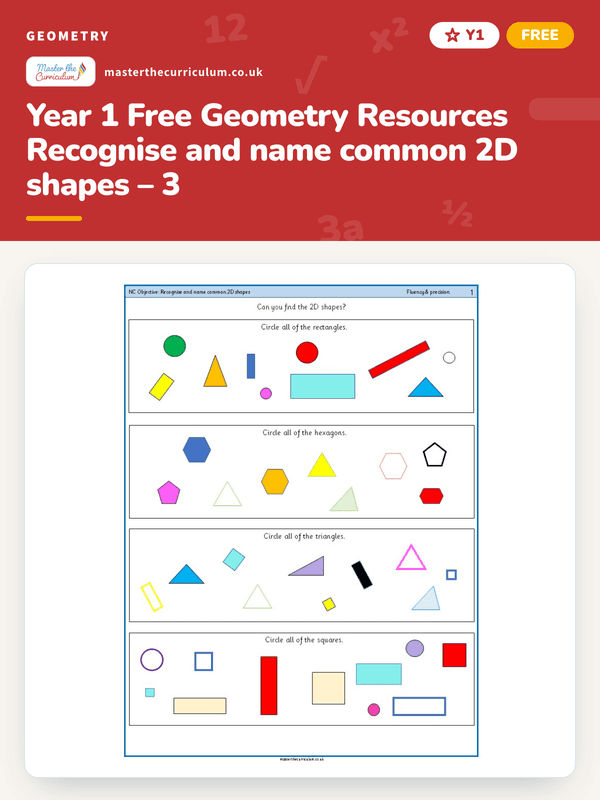
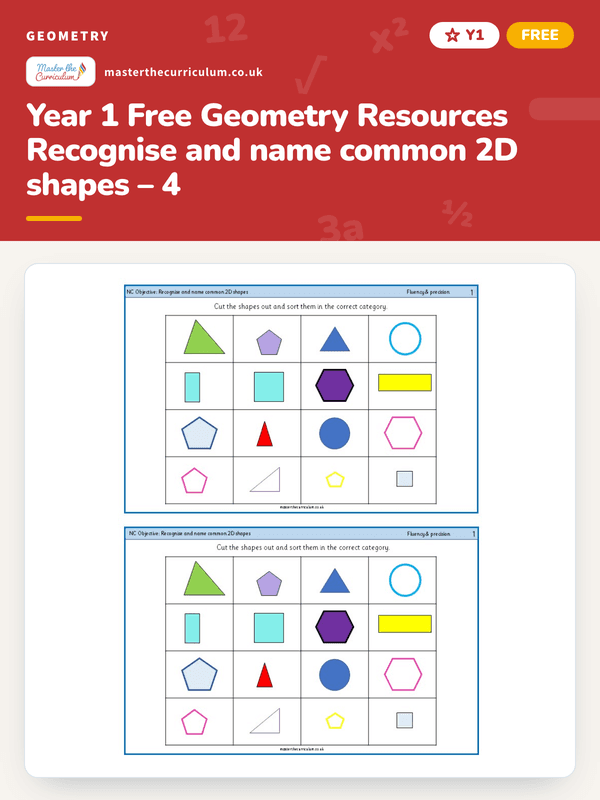
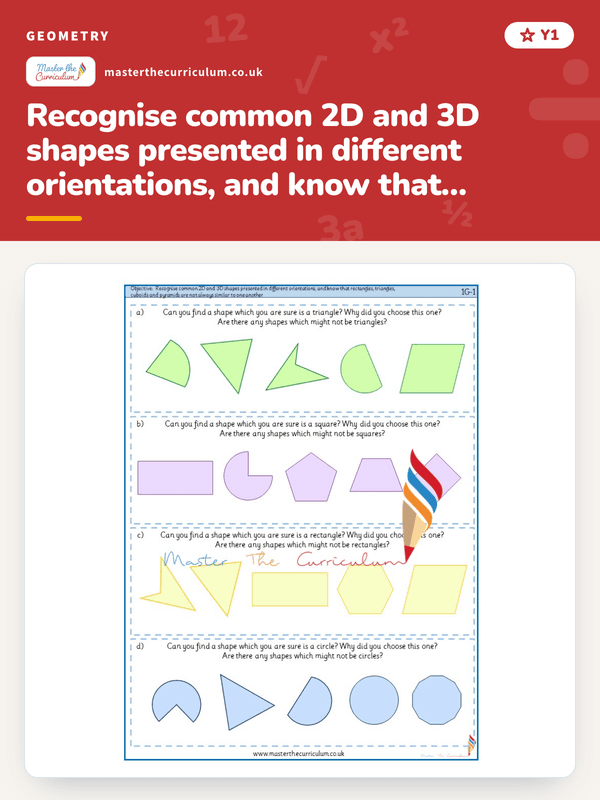
Recognise common 2D and 3D shapes presented in different orientations, and know that rectangles, triangles, cuboids and pyramids are not always similar to one another (1)
Recognise common 2D and 3D shapes presented in different orientations, and know that rectangles, triangles, cuboids and pyramids are not always similar to one another (2)
Recognise common 2D and 3D shapes presented in different orientations, and know that rectangles, triangles, cuboids and pyramids are not always similar to one another (3)
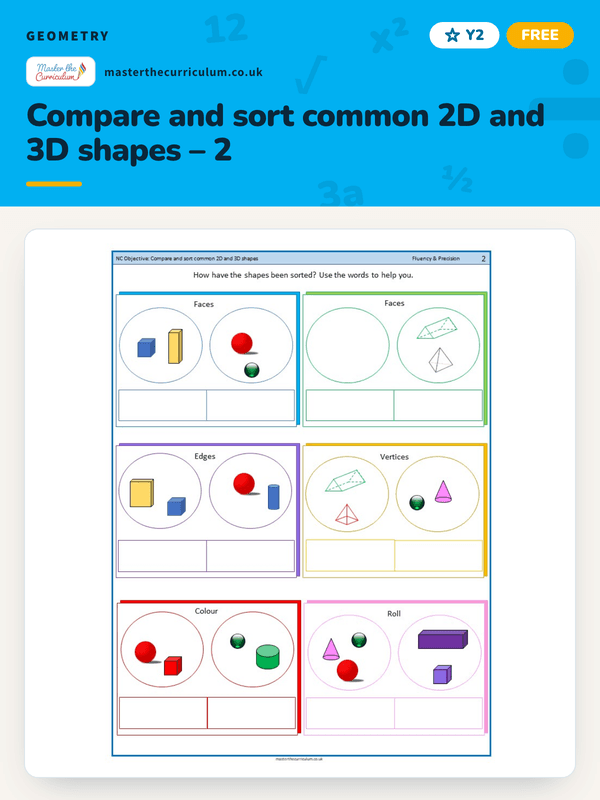
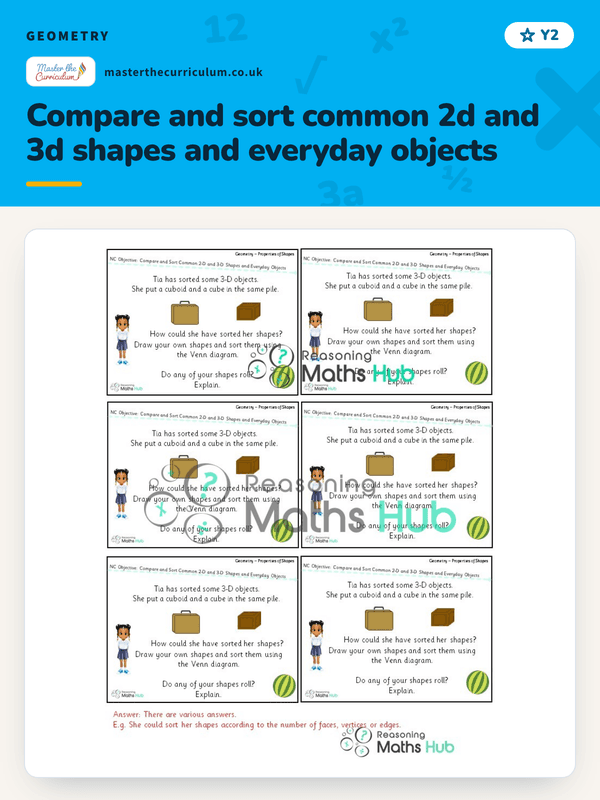
Use precise language to describe the properties of 2D and 3D shapes, and compare shapes by reasoning about similarities and differences in properties (1)
Use precise language to describe the properties of 2D and 3D shapes, and compare shapes by reasoning about similarities and differences in properties (2)
Use precise language to describe the properties of 2D and 3D shapes, and compare shapes by reasoning about similarities and differences in properties (3)
Use precise language to describe the properties of 2D and 3D shapes, and compare shapes by reasoning about similarities and differences in properties (4)
An email when there is something new for the year group you actually teach. Unsubscribe in a click.
We keep your address, and the year group you teach, so we can tell you when there is something new for it. Here is how we look after it: privacy policy.