What are the Ready to Progress criteria?
The NCETM, the National Centre for Excellence in the Teaching of Mathematics, identified the key objectives children should meet by the end of each year. The criteria are the parts of the curriculum flagged as priority: get these secure and a child is ready for the next year group.
There are 384 resources filed against them across the whole primary range, 51 of them here.
Arriving from Year 3?
The Year 3 criteria are what a child should have secure before they start Year 4. There are 76 resources for checking.
Year 3 Ready to Progress →Number and Place Value
18 resources
Divide 1,000 into 2,4,5 and 10 equal parts, and read scales/number lines marked in multiples of 1,000 with 2,4,5 and 10 equal parts (1)
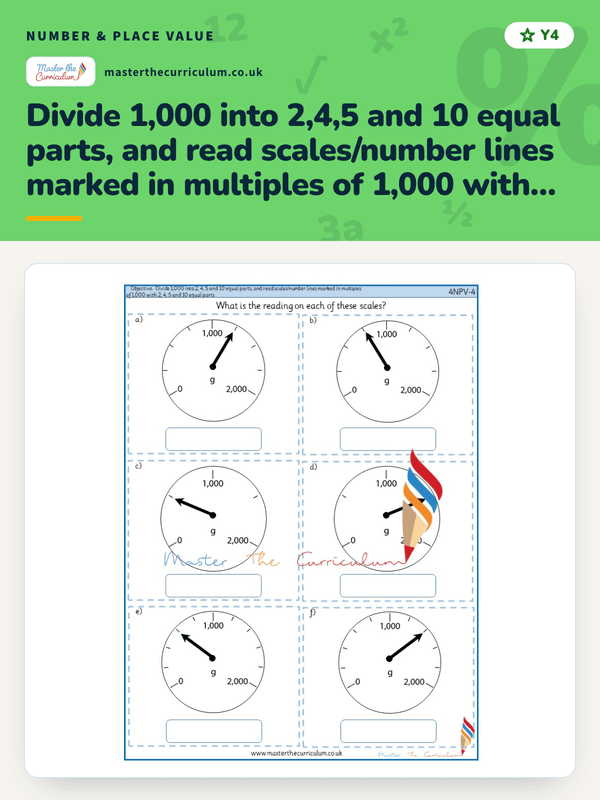
Divide 1,000 into 2,4,5 and 10 equal parts, and read scales/number lines marked in multiples of 1,000 with 2,4,5 and 10 equal parts (2)
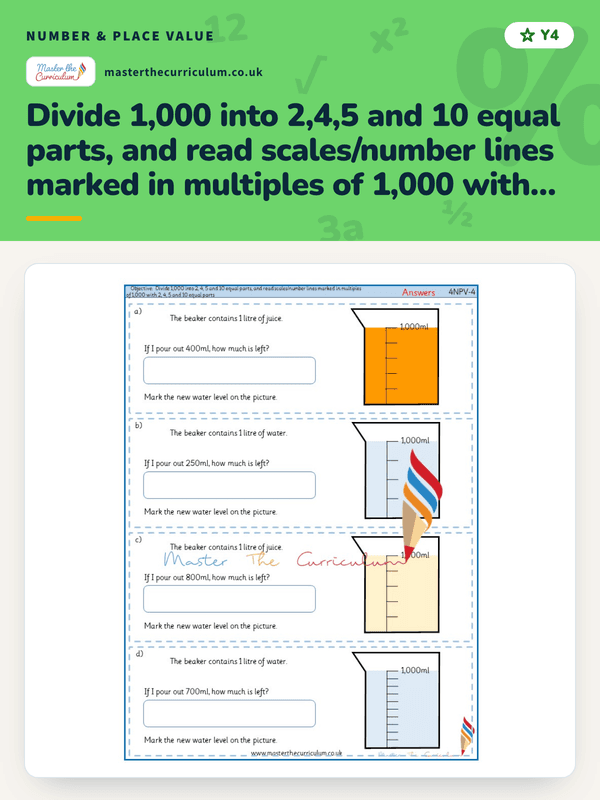
Divide 1,000 into 2,4,5 and 10 equal parts, and read scales/number lines marked in multiples of 1,000 with 2,4,5 and 10 equal parts (3)
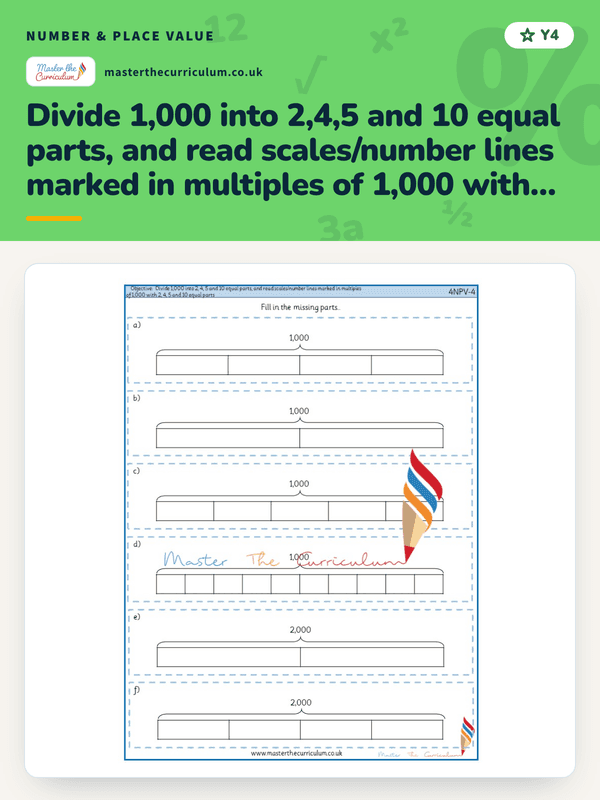
Divide 1,000 into 2,4,5 and 10 equal parts, and read scales/number lines marked in multiples of 1,000 with 2,4,5 and 10 equal parts (4)
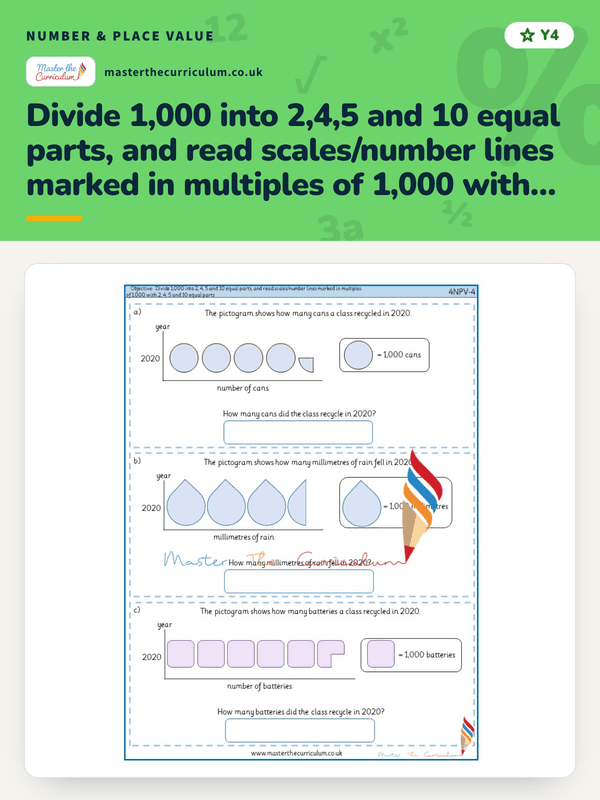
Divide 1,000 into 2,4,5 and 10 equal parts, and read scales/number lines marked in multiples of 1,000 with 2,4,5 and 10 equal parts (5)
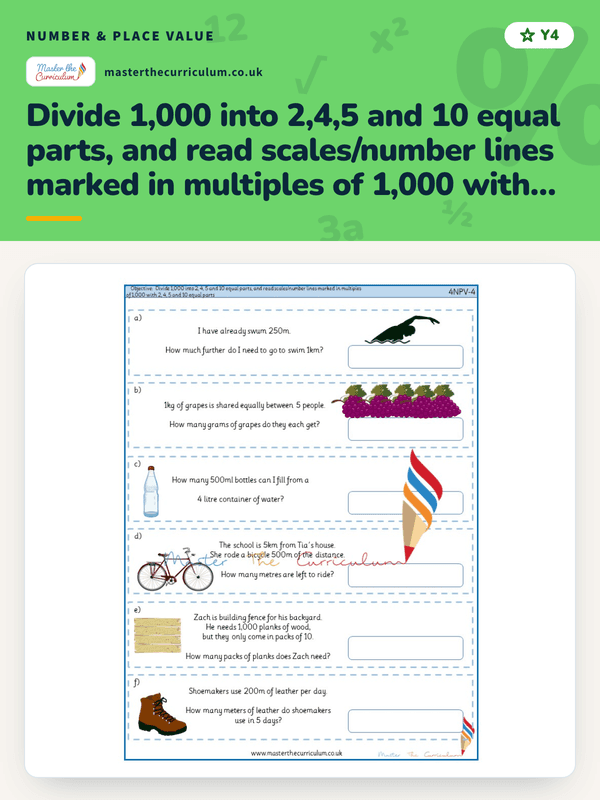
Reason about the location of any four-digit number in the linear number system, including identifying the previous and next multiple of 1,000 and 100, and rounding to the nearest of each (3)
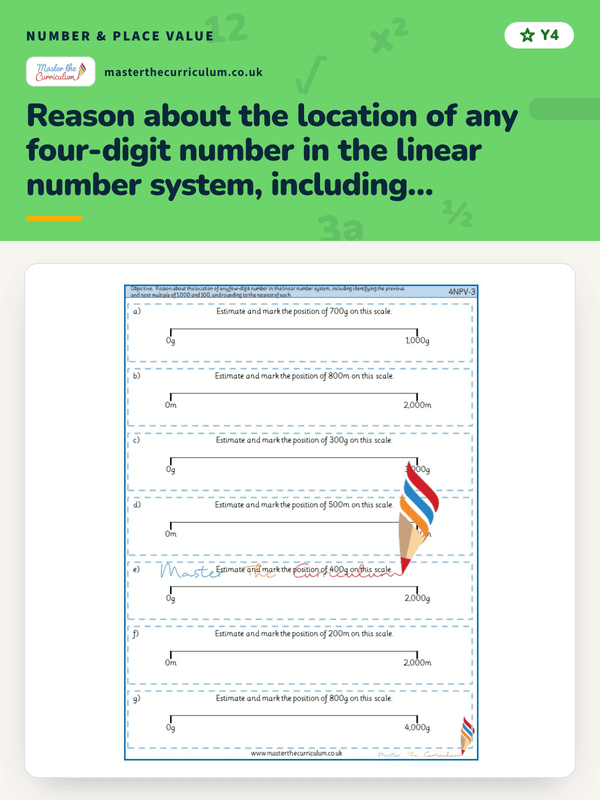
Reason about the location of any four-digit number in the linear number system, including identifying the previous and next multiple of 1,000 and 100, and rounding to the nearest of each (1)
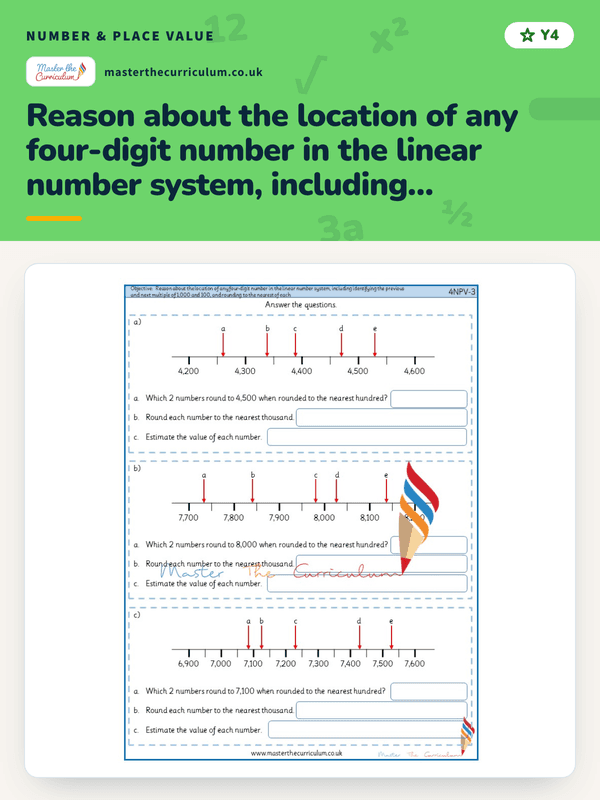
Reason about the location of any four-digit number in the linear number system, including identifying the previous and next multiple of 1,000 and 100, and rounding to the nearest of each (2)
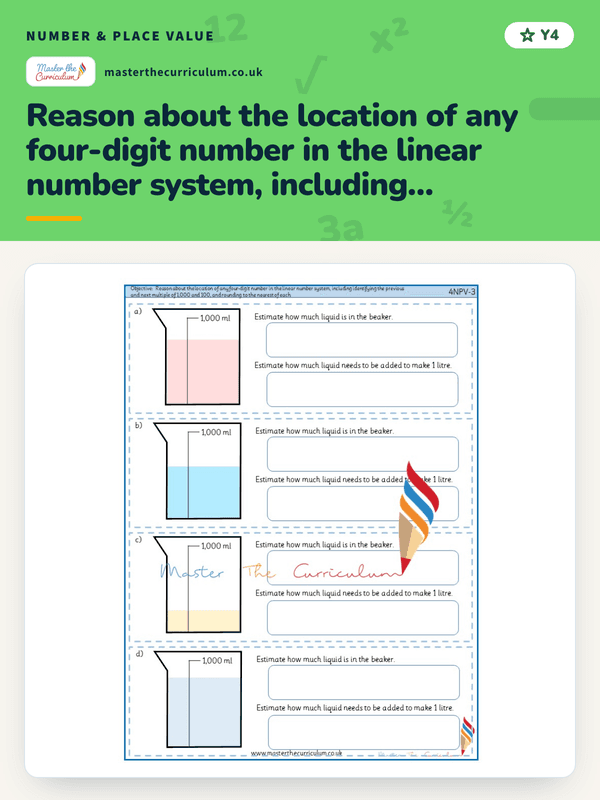
Reason about the location of any four-digit number in the linear number system, including identifying the previous and next multiple of 1,000 and 100, and rounding to the nearest of each (4)
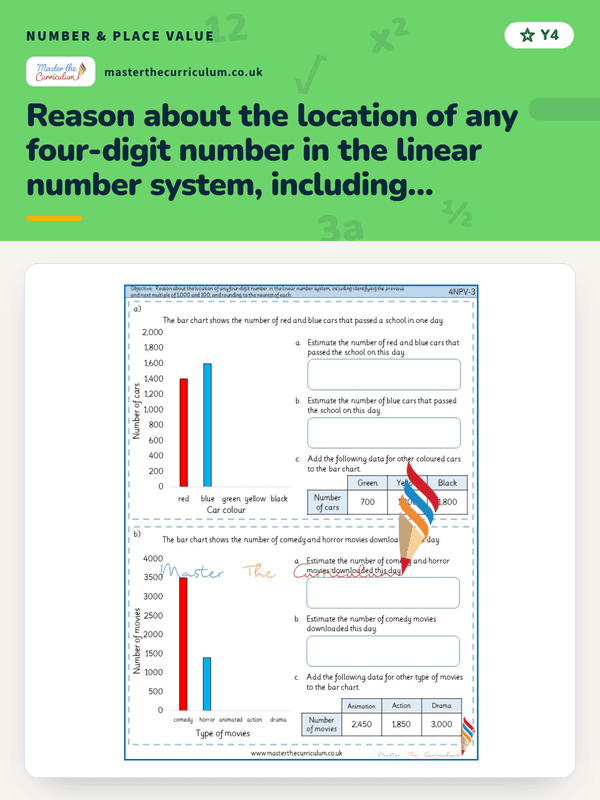
Reason about the location of any four-digit number in the linear number system, including identifying the previous and next multiple of 1,000 and 100, and rounding to the nearest of each (5)
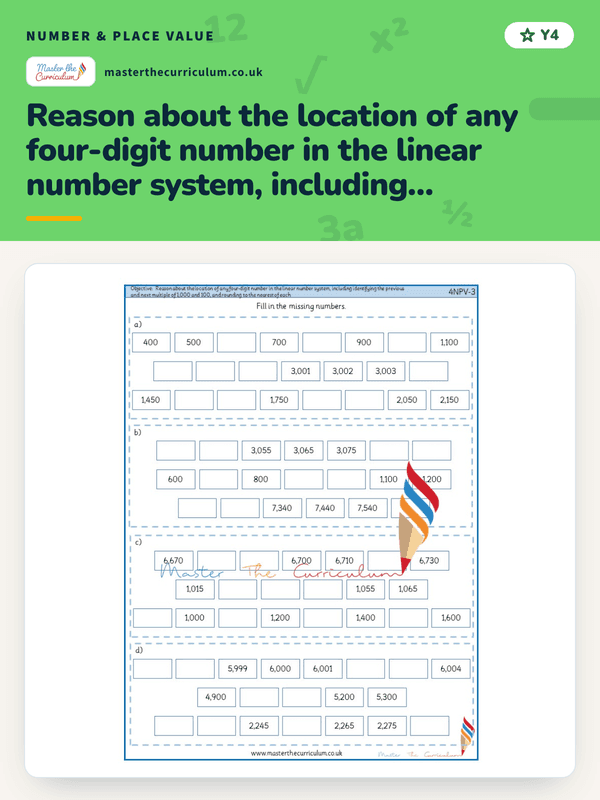
Know that 10 hundreds are equivalent to 1000 (5)

Know that 10 hundreds are equivalent to 1000 (4)

Know that 10 hundreds are equivalent to 1000 (3)

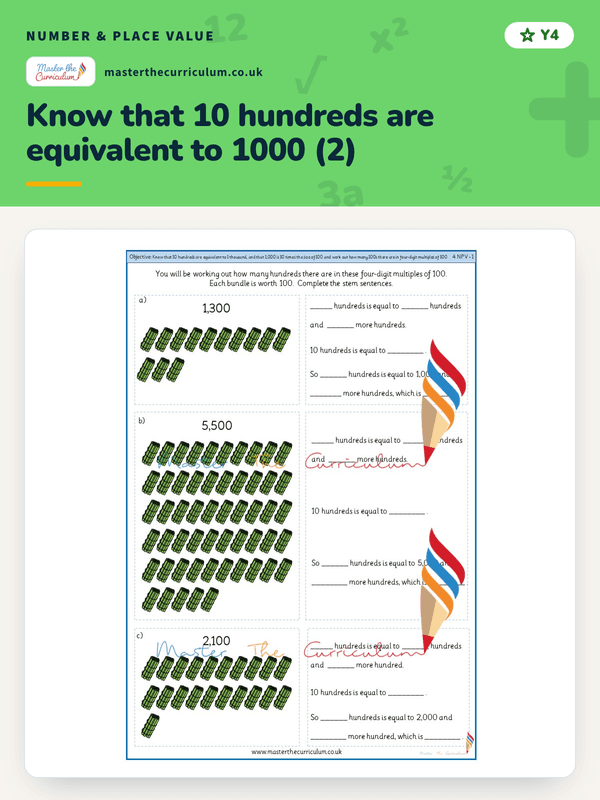
Know that 10 hundreds are equivalent to 1000 (2)
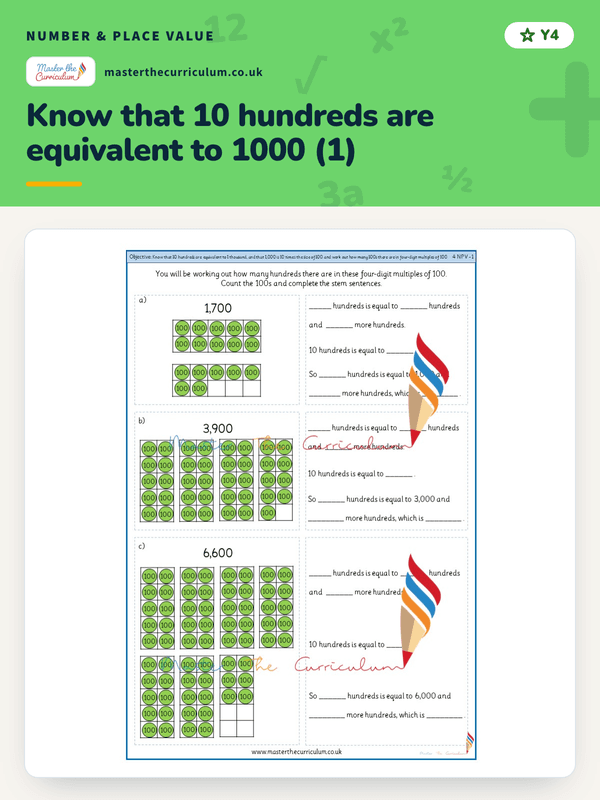
Know that 10 hundreds are equivalent to 1000 (1)
Recognise the place value of each digit in four-digit numbers, and compose and decompose four-digit numbers (3)

Recognise the place value of each digit in four-digit numbers, and compose and decompose four-digit numbers (2)

Recognise the place value of each digit in four-digit numbers, and compose and decompose four-digit numbers (1)

Multiplication and Division
12 resources
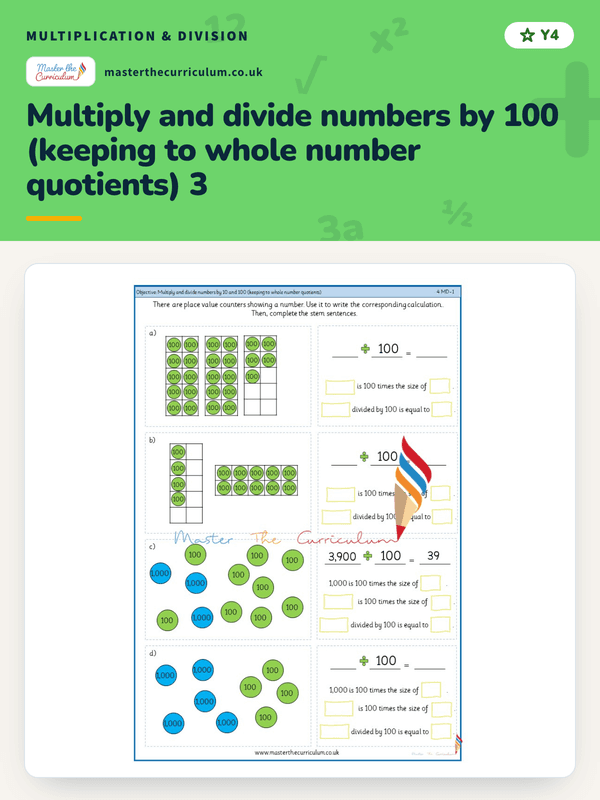
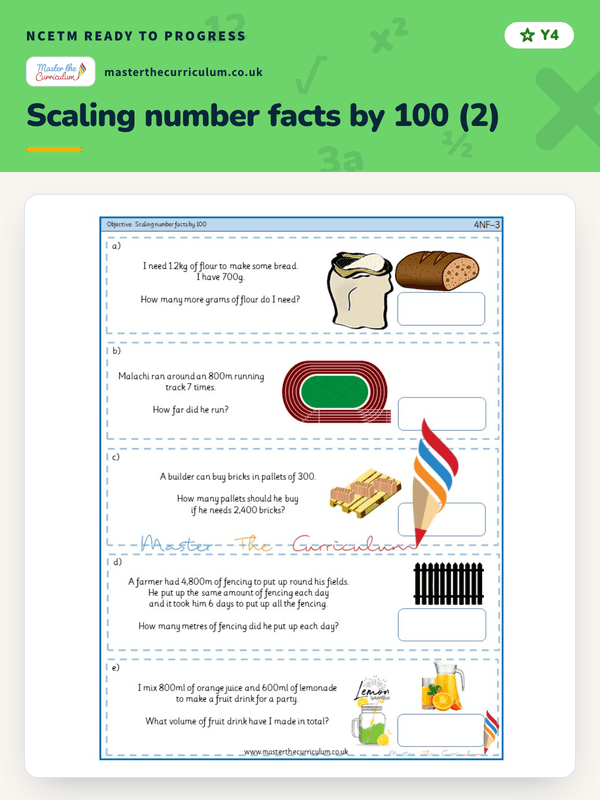
Scaling number facts by 100 (2)
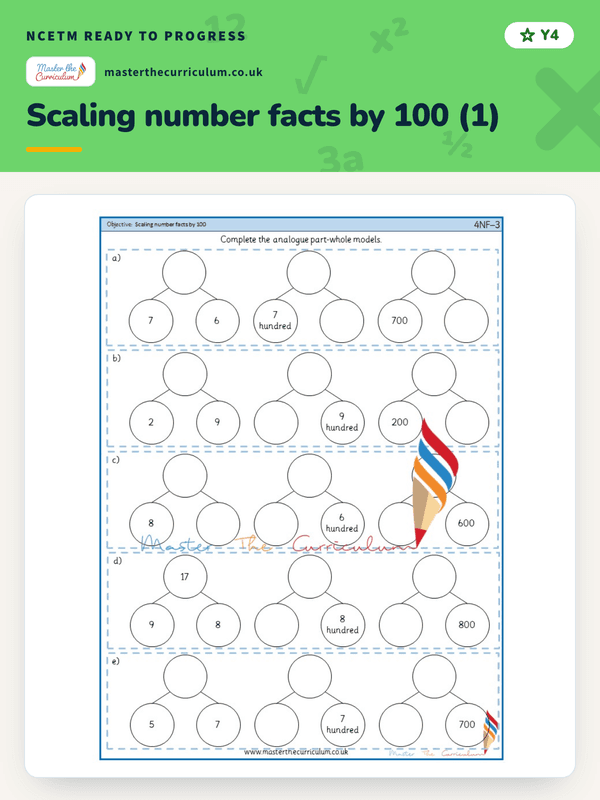
Scaling number facts by 100 (1)
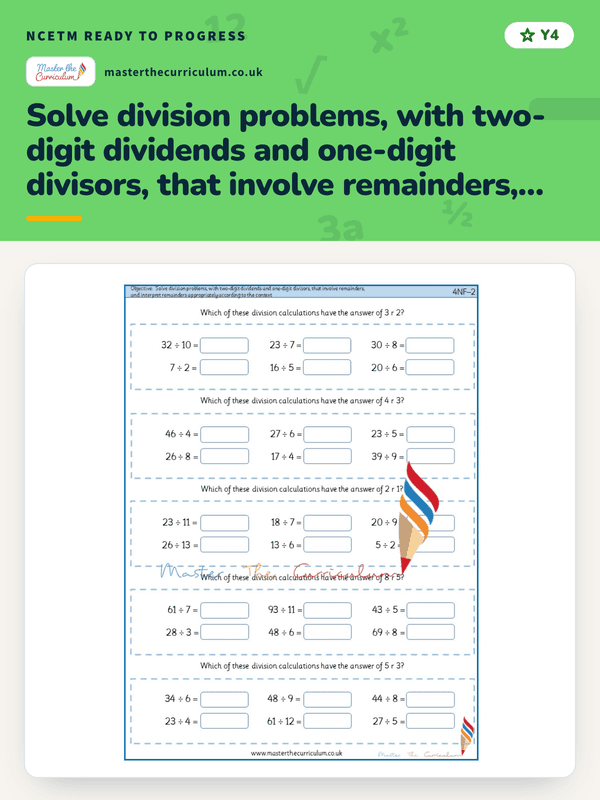
Solve division problems, with two-digit dividends and one-digit divisors, that involve remainders, and interpret remainders appropriately according to the context (3)
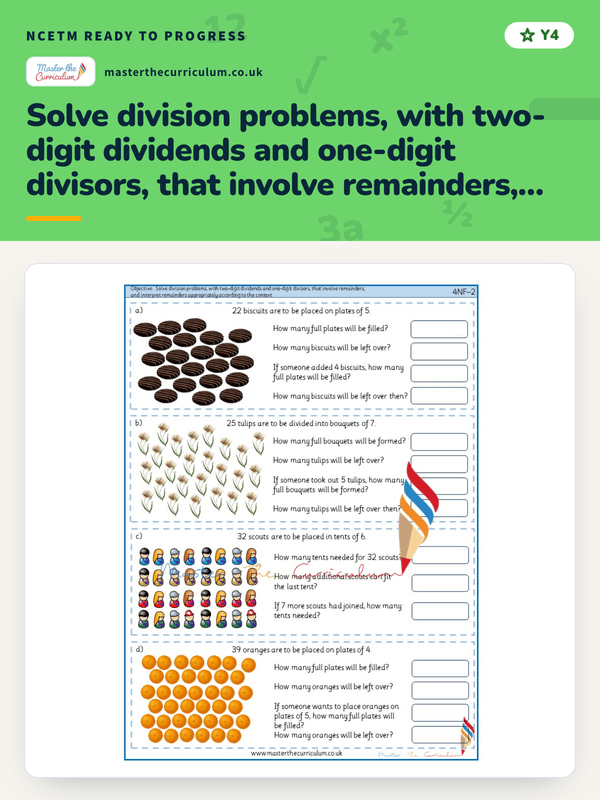
Solve division problems, with two-digit dividends and one-digit divisors, that involve remainders, and interpret remainders appropriately according to the context (2)
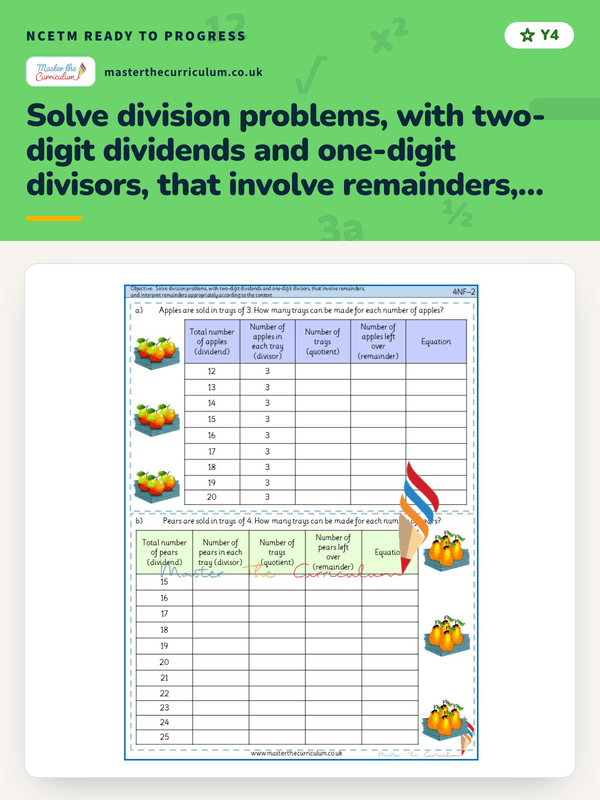
Solve division problems, with two-digit dividends and one-digit divisors, that involve remainders, and interpret remainders appropriately according to the context (1)
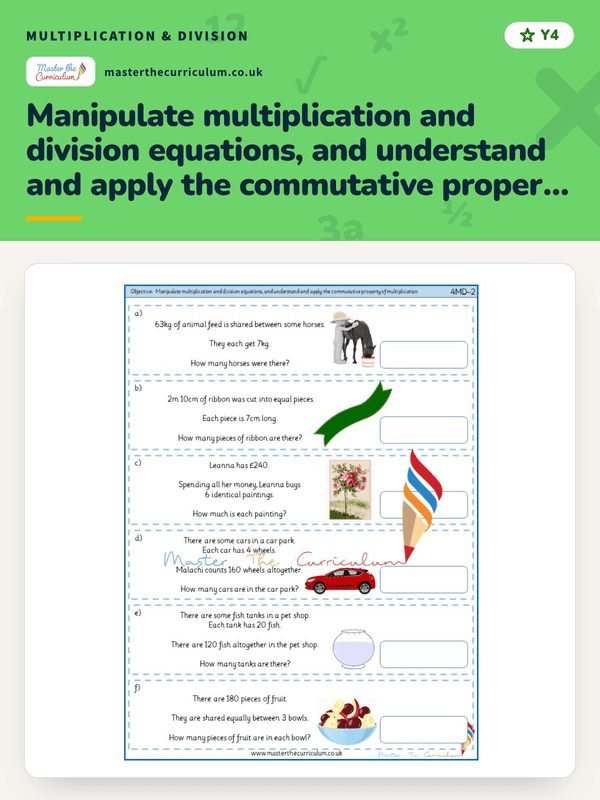
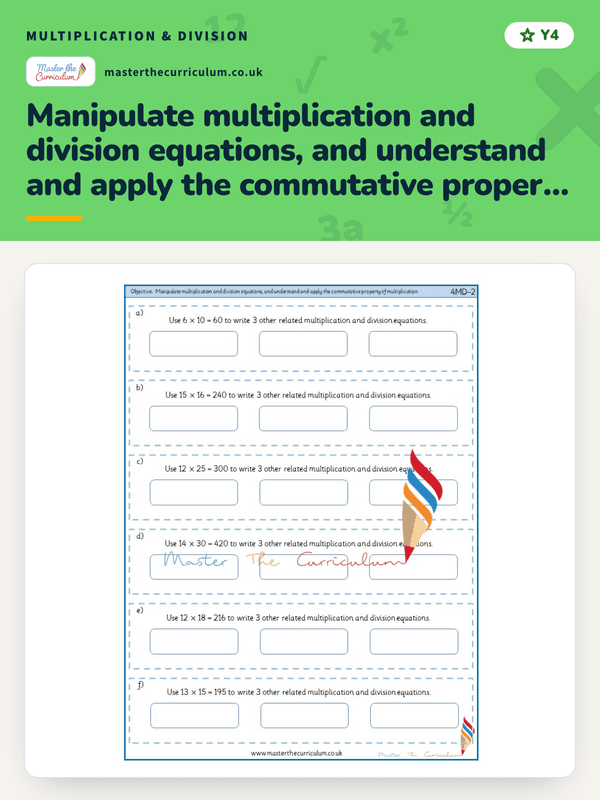
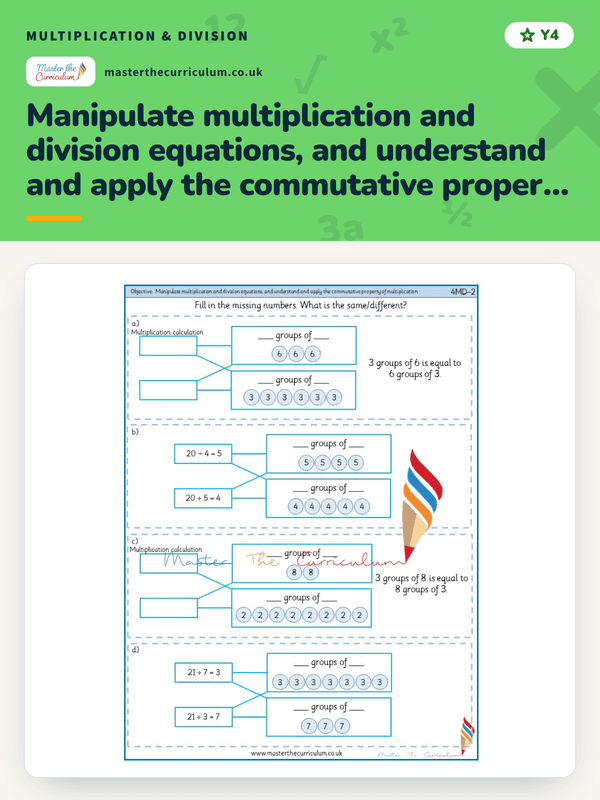
Recall multiplication and division facts up to 12 x 12, and recognise products in multiplication tables as multiples of the corresponding number (5)
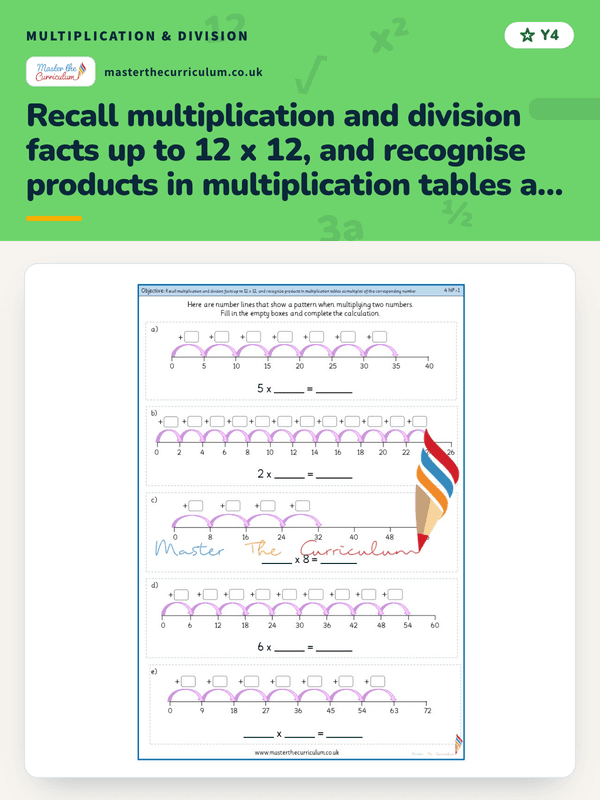
Recall multiplication and division facts up to 12 x 12, and recognise products in multiplication tables as multiples of the corresponding number (4)
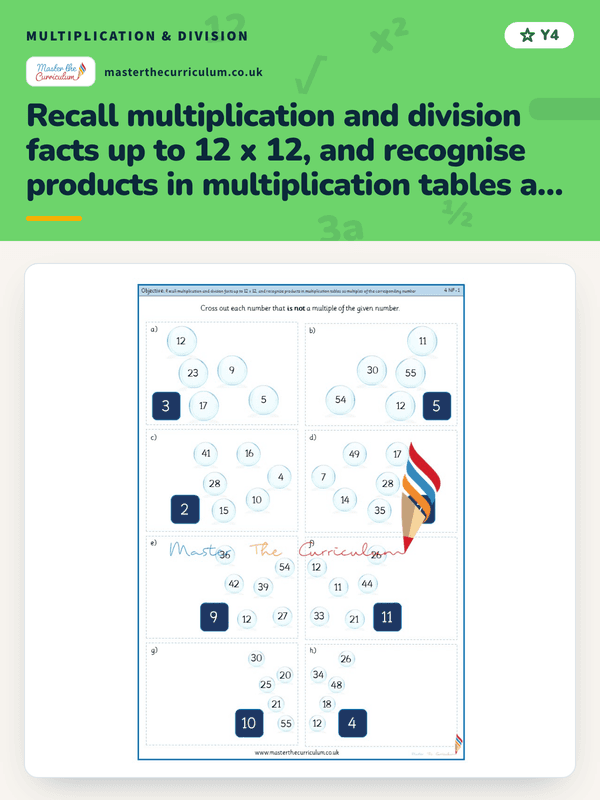
Recall multiplication and division facts up to 12 x 12, and recognise products in multiplication tables as multiples of the corresponding number (3)
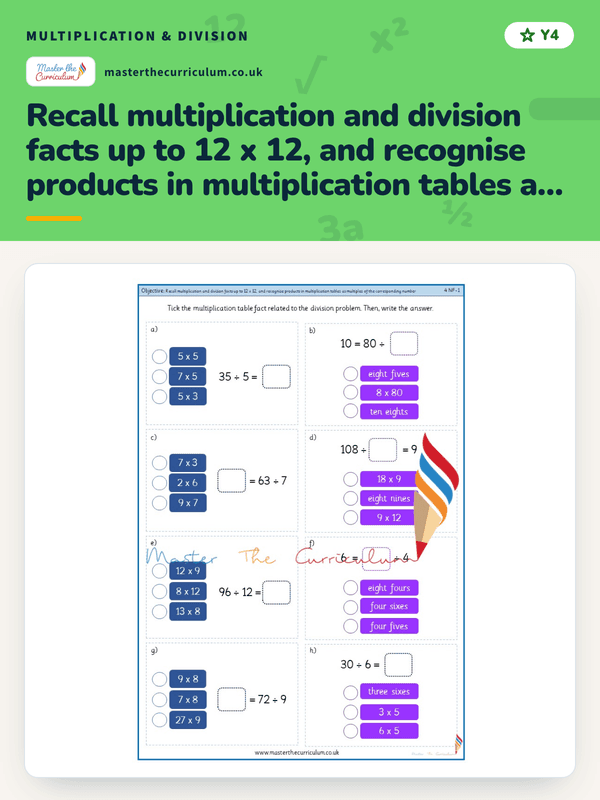
Recall multiplication and division facts up to 12 x 12, and recognise products in multiplication tables as multiples of the corresponding number (2)
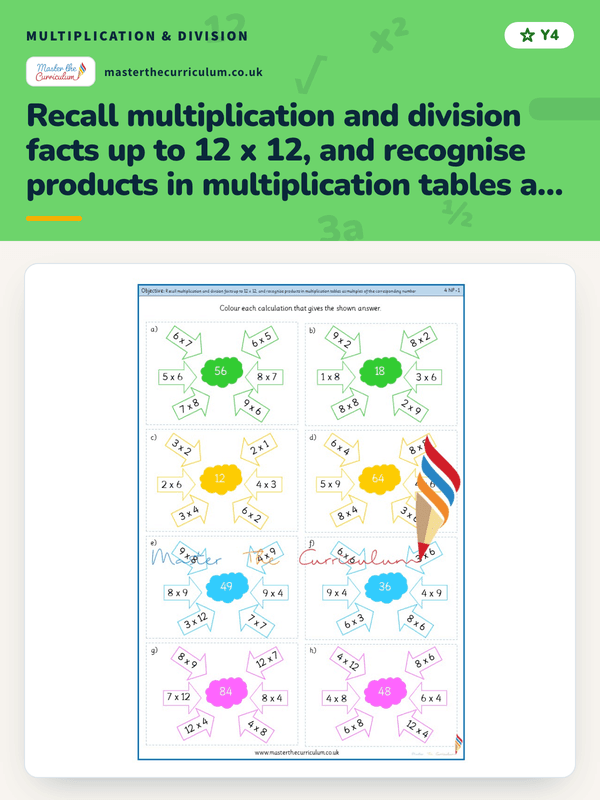
Recall multiplication and division facts up to 12 x 12, and recognise products in multiplication tables as multiples of the corresponding number (1)
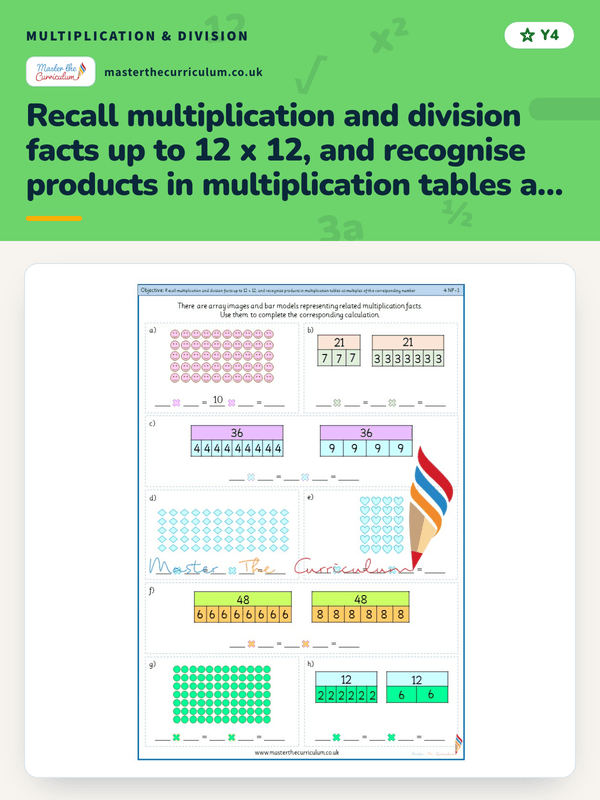
Next in the sequence: Year 5 Ready to Progress (67)