What are the Ready to Progress criteria?
The NCETM, the National Centre for Excellence in the Teaching of Mathematics, identified the key objectives children should meet by the end of each year. The criteria are the parts of the curriculum flagged as priority: get these secure and a child is ready for the next year group.
There are 384 resources filed against them across the whole primary range, 45 of them here.
Arriving from Early Years?
The Early Years criteria are what a child should have secure before they start Year 1. There are 42 resources for checking.
Early Years Ready to Progress →Number and Place Value
18 resources
Identify the previous and next multiple of 10 (3)

Identify the previous and next multiple of 10 (4)

Identify the previous and next multiple of 10 (5)

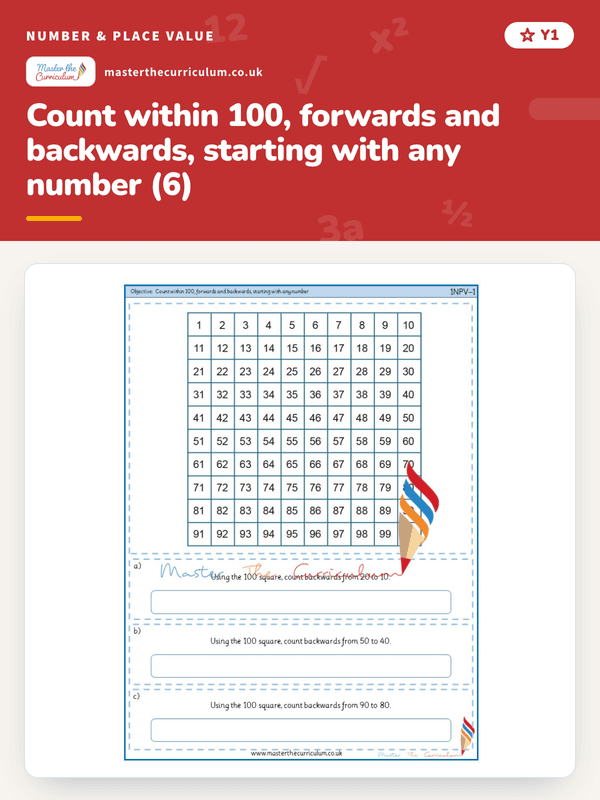
Count within 100, forwards and backwards, starting with any number (6)
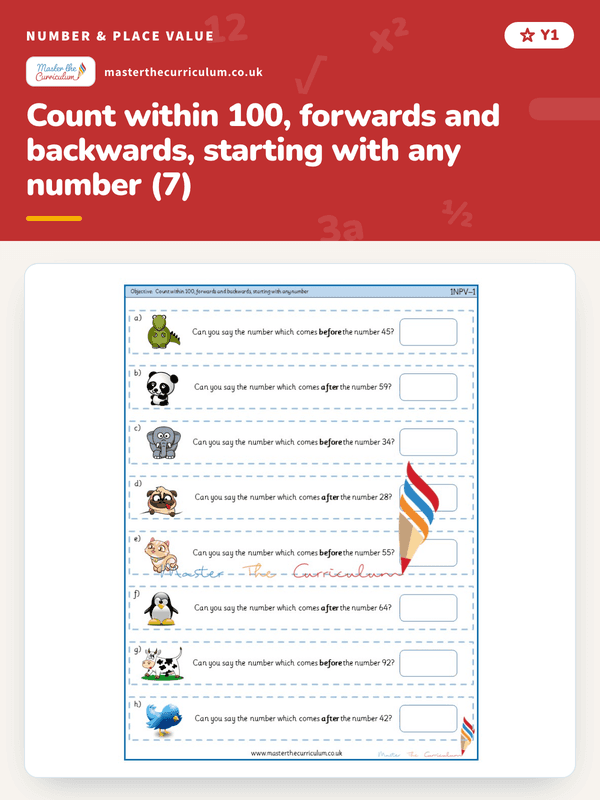
Count within 100, forwards and backwards, starting with any number (7)
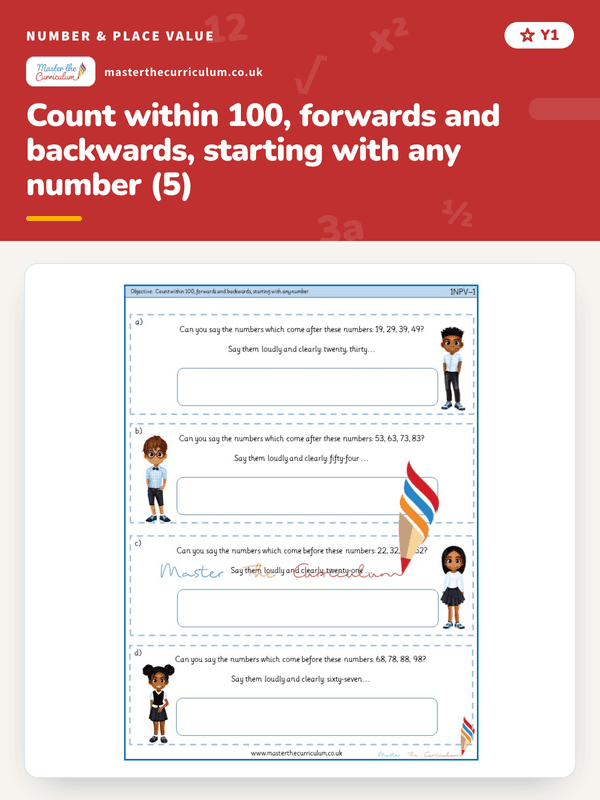
Count within 100, forwards and backwards, starting with any number (5)
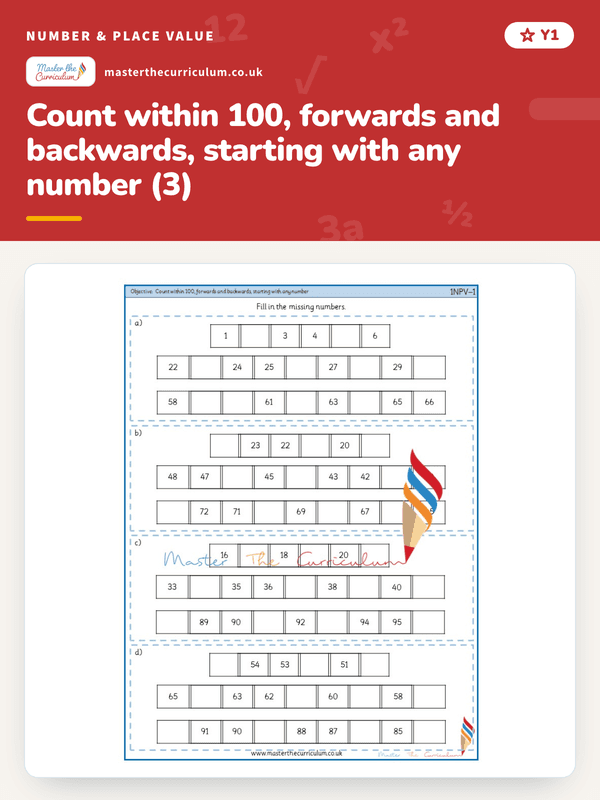
Count within 100, forwards and backwards, starting with any number (3)
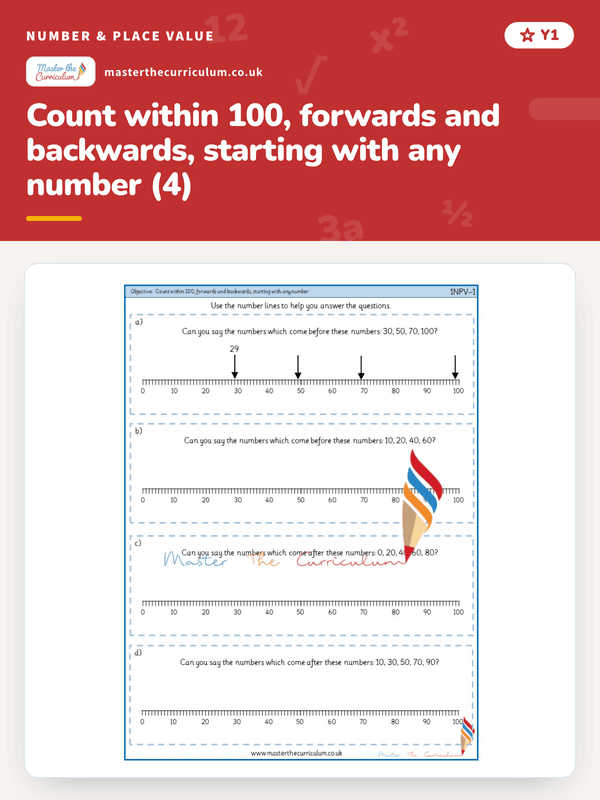
Count within 100, forwards and backwards, starting with any number (4)
Count within 100, forwards and backwards, starting with any number (5)

Reason about the location of numbers to 20 within the linear number system (7)

Reason about the location of numbers to 20 within the linear number system (6)

Reason about the location of numbers to 20 within the linear number system (5)

Reason about the location of numbers to 20 within the linear number system (4)

Reason about the location of numbers to 20 within the linear number system (3)

Reason about the location of numbers to 20 within the linear number system (2)

Reason about the location of numbers to 20 within the linear number system (1)

Count within 100, forwards and backwards (2)

Count within 100, forwards and backwards (1)

Addition and Subtraction
11 resources
Read, Write and Interpret Equations (6)

Read, Write and Interpret Equations (5)

Read, Write and Interpret Equations (4)

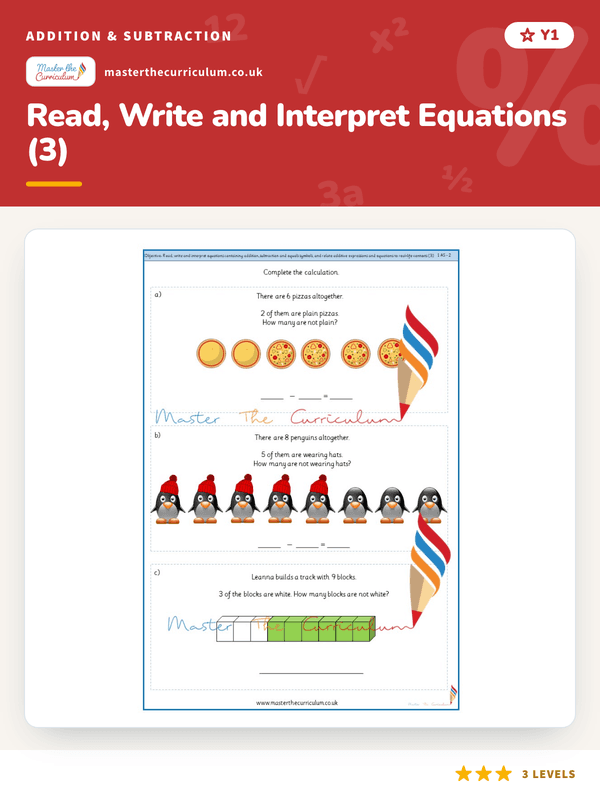
Read, Write and Interpret Equations (3)
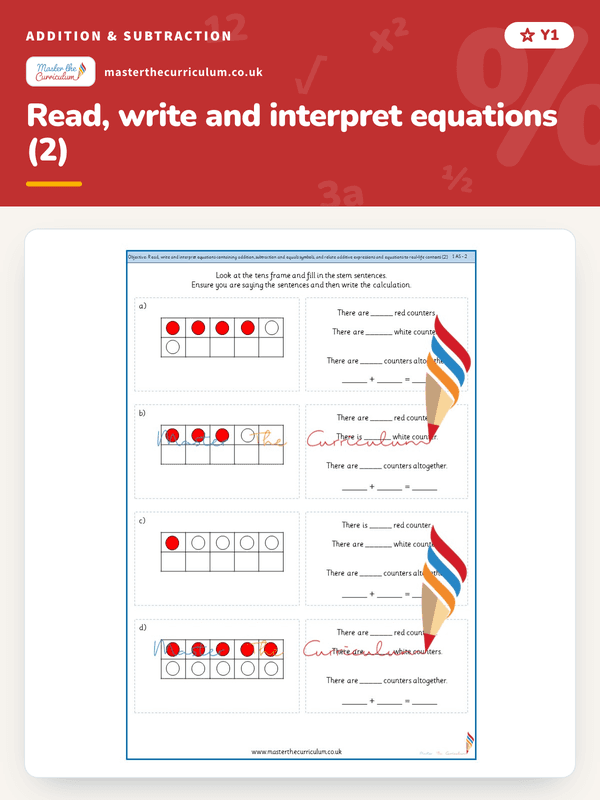
Read, write and interpret equations (2)
Read, Write and Interpret Equations (1)

Compose numbers to 10 from 2 parts, and partition numbers to 10 into parts, including recognising odd and even numbers (2)

Compose numbers to 10 from 2 parts, and partition numbers to 10 into parts, including recognising odd and even numbers (1)

Compose numbers to 10 from 2 parts, and partition numbers to 10 into parts (3)

Compose numbers to 10 from 2 parts, and partition numbers to 10 into parts (2)

Compose numbers to 10 from 2 parts, and partition numbers to 10 into parts (1)

Count forwards and backwards in multiples of 2, 5 and 10 (5)

Count forwards and backwards in multiples of 2, 5 and 10 (4)

Count forwards and backwards in multiples of 2, 5 and 10 (3)

Count forwards and backwards in multiples of 2, 5 and 10, up to 10 multiples, beginning with any multiple, and count forwards and backwards through the odd numbers (1)

Count forwards and backwards in multiples of 2, 5 and 10, up to 10 multiples, beginning with any multiple, and count forwards and backwards through the odd numbers (2)

Count forwards and backwards in multiples of 2, 5 and 10 (3)

Count forwards and backwards in multiples of 2, 5 and 10 (2)

Count forwards and backwards in multiples of 2, 5 and 10 (1)

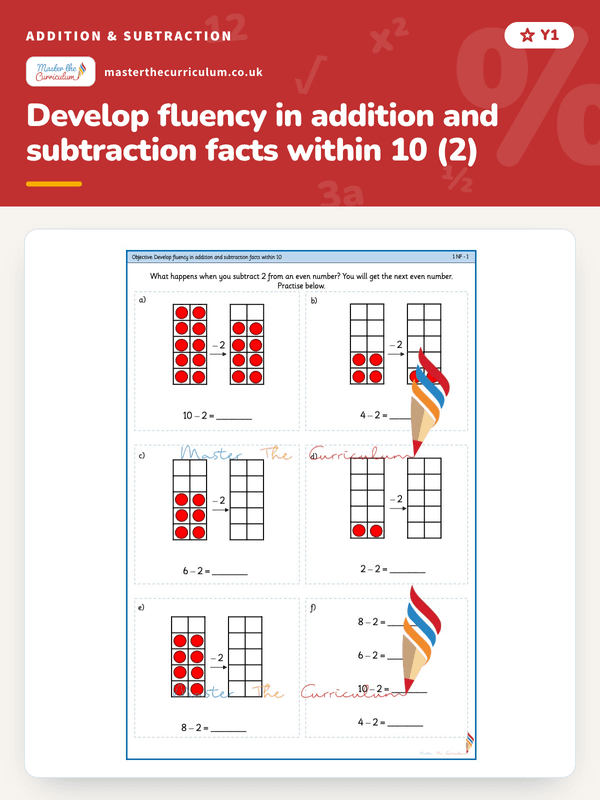
Develop fluency in addition and subtraction facts within 10 (2)
Develop fluency in addition and subtraction facts within 10 (1)

Compose 2D and 3D shapes from smaller shapes to match an example, including manipulating shapes to place them in particular orientations (3)

Compose 2D and 3D shapes from smaller shapes to match an example, including manipulating shapes to place them in particular orientations (2)

Compose 2D and 3D shapes from smaller shapes to match an example, including manipulating shapes to place them in particular orientations (1)

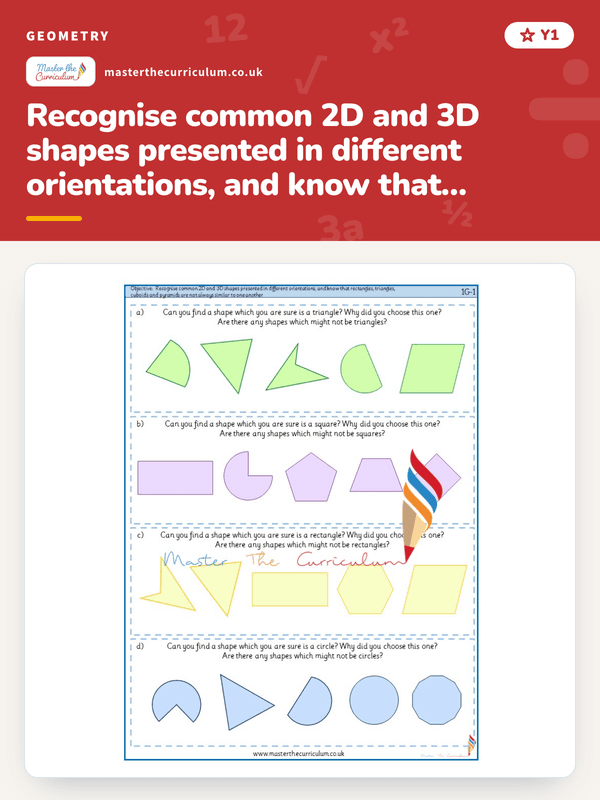
Recognise common 2D and 3D shapes presented in different orientations, and know that rectangles, triangles, cuboids and pyramids are not always similar to one another (3)

Recognise common 2D and 3D shapes presented in different orientations, and know that rectangles, triangles, cuboids and pyramids are not always similar to one another (2)

Recognise common 2D and 3D shapes presented in different orientations, and know that rectangles, triangles, cuboids and pyramids are not always similar to one another (1)
Next in the sequence: Year 2 Ready to Progress (46)
